
True Offerings: Do Not Forget Self-Cultivation Amidst the Whirlwind of Helping Others
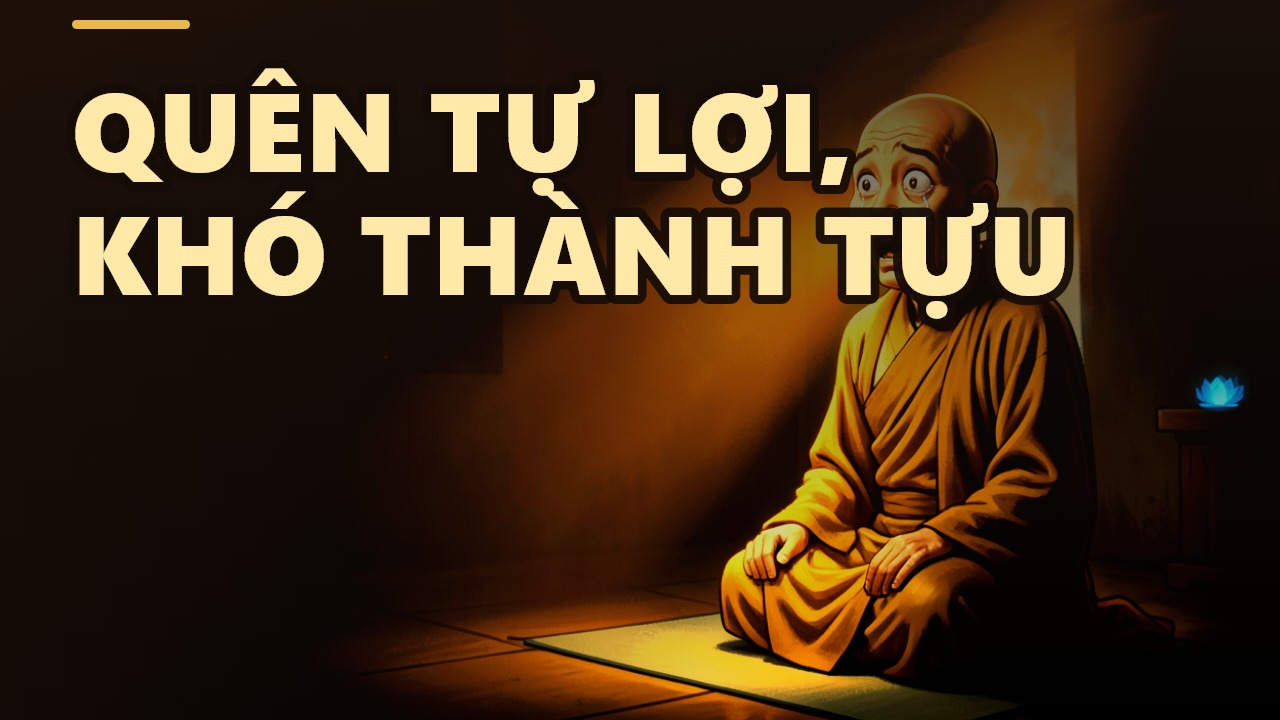
The lesson from the Dhammapada is clear: even if we help others, forgetting to cultivate ourselves makes true accomplishment difficult. We must balance altruism with self-cultivation to attain pure merit.
"I work so hard at charity, yet why do I not feel my mind becoming peaceful?" Perhaps many of us have wondered just like that lay Buddhist woman. The Buddha taught in the Dhammapada: "No matter how much you benefit others, never forget to benefit yourself. Only when you benefit both others and yourself can you achieve supreme wisdom." This dharma talk on "True Offerings" by Venerable Thich Chan Quang helps us understand this teaching more deeply.
## The Elder’s Shock at the News of Nirvana
When the Buddha announced he would enter nirvana in four months, most of the Sangha were filled with sorrow. However, the elder Atadita was anxious because he had not yet attained enlightenment. He withdrew from all conditions and devoted himself entirely to practice. When the bhikkhus reported this to the Buddha, he praised him: "Atadita is excellent! Hearing that the Tathagata will soon enter nirvana, he realized he had not yet attained enlightenment, so he exerted his utmost effort in practice. This is true reverence for the Buddha."
"The most genuine reverence for the Buddha is found in those who are concerned, who recognize their own shortcomings, and strive diligently to practice."
Although we do not have the Buddha before us today, we can still learn from the elder’s example. Revering the Buddha is not merely about words, but about action in our practice.
## Benefiting Others While Forgetting Oneself: A Path to Mara
The Buddha emphasized that no matter how much we benefit others, we must not forget to benefit ourselves. What does "benefiting oneself" mean? It is not selfishness; it is the commitment to refine one’s own character. If we focus solely on helping externally while our ego swells internally, we gradually fall into our own traps. Venerable Thich Chan Quang warns:
"A person who frequently engages in charitable work without cultivating their ego may eventually become a Mara."
This is because Maras also possess merit, but merit without wisdom easily transforms into arrogance, jealousy, and deception. Accumulating blessings without transforming the inner mind is an easy path, yet it is fraught with danger.
## Three Levels of Mind: Selfishness, Altruism, and Overcoming Faults
Living selfishly is the easiest path. Living altruistically—living for others—is harder. But the most difficult task is overcoming one’s own faults. The Dhammapada teaches that practitioners must fulfill both aspects: benefiting others and benefiting themselves. Venerable Chan Quang explains: "It is easy to live altruistically and do charitable work, but it is very difficult to conquer one’s own mistakes." Consequently, we often meet people who are diligent in charity but reluctant to sit in meditation or control their minds. This is like a general going to battle while neglecting the supplies within.
## The Humble Mind: Dust and Grass
One of Venerable Chan Quang’s frequent teachings is to always view oneself as "dust and grass." When we accomplish something good, pride easily arises. He reminds us: "If I think I am great, I cannot teach anymore; my mind becomes corrupted. I must constantly remind myself that I am nothing but dust and grass."
"To be a speck of dust allowed to rest where the Buddha has walked is already a great joy."
When we maintain a humble mind, the Buddha continues to protect us. If even a slight thought arises saying, "I am accomplished," the Buddha withdraws his protection immediately. Therefore, let us recite the mantra of "dust" daily, ensuring that the spiritual path does not become a road leading back to the ego.
## Conditioned Merit and Unconditioned Merit: The Secret to Liberation
When we perform good deeds, we accumulate merit. If we use that merit to enjoy material life—large houses, bank accounts—then that merit is "conditioned" and can run out. However, if we channel it into practice, using mental purity to transform spiritual energy, that merit becomes "unconditioned." The teacher says:
"This is the secret between conditioned merit and unconditioned merit. Have you grasped it fully? This is extremely important."
Do not let all your merit flow into comforts. Learn to refuse some enjoyment, and dedicate time to meditative concentration, striving for purity and wisdom.
True offerings are not just about giving money or time. First, offer your own body and mind through the determination to practice. Start today: do good deeds, but simultaneously reserve time for yourself—to meditate, to chant the Buddha’s name, and to reflect. Always remember that you are but dust. This is the path that leads to the supreme wisdom of the noble ones.
AI-assisted translation from the Vietnamese original.
Read in Vietnamese →