
The Gradations of Emotion: From Reverence for the Buddha to Loving Even Trash
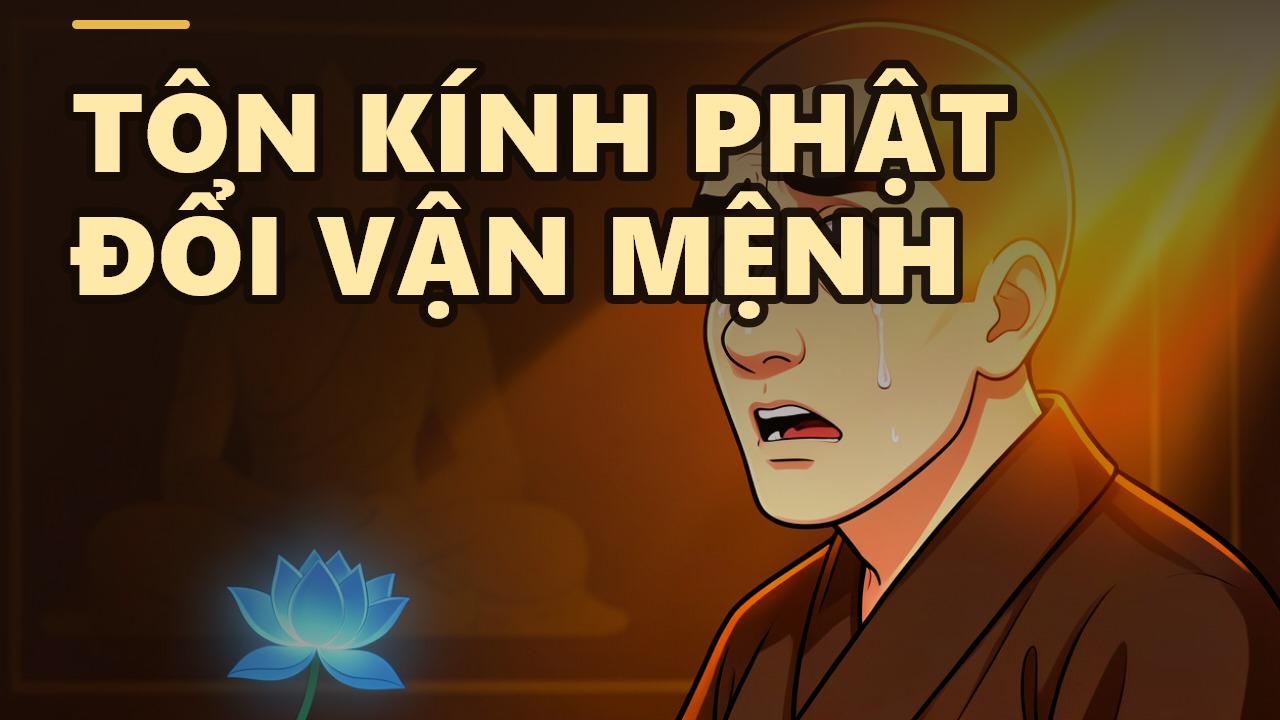
**Summary:** Master Thích Chân Quang teaches about emotions—the source of all actions, how to choose the objects of love and hate to create merit, and the ultimate destination: unconditional love.
Have you ever wondered why you come to the temple for the Vu Lan ceremony? Is it because the temple is grand, because of its conveniences, or because of the delicious food? Here is a very heartfelt answer: it is because of emotion. The love for the temple, for the teacher, for friends. And deeper still, that love is the thread guiding our entire life, as the Buddha taught in the twelve links of dependent origination.
**Emotion – The Root of All Actions**
In his dharma talk, "The Gradations of Emotion," Master Thích Chân Quang affirms that all actions of beings, from the smallest to the greatest, from the wise to the foolish, originate from emotion. The Buddha called this "craving" – a vital link in the twelve conditions.
When we love, we wish to be close; when we hate, we wish to stay away. Emotion is not just a feeling; it is the energy that drives us to act. Therefore, the important question is not whether we have emotions, but what object those emotions are directed towards.
**Merit and Sin Do Not Lie in the Feeling, but in the Object**
Hearing the word "love," we might assume it always brings blessings. But the Master teaches it is not that simple. Loving a good person generates blessings from merit; loving an evil person generates sin. Showing reverence to a saint brings immeasurable blessings, while showing reverence to a hypocrite brings shared guilt. Does hating a good person destroy all opportunity, while hating a bad person brings merit? That is not so. The subtle point is that we are only permitted to hate the evil deed, not the person.
We are only permitted to hate the bad action itself. Do not hate the bad person. When you see a bad person, you must feel compassion for their suffering.
He tells the story of how Uncle Ho hated evil deeds the most, yet he was gentle and compassionate. This was a wonderful distinction: seeing the evil clearly but without animosity towards the person, knowing they would inevitably suffer.
**Reverence for the Buddha – A Wondrous Transformation**
The Master advises us to generate absolute reverence for the Buddha, even if it is initially just an intention in our minds. This is enough to create a tremor in the realm of phenomena and rearrange karmic imprints from countless lifetimes. For example, a person with the karma of murder from a past life was destined to die violently. But thanks to the merit of reverence for the Buddha, the karma is transformed; they may meet with an accident but will be rescued, or will die with honor. This is not a wishful fantasy, but a karmic law bent by the power of reverence.
My vow to hold absolute reverence for the Buddha is an immediate tremor upon the realm of phenomena.
However, intention alone is not yet sincerity. To attain true, absolute reverence, one must realize a stage of sagehood. Yet, as we persevere with this intention, that emotion gradually takes shape and transforms our life.
**The Ultimate Goal is Love and Compassion**
Initially, Buddhism teaches us to abandon emotions, as any emotion is entangled with greed, hatred, and delusion. But when the mind is purified, emotions return in a more pristine form. The Master clarifies: the more correctly we practice, the more emotion we have, and this emotion is guided by wisdom. Ultimately, the pinnacle of the teachings is nothing lofty—it is simply love. This is like a garden of a clean mind where the flowers and fruits of love blossom naturally.
What is the ultimate essence of the teaching? It is love. There is nothing esoteric about it.
He shares that every time he steps onto the teaching platform, he looks at everyone with eyes full of love, and he advises all monastics to also be filled with love for the lay followers. Because the temple is the only true refuge, as it overflows with love.
**The More You Love, the More You See the Small Things**
A person with a great heart is one who can love the smallest things. From a falling flower petal, a dropping leaf, to a used napkin just discarded. The Master even established a "Love the Trash" association to test people's hearts. When we can love trash, we have stepped into the ranks of the bodhisattvas. This may sound unimaginable, but it is a very practical lesson: start small.
A person with a great heart is one who can love the small things, growing ever smaller... I challenge the assembly: how small can you love? Let me answer: love smaller and smaller, until you can love even trash.
**Many Gradations of Emotion – A Beautiful Soul**
We have many relationships: parents, teachers, friends, children, our homeland, the Buddha. Each relationship requires a different emotional register. Respect for parents, love for friends, absolute reverence for the Buddha—this is a painting with many colors. Flattening all these gradations, as in some Western perspectives, is actually a loss of civilization, as it erodes the value of reverence. The Master compares it to a house needing coordinated colors, a robe needing its trim—our soul also needs these many gradations to be beautiful and warm.
While there are many gradations, these gradations of emotion expend our energy.
Therefore, let us cultivate genuine gradations of emotion in our hearts. Reverence for the Buddha, filial piety towards parents, love for friends, and one day, even love for the smallest things. This is the path leading us back to our own beautiful essence—beings of love.
AI-assisted translation from the Vietnamese original.
Read in Vietnamese →