
Is Technology 4.0 'Wiping Out' Temples? Why Young People Are Leaving Temples, and What Will Never Change?
Thầy Thích Chân Quang points out that technology 4.0 is drawing people away from temples, yet the core values of life—eating, sleeping, learning, and cultivating virtue—can never be replaced by any machine.
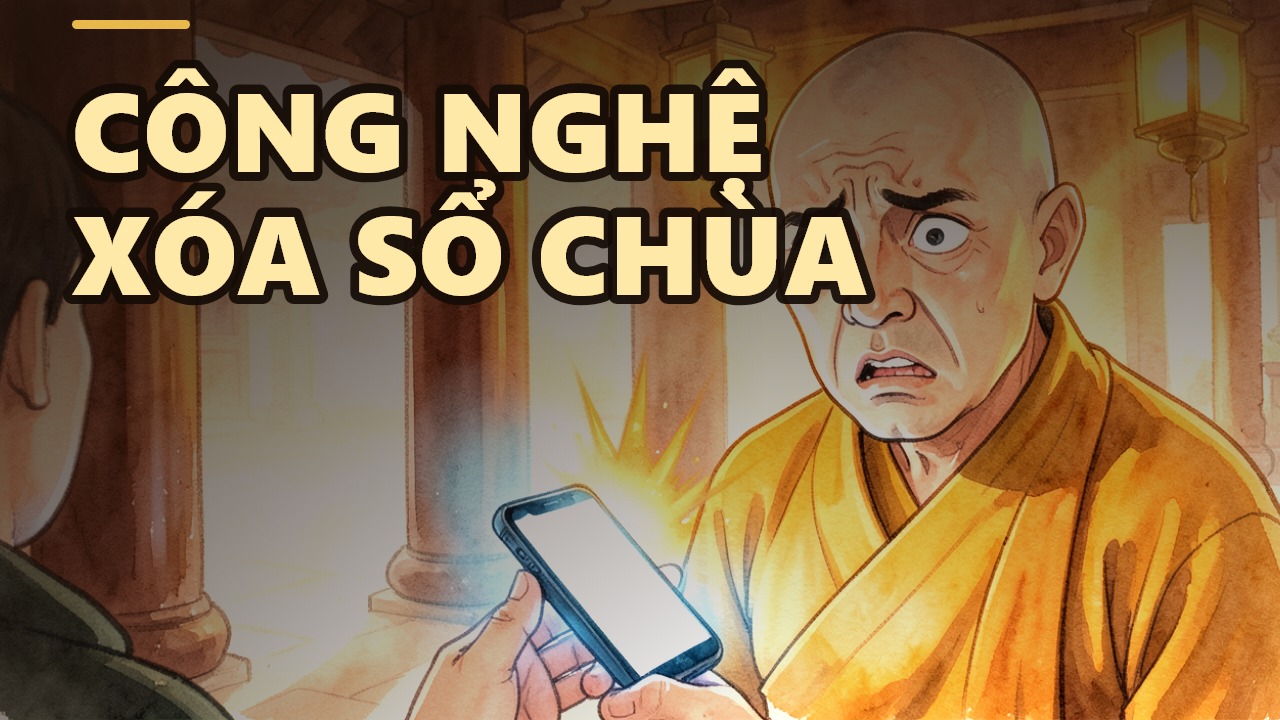
In the old days, in villages without electricity or television, the temple was the liveliest place in the community. People gathered to chant sutras and listen to stories as a form of entertainment. But now, in the world of the Fourth Industrial Revolution, is the temple still a place that draws people in? Thầy Thích Chân Quang, in a Vu Lan dharma talk, posed a question full of concern: "Technology 4.0 has marched into the temple and can break the temple, can even erase it entirely." So what should we understand about this new era, and about our path of practice in this age?
What is Technology 4.0? From the Steam Engine to Artificial Intelligence
Thầy recounts the history of the industrial revolutions in a way anyone can understand: the first brought the steam engine, giving people the strength of muscle; the second brought electrification, carrying energy into every corner of life; the third brought computers, helping us calculate and organize; and the fourth brings artificial intelligence—more intelligent than humans, able to create, write books, compose music, and even control our homes from afar.
"Machines now stand equal to human beings, and in many things they surpass us."
Thầy emphasizes: any country that fails to adapt in time will fall behind, and Vietnam is deeply concerned. Even the vendor selling sticky rice must know what technology 4.0 is, because the world has embarked on a journey none of us can stand apart from.
Temples Grow Quiet as the Virtual World Beckons
While the world moves forward, the temple stands still. Thầy offers this image: life moves ahead, the times move ahead, but the temple refuses to move. People cannot abandon their lives, so they part ways with the temple. Why? Because the temple has no Facebook, no internet, no games. Young people would rather socialize online than chant sutras. A real temple with a real monk, a real sutra, a real meditation session cannot compete with the clever clips circulating online.
"People live up in the clouds—the virtual life is what counts as civilized, and this real world below no longer matters."
Thầy tells of someone who said their office is in the sky—iCloud—while the real office down on earth belongs to "those poor wretches." The story is humorous but deeply meaningful: we are losing our connection with reality.
Whose Fault Is It When Temples and People Drift Apart?
Who is the culprit? Not the people, and not the temple itself, but the stubborn refusal to progress with the times. The temple holds on to its simple way of life—eating modestly, wearing plain brown robes—while people need bank accounts, mobile phones, fashionable clothes, and modern music. The temple speaks an old language, chants in old melodies, and people neither understand nor care. The temple is left with value only in services like funerals and house-blessing ceremonies—merely a presence to avoid being mocked, no longer a place where people entrust their moral life.
"People and temples no longer walk together. That means no one comes to the temple anymore."
Thầy sees this simply by looking at the temple gate: no more flies buzzing means no more offerings, no more visitors. But this lesson is not meant for blame—it is meant to awaken us.
What Will Never Change?
Thầy offers a remedy: no matter how far science advances, there are things no machine can replace—eating, drinking, sleeping, caring for the body, learning to gain knowledge, training our health, and cultivating virtue. These are things each person must do for themselves. A machine can calculate for us, but it cannot eat for us, and it cannot cultivate virtue for us.
"Cultivating virtue is something you must do yourself—only then do you have virtue. No machine can cultivate it for you."
So technology 4.0 is not the enemy, but a challenge calling us to adapt. The temple can survive if it learns to use technology, so long as it does not lose its essence. And every Buddhist should do the same—use technology as a tool, without letting it sweep us away from what is real.
Let us return to real living: eat truly, sleep truly, learn truly, practice truly. Do not let the virtual world consume your soul. It is precisely this awareness amid the currents of the digital age that allows us to keep our peace and clarity, just as the Buddha taught. Filial love for our parents, and every other virtue, will never go out of date. Let technology serve us—never let us become its servants.
AI-assisted translation from the Vietnamese original.
Read in Vietnamese →