
Humans Created Gods, Then Knelt Before Them: Why?
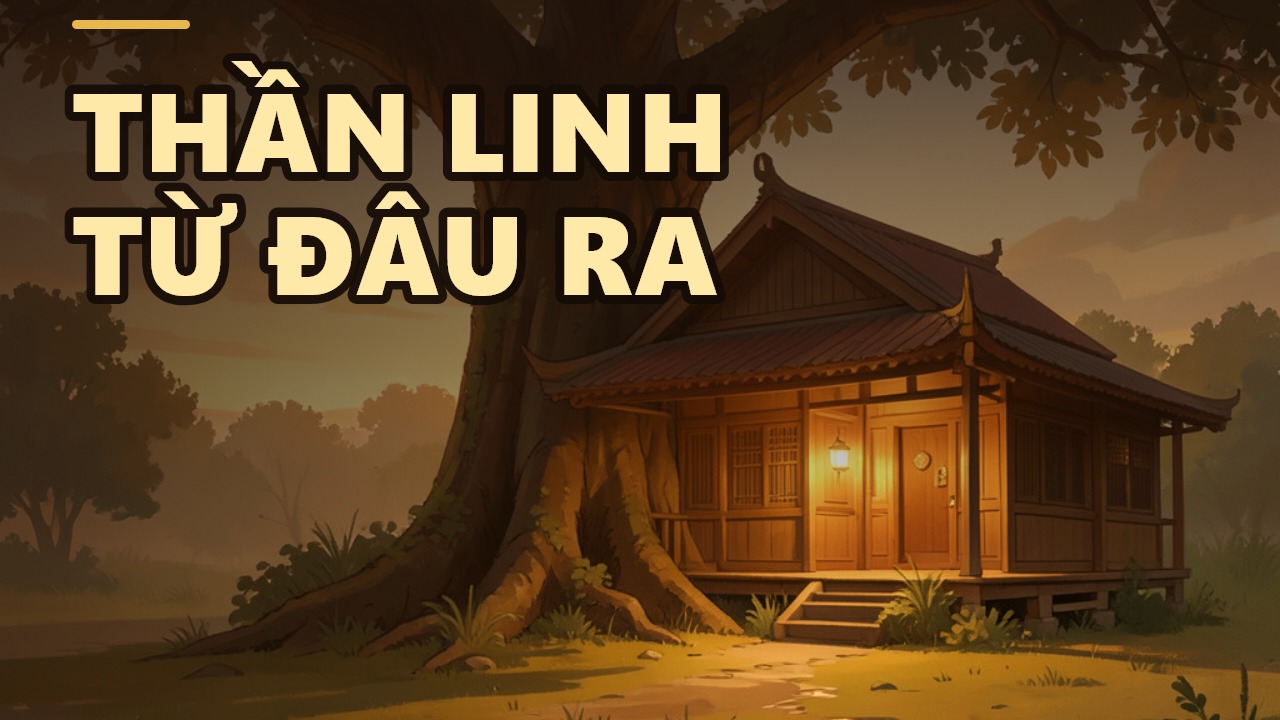
Have you ever wondered why humans believe in deities? From ancient times, before science developed, people stood before rain, wind, thunder, and death, asking themselves, "Why?" Then an answer emerged: "Heaven did it." And religion began from there.
### The Endless Curiosity of Humanity
Humans are creatures who always wonder. A tiny child keeps asking their mother, "What is this?" while adults ask, "Why does it rain?" or "Why do people die?" When the knowledge of the era was insufficient to explain these mysteries, people sought a comforting answer. That answer became the concept of gods.
Venerable Thich Chan Quang observes that our ancestors proposed the hypothesis of divine beings not out of ignorance, but because they needed an explanation to find peace of mind. If we lived in that time, perhaps we would have accepted it as well. After all, apart from saying "Heaven made everything," there was no other way to understand the world.
### Did Humans Create Gods, or Vice Versa?
There is a bitter irony in this world: humans created gods, only to kneel before the very deities they imagined. Venerable Thich Chan Quang pointed this out clearly: It was humans who created gods, yet later claimed that gods created humans.
When a person with sudden insight conceived the idea of a supreme deity, the community listened because no other explanation existed. This belief spread, transforming into culture, ritual, and religion. However, we should not hastily criticize the past, for the history of human thought had to climb such steps.
### Three Pillars of a Religion
For a religion to form, three elements are required: a theory (the doctrine of divinity), a ritual (offerings and chanting), and a community of believers. Venerable Thich Chan Quang affirms that when people possess a theory, perform rituals, and gather followers, a religion takes shape.
Buddhism also contains these three factors: the Tripitaka serves as the theory, chanting ceremonies serve as the rituals, and Buddhists serve as the followers. Yet, the difference lies in the content of the theory, not merely in its form.
### Supernatural Phenomena: Real Experiences
Beyond imagination, ancient people witnessed phenomena that could not be explained by crude theories of divinity. Venerable Thich Chan Quang states that supernatural matters are real. Stories of house-guarding spirits, charms, sorcerers, or mediumship experiences involve actual encounters. Because of these phenomena, humans believed in a parallel spiritual world. Thus, religion was once again reinforced by faith in the invisible realm.
### Right View in Buddhism
Buddhism views this issue with great subtlety. Is there a soul? Venerable Thich Chan Quang explains that a temporary spirit exists, but a permanent self does not. This means that after death, there is an intermediate state carrying the form of the old body, but there is no eternal "I." Understanding this helps us avoid two extremes: completely denying life after death, or clinging to a "soul" as an unchanging entity. Right view allows us to see all phenomena clearly without being dominated by superstition.
Looking back at the origins of religion, we see that humans have always yearned to find the ultimate truth of the universe and life. The Buddha taught that understanding and practice lead us to the other shore. Today, armed with wisdom, let us continue writing our story with mindfulness, compassion, and a faith that is not blind. This is Buddhism in modern life.
AI-assisted translation from the Vietnamese original.
Read in Vietnamese →