
It Seems So, But It Is Not Mine: Why the More You Hold On, the More You Lose?
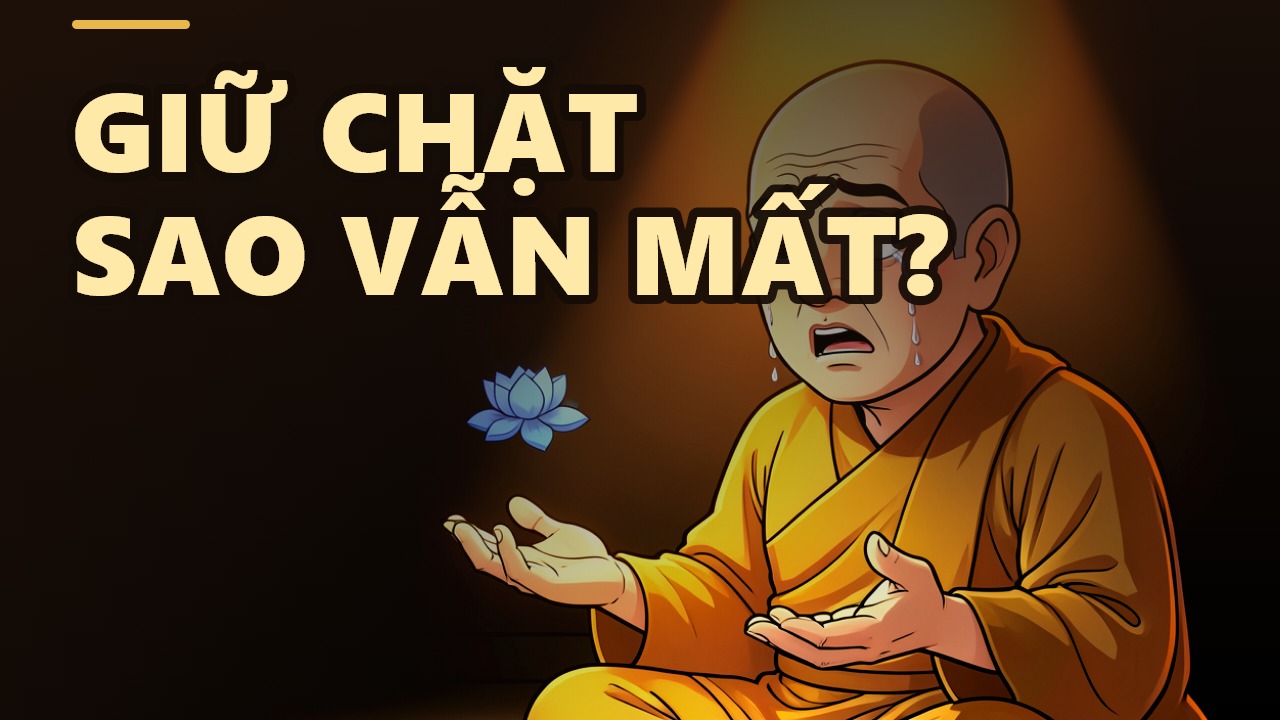
Have you ever felt that you were holding on to something so tightly, and yet everything still slipped away? There is a profound teaching of the Buddha that was opened up by Thầy Thích Chân Quang in a dharma talk titled "It Seems So, But It Is Not Mine." The title may sound amusing, yet it expresses one of the most sublime truths of Buddhism.
What did the Buddha teach about what is "mine"?
The Buddha taught very clearly: "Contemplate and see that nothing is a self, and nothing belongs to a self." This simple sentence has been very rarely accomplished over thousands of years. Whoever accomplishes it begins to enter the noble stream. This is the teaching of non-self (anatta) — there is no "I" and nothing that belongs to "me." Thầy Chân Quang emphasized:
The Buddha taught this very clearly: contemplate and see that nothing is a self, nothing belongs to a self. That sentence is simple, yet no one can carry it out. Over thousands of years, very few have been able to do it.
We hear it and find it beautiful, but when we apply it to daily life, we stumble immediately. Why? Because the grasping at "mine" runs deep in our flesh and blood.
The things we consider "ours" are in fact only illusions
Before practicing, we regard our house, car, money, and land as ours. Losing even one centimeter of land, two families may sue each other for ten years. Thầy Chân Quang recounted: "Two households fought in court for ten years over just one centimeter. That is how deeply they cling." Property is the strongest form of grasping; when dividing an inheritance, siblings may even take up knives against one another. It is not only property — affection, honor, and status are the same. Some people, out of jealousy, have killed their wife and children because they thought "my wife belongs to me." Others defend their honor at any cost when someone speaks ill of them.
The root of grasping: this body is mine
But the heaviest grasping lies right in our own body. The Buddha struck directly at it: "This form is not mine; feeling, perception, mental formations, and consciousness are not mine." If we contemplate carefully, we see that the body is impermanence (anicca) — we want it healthy, but it falls ill; we want it young, but it grows old. It does not obey us.
Now it exists, but it may be lost at any moment. We want it healthy, yet it is not healthy; we want it not to be sick, yet it keeps being sick. Every night we want to sleep, but it refuses to sleep, and we can accomplish nothing.
When we see that this body is not ours, everything outside also becomes lighter.
The more you hold on, the more you lose; let go of everything and you will gain everything
Thầy taught: "If we see everything in this world as belonging to us, we will lose it all the moment it slips from our hands. But whoever can live the Buddha's teaching, moving through life at ease without seeing anything as their own, will find that the entire universe belongs to them." This is the principle of cause and effect (karmic law). The more someone clings to their beauty, the more they alter and adjust themselves, the worse they look. There was once a very beautiful actress who wanted to be even more beautiful, so she kept having surgery, until in the end her face became like a demon's. Meanwhile, someone who does not cling, who regards the body as empty like the void, will find their appearance growing ever more radiant.
Living in the world: saying "mine" while the heart does not cling
In society, the law recognizes ownership so that society remains stable. Therefore, we still say "this house is mine," "this car is mine," but a disciple of the Buddha must quietly know that in truth, it is not ours. Thầy gave the example of Thầy Thích Phước Lợi: when asked who owned a certain temple, Thầy still said "mine," because it was registered in his name, but in his mind and heart, he never saw the temple as his own.
The mouth speaks like the world, but the mind and heart are not like the world at all. In the heart, there is no seeing this temple as mine. The temple belongs to the Buddha.
How do we practice?
Begin by sitting in meditation, contemplating that this body is impermanence (anicca) and is not ours. When the inner grasping is loosened, we will find that nothing outside can bind us anymore. The Buddha compared it to felling a tree: cut the root, and the branches and leaves collapse on their own. The root is precisely this body and mind/heart. If we insist that everything belongs to us, we will lose everything. If we let go, we will receive the whole universe.
Sit in meditation and contemplate the body's impermanence (anicca), asking yourself: "Is this body truly mine?"
Remind the mind and heart: "This is not mine" whenever you cling to property, honor, or loved ones.
Let go gradually, starting from the smallest things, so that the mind/heart holds on to nothing.
Begin today: whenever you look at any possession, any person, any honor, or any body, remind yourself: "It seems so, but it is not mine." This is not a denial of responsibility, but a deep truth that allows us to live in this world with a heart like the open sky — light and at ease. Only when there is nothing left to hold do we truly have everything.
AI-assisted translation from the Vietnamese original.
Read in Vietnamese →