
Something and Nothing: Why Do We Always Misunderstand What Exists?
Explore the hazy boundary between "something" and "nothing" through Master Thích Chân Quang's dharma talk – realizing that existence depends on our senses, and that the law of cause and effect (karmic law) concerning the self helps us practice in the right direction.
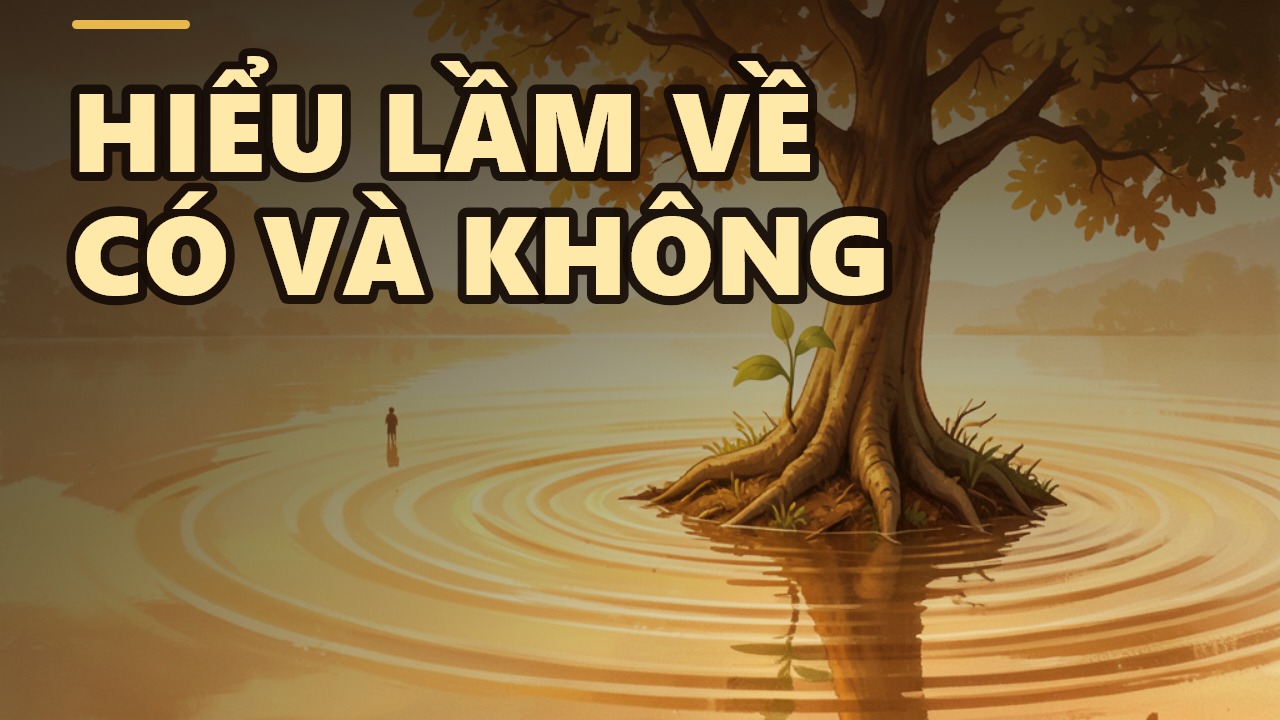
Have you ever wondered: what exactly are "something" and "nothing"? We use these two words every day, yet few of us ever pause to think about them. In his dharma talk, Master Thích Chân Quang startled the whole assembly with a simple question:
"All our lives, every single day, we keep saying this exists, that doesn't exist – this is nothing, that is something. But now let me ask: what does that really mean? And right away, we find ourselves speechless."
A simple question, yet it opens up an entire horizon of understanding about the world and about ourselves.
Something and Nothing – The Fragile Boundary of the Senses
We tend to assume that whatever we can see, touch, or hear exists, and whatever we cannot see does not. In reality, this boundary depends entirely on each person's senses and wisdom. Master Thích Chân Quang gives the example of a blind person: no matter how many times the color green is described, they can never know it, because they have no capacity to perceive it. Similarly, people in ancient times looked at the ground and believed the earth was flat; only later, as wisdom advanced, did humanity discover that the earth is round.
"But be careful – it may well exist, simply because we have not seen it. It is not that it does not exist."
For this reason, do not rush to conclusions about what we have not yet seen. Who knows – it may be an entire world existing beyond the reach of our eyes.
Things That Exist Though Our Eyes Cannot See
We cannot see electricity, radio waves, or infrared rays, yet everyone knows they are real and powerfully shape our lives. Because we came to understand them, humanity created lightning rods, electric lights, televisions, and more. In the same way, the spiritual world – the invisible realms that the Buddha's teachings (Dharma) speak of – though unseen by ordinary eyes, still exists and touches both body and heart.
"Each time we come to know one more truth, one more thing that is real and present, we can adjust our lives in beneficial ways."
Understanding this, we will live more carefully, learn to love even the sentient beings we cannot see, and know how to create blessings from merit for ourselves through acts of generosity and giving.
Things That Do Not Exist Yet We Believe They Do
Conversely, there are many things in life that do not exist, yet we take them to be real. Like the character Thái Vũ in the old story, whom so many people blindly pursued. Or the woman who trusted the check from her "future brother-in-law," only to find the account completely empty. More frightening still, there are cults that fabricate a so-called "God" or "Buddha" to deceive their followers, promising dazzling wonders that cost them their entire lives.
"There are things that do not exist, yet we imagine they do. And so we adjust our lives in mistaken ways."
Therefore, we need wisdom to tell truth from illusion. Do not let glittering promises deceive you, for those who chase after what does not exist will end up with nothing at all.
The Trap of the Self: Those Who See Themselves as "Something" Become "Nothing"
This is the crux of Master Thích Chân Quang's teaching: the more a person considers themselves "something" – possessing wisdom, status, or superiority – the more the world looks upon them with disdain, seeing them as hollow. Conversely, those who see themselves as "nothing" – humble and letting go – are respected and beloved by others.
"When someone sees themselves as nothing, what is the fruit of karma that comes to them? It is something wondrous. And when someone sees themselves as something, what fruit comes to them? Nothing – nothing at all."
The Buddha taught us about non-self (anatta) – the truth that there is no solid "self" to be found. When we cling to the self, greed, selfishness, pride, and jealousy arise. But when we practice letting go of the self, we can open our hearts and live beautifully and peacefully.
Practice Is Realizing the "Nothing" to Attain the Great "Something"
The Lotus Sutra speaks of the knowledge and vision of the Buddha – something attained only by those who see themselves as nothing and let go of self-grasping. Meanwhile, those who believe they are already the Buddha, or equal to the Buddha, only collapse further. Master Thích Chân Quang emphasized: "Whoever sees themselves as nothing at all will realize the knowledge and vision of the Buddha. But whoever believes the Buddha already dwells within their heart will, in the end, arrive at an enormous zero."
"To see oneself as nothing, just as the Buddha taught, is precisely how one attains the something that is the absolute knowledge and vision of the Buddha."
Thus, practice is the process of recognizing the emptiness of the self, so that we no longer fear loss and no longer cling. When our heart grows still and empty like a calm lake, we can clearly see the true nature of all things and live a life of ease and awakened clarity.
So let each of us ask ourselves: am I seeing myself as "something," or as "nothing"? Let us learn humility and letting go of the self, so that the heart may open to what truly exists. Then we will come to see rightly, think rightly, and live rightly – the first steps on the path of returning to the original nature of suchness that has always been within each of us.
AI-assisted translation from the Vietnamese original.
Read in Vietnamese →