
With Meditation, Wisdom Arises – Do Not Let Your Spiritual Practice Be Wasted
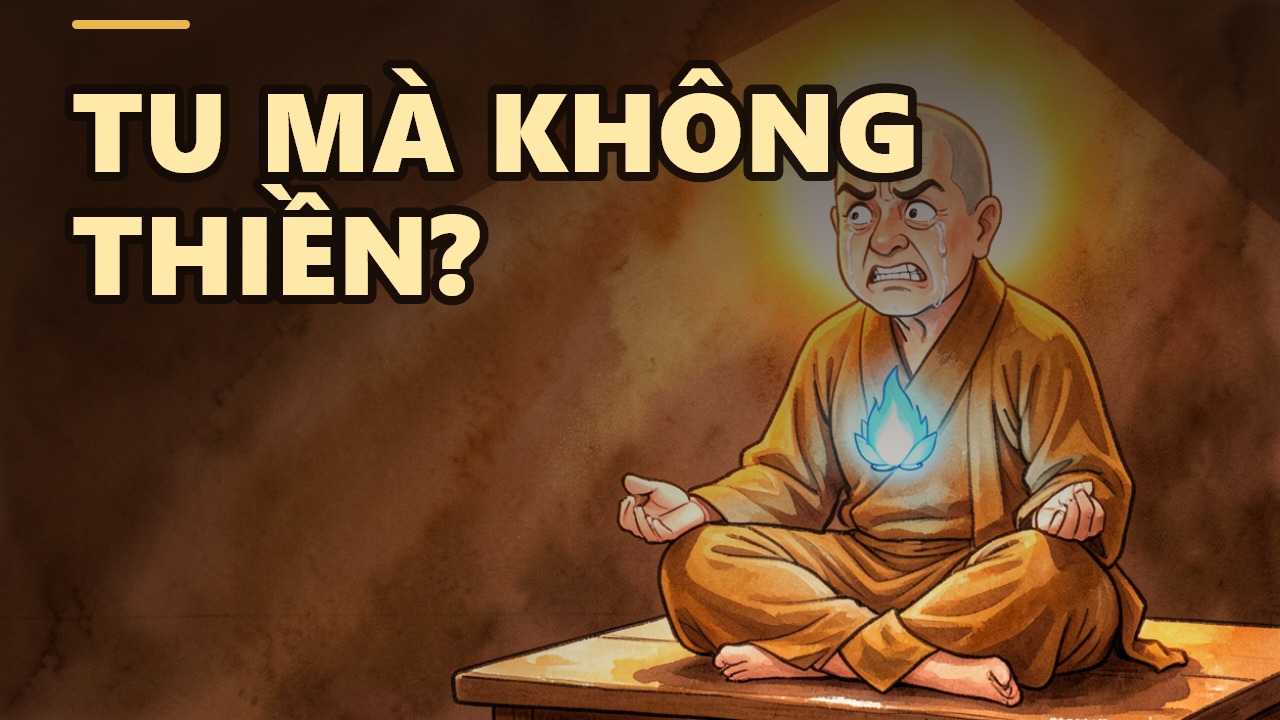
Have you ever sat in meditation only to find your mind wandering wildly, your limbs numb and aching, asking yourself, "Why is spiritual practice so difficult?" If so, you are not alone. In a recent dharma talk, Venerable Thich Chan Quang affirmed that meditation is indeed challenging, yet it remains the sole path leading to wisdom and enlightenment.
With Meditation, Wisdom Arises; Without It, Wisdom Perishes
Venerable Thich Chan Quang recalled the profound yet concise teaching of the Buddha found in the Dhammapada: "When there is meditation, wisdom arises; when there is no meditation, wisdom perishes." The teacher explained that without practicing meditation, no matter how much effort or merit we accumulate through making offerings, we remain outside the gate, unable to enter the home of the Buddha's teachings (Dharma). Without meditation, wisdom does not arise, and the Dharma cannot flourish.
Meditation Is Difficult Because We Must Face Ourselves
Anyone who has meditated knows the pain in the legs, the fatigue in the body, and the chaos of the mind. Venerable Chan Quang stated plainly, "Meditation is extremely difficult." But why? Because we must confront our greatest enemy—ourselves. This enemy is primarily our own delusional thoughts. He compared these thoughts to an elephant and ourselves to a mouse. If we try to fight directly, we will be crushed. Instead, we must be skillful and patient, like a mouse slipping into the gap between an elephant’s toes. Gradually, we learn to master our mind/heart, and each hour of meditation becomes an hour of happiness.
Three Pillars: Qigong, Ethics, and Merit
To achieve success in meditative concentration, three supporting factors are essential. First is qigong, which strengthens the body and builds inner energy, allowing one to sit for long periods without fatigue. Conditions such as back pain, insomnia, and liver heat can improve rapidly with this practice. Second is internal ethics. The mind/heart must be purely wholesome and selfless. A meditator cannot bring a selfish attitude into their practice. Even the wealthy must serve humbly when entering the temple. Third is merit. We must live a life of service, performing countless acts of blessings from merit. Once we commit to meditation, we no longer live solely for ourselves. These three elements intertwine to support meditative concentration. Lacking even one makes the path arduous.
Correct Method According to the Nikaya Sutras
While many schools of meditation exist worldwide, we follow the original method taught by the Buddha in the Nikaya sutras. Venerable Chan Quang emphasized that this method contains no errors. The Buddha’s instruction is simple: "Breathing in, I know I am breathing in; breathing out, I know I am breathing out." Though it sounds ordinary, this simplicity is the key to spirituality. It took decades of practice to truly understand this plainness, whereas complex and flashy teachings often lead practitioners astray.
Who Will Continue to Sit in Meditation?
The teacher asked: When the mind is chaotic, the legs hurt, and the body is tired, who continues to sit? There are two types of people. One is those who seem foolish, persisting despite little immediate pleasure. The other is the beloved child of the Buddha, who has planted deep roots of goodness over many lifetimes. Those with good karmic conditions do not give up. They sit regularly every day and join monthly retreats without fear of hardship. These individuals contribute to the growth of wisdom within the Buddha's teachings (Dharma). Conversely, if monks and nuns fear or avoid meditation, Buddhism declines. Therefore, by diligently sitting in meditation, even if we do nothing else, we help build the enduring prosperity of the Dharma.
Meditation is not easy, but we must not flee from it. Begin by sitting for just fifteen minutes each day. Do not fear physical pain or mental agitation. The greater the difficulty, the more we appreciate the value of our practice. Remember, every person who diligently cultivates meditative concentration contributes to the wisdom of Buddhism—a priceless gift for generations to come.
AI-assisted translation from the Vietnamese original.
Read in Vietnamese →