
The Cycle of Rebirth: Life's Difficult Equation and the Solution for a Fulfilling Existence
**Summary:** Each human life is a difficult equation that we must solve. And without diligent practice, up to ninety percent of beings become hungry ghosts after death. Let us listen to the sharing of Most Venerable Thích Chân Quang to find the solution for our own lives.
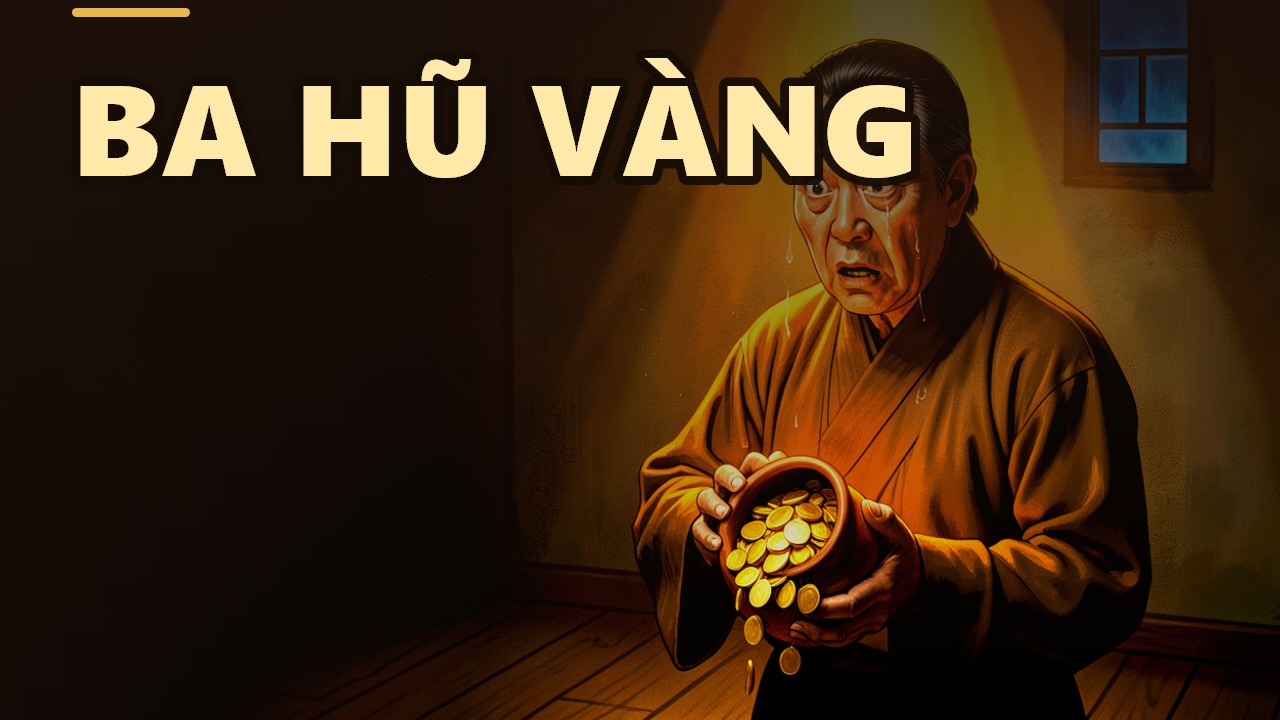
Have you ever wondered: Why were you born into this family, met these people, and experienced these events? Is it all just random chance? Most Venerable Thích Chân Quang begins his teaching with a very grounded story: a father, on his deathbed, calls his son over and tells him to dig under the bed to find three pots of gold. But then he adds: your father also has two other houses, five wives, five children, and a debt of three thousand gold bars to the underworld. The son, upon hearing this, feels faint.
That story is exactly like our own lives: when we are born, we face an equation for which there are no pre-written answers. It is the equation of a human lifespan. And the way we solve it will determine where we go after we close our eyes for the last time.
**Each human life is a difficult equation.**
When we are reborn into this life, we carry with us the karma, sins, and blessings from past lives. This karma places us in favorable or difficult circumstances, in happiness or suffering. We do not know where we truly stand, whether we should be glad or sad, whether we should accept or refuse. As Most Venerable Thích Chân Quang says:
"Each of us, when reborn into this life, faces an equation that must be solved. A human life is a difficult equation, and we do not know how to live it correctly."
Indeed, from the moment we are born, we are confronted with relationships, opportunities, and challenges. All are unknown variables. Some are fortunate, some endure suffering. But every equation must be solved; no one can escape it.
**Three ways to solve it – and which one are you choosing?**
In the story of the father leaving his estate, Most Venerable Thích Chân Quang presents three approaches. The first: dig up the three pots of gold, run away, and leave the debts for someone else to handle. The second: stay, calculate, pay the debts, and distribute the assets among all the children, even if the gains are small and the losses are great. The third: feel faint, enter a monastery, renounce everything.
Most of us are living the second approach: facing life head-on, trying to manage and fulfill our duties as best we can. But who can solve it completely? The Venerable also honestly points out that no method is perfect. We gain one thing and lose another. However, if we learn to live according to the Buddha's teachings, we can choose the third approach in a positive way: renunciation is not to escape, but to practice letting go, to cultivate ourselves, and to be an example for the world.
**Facing life in utter confusion.**
When we choose the second approach, we must face a future shrouded in uncertainty. For example, upon growing up, we meet someone, feel an attraction, fall in love, and marry – but who knows if it is the right choice? Or someone invites us to invest three hundred million in a sugar factory – will there be profit or total loss? No one can answer for us at that moment. Most Venerable Thích Chân Quang says:
"When we live in this world, facing the future, facing opportunities, we truly do not know; it is all shrouded in confusion."
Because of this confusion, we turn to fortune-tellers. We pray for a chant, for a horoscope reading. But that is merely a temporary escape. The equation remains; no one can solve it for us. Only when we have the light of dharma to guide us can we know what to do and what to avoid.
**How to get a perfect score on the equation?**
If anyone could solve the equation of life perfectly, without a single mistake, that person would receive a perfect score. And what becomes of the person with a perfect score? Most Venerable Thích Chân Quang says:
"If someone solves that equation perfectly – meaning whatever they do is correct, whatever they think is correct, whatever they say is correct, however they act is correct... then that person gets a perfect score. And what of that person? They are reborn in a heavenly realm and may even attain enlightenment in that very life."
It sounds appealing, but how many achieve a perfect score? The Venerable asks playfully: "When you were in school, how many points did you get for math?" A student below answers: "Seven points!" – which is above average. Life is the same; not everyone gets everything right. We constantly make mistakes in our thoughts, words, and actions. This is why, at death, we do not know where we will go.
**After death – most become hungry ghosts.**
We arrive at the most critical part of the teaching: when life ends, we step into another realm. Most Venerable Thích Chân Quang emphasizes:
"More than ninety percent of people enter the realm of hungry ghosts. More than ninety percent of the dead become hungry ghosts. A hungry ghost is a being that has no place for rebirth yet – they are not in hell, not in a heavenly realm, not reborn as an animal; with no destination for rebirth, they are all hungry ghosts."
Why is this so? Because while alive, we ate three meals a day, sometimes even six. But after death, if there are no descendants making offerings, then in a whole year we are only offered food once on the death anniversary. The sensation of hunger is prolonged and terrible. And so we become starving spirits, scratching at doors, begging for food. But the living do not understand, and instead try to chase away the spirits.
**Practicing to change our destiny.**
The teaching does not stop at a warning but offers a method: diligently practice the Buddha's teachings. Whenever anger arises, ask: "Is this anger in accordance with the dharma?" Whenever craving arises, ask: "Does this bring benefit to myself and others?" In this way, we will gradually act correctly and make fewer mistakes. And if we act correctly until the end of our lives, we can solve the equation completely, without fear when facing the realm of death.
Most Venerable Thích Chân Quang also reminds us: "Dying in Vietnam is more fortunate than dying in America" – because the Vietnamese have the tradition of offering rice to the deceased. This shows that making offerings for those who have passed is very important. But it is best to accumulate blessings and practice diligently while alive, so as not to fall into the realm of hunger and suffering.
Now, as we sit here, we still have time. From today until the end of our lives, let us walk without leaving thorns behind, but scattering the fragrance of flowers. Do not let a precious human life pass in vain. Let us resolve to live in accordance with the Buddha's teachings, and at the same time, guide our loved ones to do the same. This is the only way for us to achieve a perfect score in the equation of samsara.
AI-assisted translation from the Vietnamese original.
Read in Vietnamese →