
Achieving Meditative States or Achieving Sainthood? The Important Fork on the Path of Practice
**Summary:** A dharma talk by Venerable Thich Chan Quang helps distinguish between practicing meditation to achieve meditative states and practicing meditation to achieve sainthood, helping Vietnamese practitioners avoid missteps on their spiritual journey.
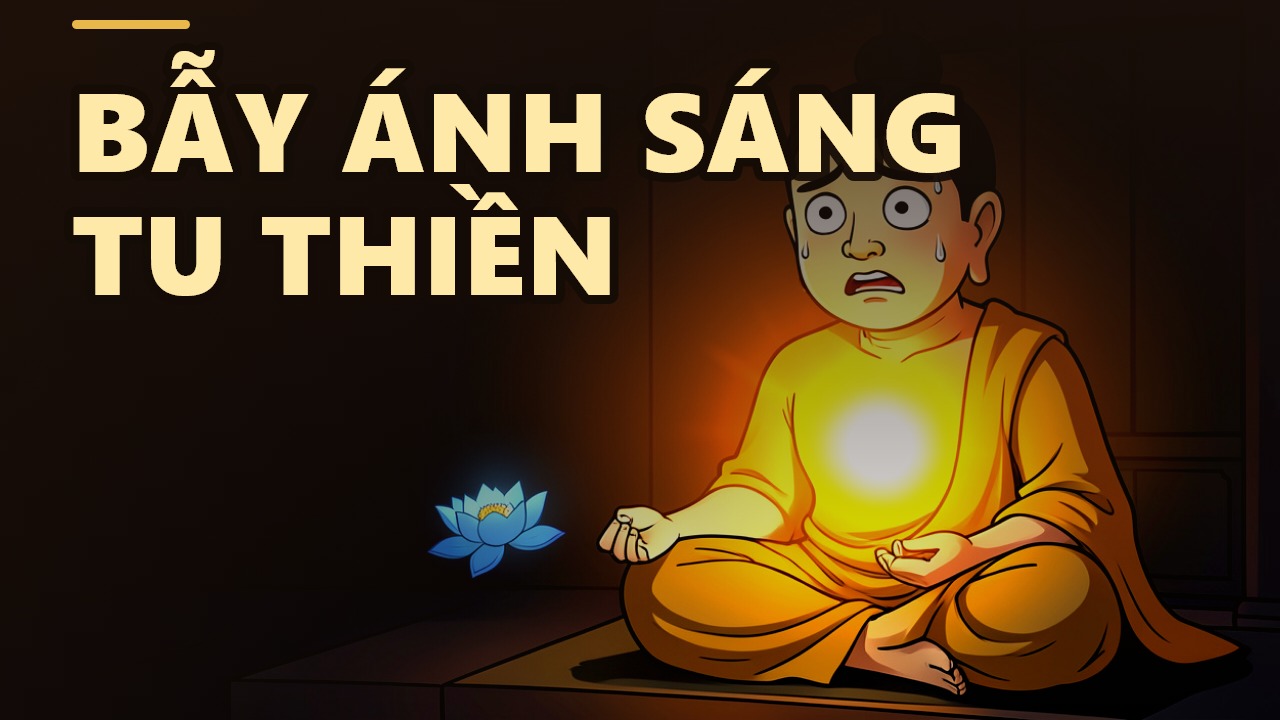
As you sit in meditation, you might suddenly perceive a radiant stream of light, with a wave of bliss pervading your body and mind. Is this a sign of enlightenment? In his talk "The Difference Between Achieving Sainthood and Achieving Meditative States," Venerable Thich Chan Quang explains that such light and bliss—even if wondrous—are merely one of the five hindrances on the path of meditative concentration. His talk serves as a wake-up call, helping practitioners avoid the subtle traps on the spiritual journey.
**Meditation: The Core of Buddhism Being Revived**
The Venerable begins with an analogy about the English language, mentioning a minister's proposal to recognize it as Vietnam's second language. He notes that if this were to happen, Vietnam would integrate more deeply with the world. He then draws a parallel: in the future, the world will also begin practicing meditation. If we do not embrace meditation now, we will fall behind, both in wisdom and in spiritual civilization.
"Meditation is the true root, the core of Buddhism is meditative concentration. If one day the whole world practices meditation and we do not, we will suffer two losses: first, we will fall behind in wisdom, culture, and spirituality; second, we will feel shame."
Therefore, he views everyone sitting in the meditation hall at Phap Van Temple today as people "who are upholding the nation's honor." He emphasizes that the commemoration of the Meditation Master-King, Tran Nhan Tong, is approaching. If Vietnamese people know nothing about meditation, it would be a source of shame. We must awaken and begin the path of meditative concentration so as not to stand apart from humanity's shared progress.
**Two Different Goals: Achieving Meditative States or Achieving Sainthood?**
Within the circle of practice, there are two paths that may seem similar but ultimately diverge greatly: one involves practicing meditation to achieve meditative states, and the other to achieve sainthood. Achieving meditative states means attaining bliss, supernatural powers, or seeing light... but this is merely enjoying blessings. In contrast, achieving sainthood means transcending all of that, becoming a saint through enlightened liberation.
"Practicing meditation to achieve meditative states is a form of enjoying blessings. But remember, blessings enjoyed will eventually be exhausted."
He recounts the story of a practitioner from another system who boasted of achieving certain realms, seeing light, and experiencing bliss. The Venerable responds: "Inside, you see light, but on the outside, you are gradually becoming haggard because your blessings are running out. That feeling of bliss is created by the pituitary gland in the brain. When you indulge in it, the primal energy rises to the brain; when it matures, the brain shatters into madness."
This is not enlightenment, but a dangerous illusion—a trap on the spiritual path.
**The Five Hindrances on the Path of Meditative Concentration**
The Venerable reminds us of the five hindrances that every meditation practitioner must pass through:
The first hindrance is the body—sitting in meditation brings great pain, numbness in the legs, and discomfort. The second hindrance is distracting thoughts—the mind’s constant thinking that refuses to become still. The third hindrance is illusion—seeing light, seeing internal organs, perceiving other realms, and also experiencing bliss. The fourth hindrance is supernatural powers—knowing events from the past and future, seeing through others. The fifth hindrance is the ego—the sense of a grandiose "I" that seeks recognition and is filled with arrogance.
Many people, after just overcoming the body and distracting thoughts, mistakenly believe they have glimpsed the gateway. But when they encounter illusion, they become utterly entranced; with supernatural powers, they stop in pride, forgetting that all of this is merely the beginning. The Venerable says: "Only the Buddha transcended all these hindrances, including the fifth one of the ego, to attain the supreme and sublime fruit of enlightenment."
**When Achieving Meditative States is Mistaken for Enlightenment**
He tells of a disciple who left him to follow another system, then returned to boast: "I sat in meditation and saw light in my mind, experienced bliss; clearly, my practice is bearing fruit." The Venerable looks directly at him: "The feeling of bliss and the light in the mind—this is the illusion you must transcend, not something to proudly grasp and savor."
"Inside you see light, but on the outside you begin to fade and wither because your blessings are running out. Why? Because you are indulging in the sensation of bliss."
He also mentions a monk who entered a state of concentration for six days and nights—an extraordinary ability. But even such powers are only part of the wonder, not yet liberation. Chasing these experiences is like stopping in the middle of a desert, thinking you have reached an oasis.
**The Heart of a Teacher and the Spirit of Diligence**
The Venerable compares his heart to sunlight, shining equally on everyone. But some welcome the light to live joyfully, while others turn their backs, don sunglasses and hats, and shield their faces. He says: "My heart is like sunlight, but each person's heart is different. The diligent are determined to practice unto life or death; the indifferent sit listening for amusement, without aim."
"Everyone should strive diligently in meditation practice to achieve some result. That result truly makes a great contribution to the nation's culture and spirituality."
Practitioners of meditation do not sit merely for enjoyment, but to rise above the ordinary human condition and seek a higher plane. If everyone in the meditation hall comes with a resolute vow, Vietnam will soon become a destination for spiritual culture in the world.
The journey of meditative concentration is not a race towards glittering lights, but a path of turning inward to illuminate and dismantle the ego. Every minute spent sitting in meditation today is a minute we are no longer chasing illusions or clinging to supernatural powers. We sit like a gold refiner, purifying our mind until the ego dissolves. Only then do we truly achieve sainthood—a higher plane of peace and wisdom.
AI-assisted translation from the Vietnamese original.
Read in Vietnamese →