
Stubborn Sentient Beings: Are You Being "Hard-Headed" on the Path?
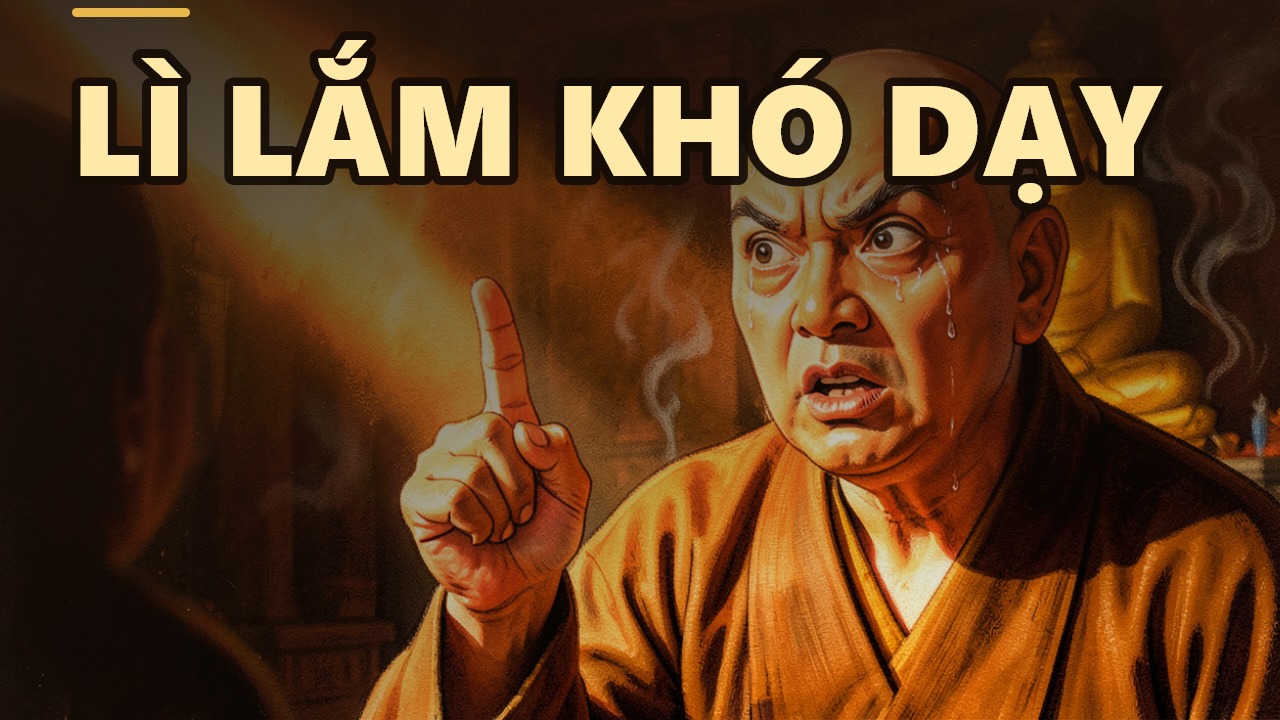
In a summer teaching, Venerable Thich Chan Quang recounted that when the Buddha manifested his radiant light, Buddhas from other realms sent their attendants to visit. They asked, “We hear that sentient beings in this Sahā world are very stubborn; is it easy for you to teach them?” According to the Venerable, “stubborn” means being extremely hard-headed—difficult to teach and difficult to practice. Curiously, we often wish each other well by saying “sentient beings who are easy to guide,” but this is merely a blessing that contradicts reality, because beings here are indeed very hard to teach.
### What Does It Mean to Be a Stubborn Sentient Being?
The term “stubborn” in the Lotus Sutra is not an insult, but a wake-up call. Venerable Thich Chan Quang explains: “To put it simply, it means being very hard-headed. Our faces show that every one of us is stubborn and difficult to educate.” Therefore, when someone wishes you “easy-to-guide sentient beings,” understand that they are praying for you not to be too stubborn. In truth, most sentient beings carry some degree of this hardness. As the Venerable says, “When hearing the wish ‘easy-to-guide sentient beings,’ we know that sentient beings are actually very difficult to teach.”
### Type One: Refusing to Accept Objective Truth
The first type of stubborn sentient being consists of those who refuse to accept objective rightness. Even upon hearing a simple moral principle like “we must love one another while living in this world,” they argue back: “Why bother with such nonsense about others!” Venerable Chan Quang emphasizes: “Hearing a statement that is perfectly reasonable, quite normal—a moral truth that everyone accepts—they still strain their necks to argue against it until they win.”
For example, if advised not to overeat to avoid illness, they reply: “Life is short, why not enjoy it fully!” The Venerable calls such statements “low, irresponsible, and lacking wisdom.” If we continue to argue stubbornly based on ego, refusing to recognize what is right, we are shutting ourselves off from awakening.
### Type Two: Not Believing in Cause and Effect (Karmic Law)
Many people doubt cause and effect (karmic law) when they see evil people becoming wealthy while good people suffer poverty. The Venerable points out that this is a shallow perspective. Why? Because they refuse to look calmly at the long term. A person who does not believe in cause and effect has lost the foundation of morality. He states: “Cause and effect (karmic law) is the foundation of ethics. If we do not believe in cause and effect, there is no ethical foundation within our hearts. Such a person can easily become evil.”
Those who disbelieve in cause and effect fear neither sin nor merit, nor do they respect the law, making them dangerous. However, if we are fortunate enough to believe in cause and effect (karmic law), we must remember: if we ignore neighbors trapped in superstition or disbelief, we share in their fault. The Venerable gives a clear analogy: seeing someone fall into a river and walking away is a fault, while trying to save them brings blessings from merit. Thus, true disciples of the Buddha always yearn to bring these teachings to everyone.
### Type Three: Refusing to Improve Oneself
The third type includes those unwilling to change or cultivate themselves. When given feedback, they say: “That is just my nature!” The Venerable notes that merely uttering this phrase places one among the stubborn sentient beings. From habits of stinginess, excessive talking, or boasting, to knowing someone better than oneself yet refusing to learn from them—all are manifestations of this “hard-headedness.”
“Let me be, that is just my nature. That is called being obstinate and stubborn.”
The Venerable admits that even he has the habit of talking too much and has not yet corrected it. But recognizing it is the first step toward overcoming it. Otherwise, when karmic results arrive, suffering will linger for a long time.
### Type Four: Lacking Awareness of Enlightenment and Liberation
The fourth type comprises educated individuals who have no interest in the path of enlightenment. They focus solely on worldly matters—science, current events, legal cases, business—but remain indifferent when hearing the Buddha's teachings (Dharma). The Venerable describes this as being “intellectual but lacking wisdom.” A truly intelligent person would be curious about things that help them awaken and escape suffering.
“Hearing about a teaching that brightens the mind, yet remaining indifferent and paying no attention—that also makes one a stubborn sentient being.”
He advises moving from intellect to wisdom. Do not stop at merely reducing stress; aim for liberation and purity.
Being a stubborn sentient being is not an unfamiliar concept. It resides in every small instance of our daily “hard-headedness.” Yet, out of compassion, Venerable Thich Chan Quang does not want us to feel fear, but rather to reflect and amend our ways. Begin by listening, accepting what is right, believing in cause and effect (karmic law), improving yourself, and opening your heart to enlightenment. Each small step creates a peaceful summer and offers a chance to cease being “stubborn.” Namo Shakyamuni Buddha.
AI-assisted translation from the Vietnamese original.
Read in Vietnamese →