
Acceptance or Change? Both Are the Dharma of the Buddha
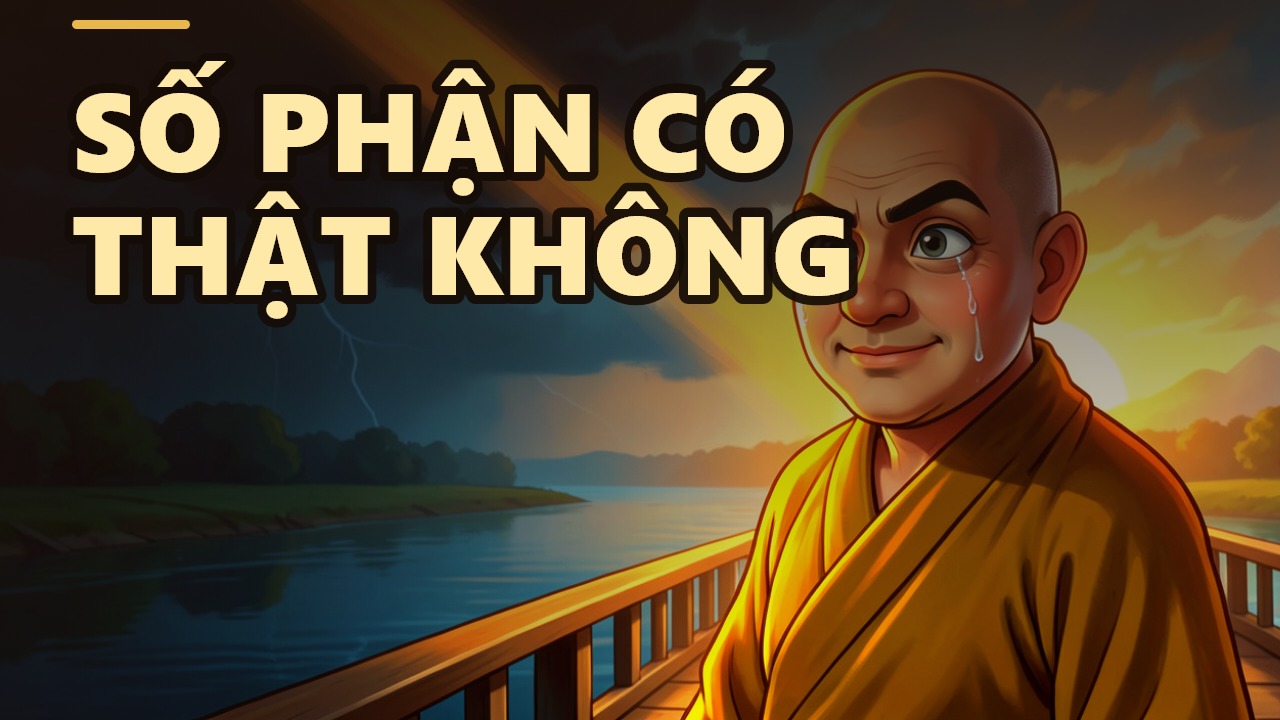
Ven. Thich Chan Quang helps us see that two seemingly contradictory teachings—accepting fate for peace and changing fate to rise up—are both rooted in cause and effect (karmic law). This understanding allows us to live with balance and joy.
At first glance, these two teachings of the Buddha appear to contradict each other. Some say, "Accept your fate and remain calm amidst adversity." Others say, "You must change your fate and strive to rise above it." These instructions seem opposed, yet both are valid principles. So, which one is the truth? Today, let us examine them closely to see that they are merely two banks of a river, connected by the bridge of cause and effect (karmic law).
Two Teachings That Seem Contradictory
In life, we encounter difficulties. The Buddha teaches us to face suffering (dukkha) with equanimity. This is a courage that brings peace. Yet, the Buddha also teaches us to strive, to rise, and to transform our fate from an ordinary being into a noble one. While this sounds contradictory, these are actually two sides of the same coin. If we only see one side, we fall into extremism.
"By accepting suffering, we naturally cease to suffer. We suffer because we try to escape from suffering," says Ven. Thich Chan Quang.
The Power of Inner Strength Is Emptiness
To maintain calm amidst storms, we need training. However, inner strength is not like physical muscle. Muscles require tension, but inner strength is emptiness. When we live altruistically, bow to the Buddha, and practice meditative concentration, we accumulate this invisible power. When faced with adversity, we remain naturally calm. For example, if someone steals the money you intended to use for your family, recognizing it as karma from past lives brings more peace than distress or blame.
"The power of inner strength is precisely a state of voidness. It is empty, containing nothing, yet this is true strength," says Ven. Thich Chan Quang.
The Trap of Passive Acceptance
If we learn only to accept without skillful means, we become weak and lazy. Ven. Thich Chan Quang shares how some countries following primitive Theravada Buddhism misunderstood the teachings, leading people to become idle. Their economies weakened, resulting in military and political vulnerability. This outcome is entirely contrary to the ideal of enlightenment.
People became lazy, planting only enough to eat before resting. Economies declined, losing competitive strength. This led to dependency and eventual military and political invasion.
"A country without progress and economic strength will inevitably weaken in its military and political standing," says Ven. Thich Chan Quang.
The Will to Rise: From Ordinary Being to Noble One
Disciples of the Buddha must have the will to change their fate, moving from self-grasping to non-self (anatta), and from delusion to wisdom. This is a journey spanning countless lifetimes. Those who claim enlightenment can be achieved in a single lifetime are ambitious but lack moral integrity. Without this will, enlightenment is impossible. Consider Mr. Thiep, who moved from being a general director of an electricity company to serving as a leader in a meditation center. His hardships became opportunities to cultivate virtue.
"Our goal is to change our fate, transforming from an ordinary being into a noble one, from self-grasping to non-self (anatta), and from delusion to enlightenment," says Ven. Thich Chan Quang.
Balancing the Two Banks: Relying on Cause and Effect
These two teachings do not conflict because both rely on cause and effect (karmic law). Accepting fate means acknowledging the results; changing fate means creating new causes. Therefore, we must learn patience while maintaining our will, just as birds need two wings to fly.
"They sound opposite, but the core issue is identical. We accept fate and suffering because we believe in the law of cause and effect (karmic law)," says Ven. Thich Chan Quang.
Dear children of the Buddha, smile as you walk through adversity with awakened wisdom. At the same time, be grateful for suffering, for it offers us the chance to transform. Do not stop, and do not blame fate. Changing your fate means changing your own mind/heart. With small steps each day, we draw closer to the shore of liberation.
AI-assisted translation from the Vietnamese original.
Read in Vietnamese →