
Parents Teaching Children: Turning Small Duties into Great Matters
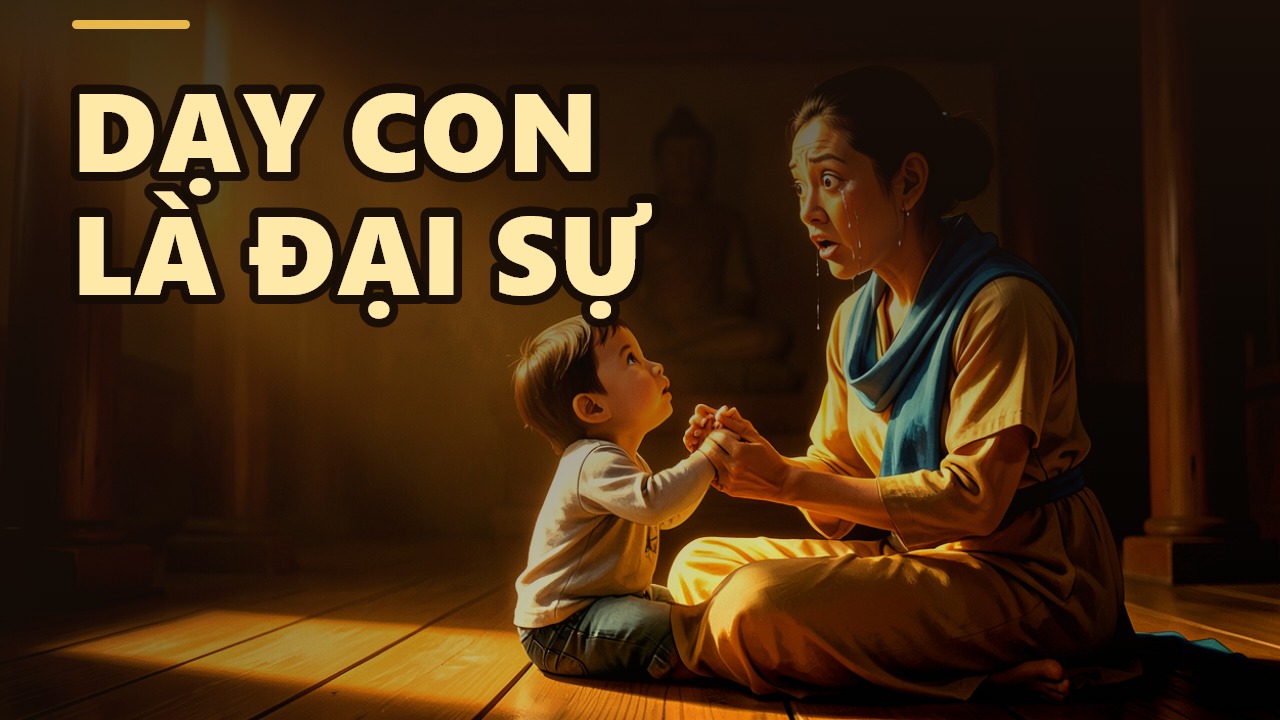
Each year when the Vu Lan season arrives, we often hear about the boundless gratitude owed to our parents. But have you ever asked yourself what truly creates this debt of gratitude? Is it merely raising a child, or is it also teaching them? In a dharma talk at Bao An Monastery, Venerable Thich Chan Quang posed a profound question. He stated that while providing for children is important, shaping their soul through proper education is even more critical. Furthermore, teaching children is not just a private family matter; it is a great undertaking that builds the culture of an entire nation.
### Teaching Children: A Small Task That Becomes a Great Matter
The teacher emphasized that many people view parenting as a minor, domestic responsibility. However, it actually relates deeply to the cultural integrity of the country. When culture fades, part of the reason lies in parents failing to teach their children properly. He explained that although parental guidance seems like a small, personal duty, it is unexpectedly a monumental task. It helps form, restore, and nurture the culture of the whole nation. Every word spoken by parents, every action, and every small lesson serves as a brick in building national identity. If we do not pass these teachings on, that culture will gradually disappear.
### To Teach Children, Parents Must Cultivate First
Many parents feel confused because they do not know how to guide their children effectively. The teacher pointed out that to teach well, one must first possess moral principles within oneself. These principles are not merely memorized scriptures or heard lectures. They arise from deep contemplation during long-term spiritual practice. Moral truth forms only when we have practiced for years and begin to clearly see right from wrong in daily life.
If parents regularly visit temples, chant sutras, engage in meditative concentration, and practice repentance, they will gradually recognize their own faults. This self-awareness allows them to teach their children according to true moral principles. Conversely, if parents live loosely with little spiritual cultivation, they may hesitate to speak to their children. Or worse, they may speak, but their children will not respect their words.
### The First Principle: Cause and Effect (Karmic Law)
The most important thing parents must teach their children is cause and effect (karmic law). The teacher said, "The first thing parents must teach their children is cause and effect." When seeing wealthy people, parents can explain that their blessings from merit come from practicing generosity, donating land for temples, or doing good deeds. If someone is rich but lacks authority, it is because they have blessings from merit but lack respect for others.
The teacher gave an example regarding helping others. We should help, but we must maintain respect. "When helping anyone, respect that person. Do not think in your mind that they are poorer than you, that they are in more difficulty than you, and therefore look down on them." Giving money while saying, "Here, I am giving you one million dong," shows a loss of respect. Instead, saying, "Please use this for now; perhaps one day when I face difficulties, I may ask for your help," preserves kindness and dignity.
### The Second Principle: Courtesy and Respect
Courtesy is a beautiful aspect of Eastern culture that we must preserve. The teacher shared, "The precious quality of our Eastern culture is courtesy, which Western cultures do not emphasize in the same way." Vietnamese people have a tradition of respecting elders, teachers, and those in positions of authority. This very courtesy helped a Vietnamese student studying abroad gain the affection of foreign professors and create many opportunities. This happened simply because the student stood humbly, spoke politely, and showed genuine respect.
Courtesy is not just about words; it includes attitude, gaze, and posture. Parents need to teach their children to express respect toward everyone, from parents and teachers to elders and officials. If we disrespect those who have blessings from merit, we incur negative karma. The teacher also reminded us that when meeting a government official, we should show respect because they possess great merit. Especially if they care for the people, their virtue becomes even greater.
### The Third Principle: Obedience
Obedience is a moral virtue that helps reduce the ego. The teacher lectured, "This morality of obedience does not involve calculating gains and losses from a young age. Do not argue about winning or losing. Just practice obedience to diminish your own ego." Within the family, children obey their parents. In society, people obey leaders, creating collective strength. The teacher used the military as an example: absolute obedience creates the power of the entire army. If we learn to obey from childhood, we will easily integrate into communities and contribute to the group as adults.
### Conclusion
During this Vu Lan season, instead of only thinking about repaying filial piety, ask yourself if you have fulfilled your duty to teach your children. If every parent cultivates themselves and teaches their children about cause and effect (karmic law), courtesy, and obedience, their children will become good citizens. These children will carry Vietnamese culture to the world. Let us start today, beginning with the small stories within our homes.
AI-assisted translation from the Vietnamese original.
Read in Vietnamese →