
Praying for Peace for the Nation, Finding Peace Within Yourself
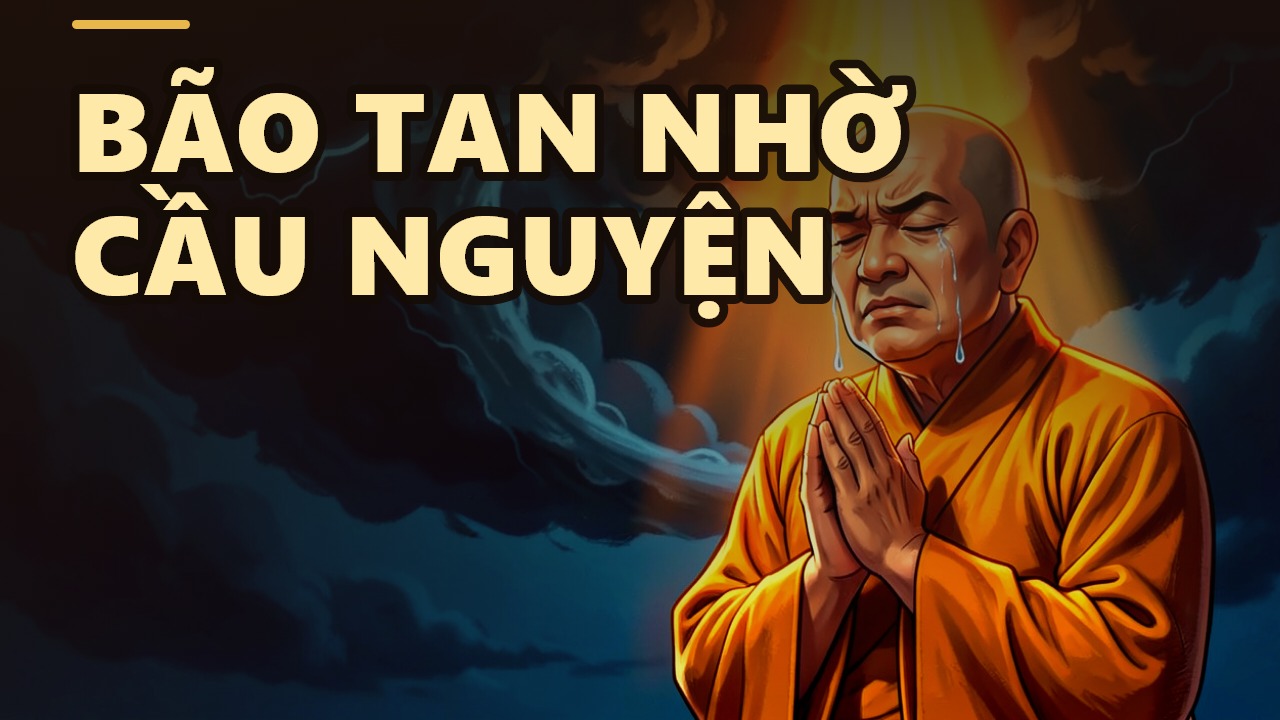
It is not merely a prayer; true peace arises from how we live: by not causing suffering to ourselves, not causing suffering to others, and directing our hearts toward our country. On the full moon of the first lunar month, millions of Vietnamese people eagerly visit temples to pray for peace. But amidst your sincere supplications, have you ever asked yourself: Does my prayer truly bring peace? Or is it just a simple ritual?
The Power of Collective Prayer
In his spring dharma talk, Venerable Thich Chan Quang recounted a storm with winds reaching three hundred seventy-five kilometers per hour, capable of sweeping away every structure in its path. Yet, when tens of thousands of Buddhists prayed together, the storm suddenly changed direction by ninety degrees and dissipated. This demonstrates that the sincerity of the many can alter even the heavens and earth.
"The power of collective sincerity must come from the many. The sincere mind of the multitude is the same. At the beginning of the year, with the sincerity of so many people, when we pray for our country’s peace, it transforms into a spiritual force protecting our nation."
Moreover, these prayers serve as an invisible shield protecting soldiers and officials who guard the borders day and night. The teacher explained that the luck and coincidences helping them detect dangers in time are thanks to the sincere prayers of countless people.
Praying for Others Brings Blessings Back to You
Interestingly, the teacher pointed out a spiritual law: when we pray for our homeland, country, and world, blessings return to our own lives. Conversely, if we only pray for ourselves, those blessings are minimal, and our virtue diminishes due to a selfish mind.
"We do not pray for ourselves; we only pray for our homeland and country. But the blessings turn back around. As for those who go to the Buddha and mutter prayers solely for themselves, their blessings are very small. Their virtue gradually fades because their minds are too selfish."
When we open our hearts to think of everyone, we live in a new, noble state. Consequently, potential dangers in the year may naturally vanish. The teacher shared stories of people who escaped strange accidents after praying at the temple on the full moon of the first lunar month, such as cars flipping over before hitting them or bad luck naturally avoiding them.
Not Causing Suffering to Self or Others – The Great Prayer for Peace
The Buddha taught that a true disciple is one who practices well, knowing how not to cause suffering to oneself and not to cause suffering to others. It sounds simple, but if deeply understood, this is the foundation of great peace.
"If we truly grasp this, it becomes the path and foundation for our practice. By not causing suffering to ourselves and not causing suffering to others, we perform the greatest prayer for peace."
The teacher used the example of a Buddhist woman abroad who lost her child, sitting in grief and refusing to eat. She caused suffering to herself, and her entire family suffered alongside her. Only when she heard the Dharma and opened her heart did she escape that suffering, bringing relief to her family. Similarly, a harsh mother-in-law and a disrespectful daughter-in-law create negative states of mind that harm both themselves and others.
Therefore, do not rely solely on empty prayers hoping for peace. Instead, correct your way of living. That is the "great prayer for peace," while mere supplication is only the "small prayer for peace."
Two Types of Suffering: Physical and Mental
The teacher categorized suffering into two types: physical suffering and mental suffering. Physical suffering includes illness and accidents; mental suffering involves irritation, anxiety, fear, and sadness. To avoid causing suffering to ourselves, we must address both.
Regarding the body, we need wisdom to avoid dangerous places and maintain health through exercises like Phat Quang Quyen or Qigong. However, there are times when, for a greater cause, we are ready to sacrifice our bodies, much like a soldier charging into battle with only a two percent safety margin.
Regarding the mind, we must maintain equanimity. The teacher recalled that in two thousand nine, when betrayed by a disciple who poisoned him, stole all documents and money, and slandered him everywhere, he remained calm. Thanks to this composure, he preserved the trust of many people.
"If I had been sad and crying then, what would have happened? Everyone would have lost their faith, right? I would no longer be a refuge for others. Therefore, I remained calm as if nothing happened, thinking of the spiritual hearts of so many people."
When we maintain inner peace, we also preserve peace for others, becoming a solid support for our families and communities.
Worrying Properly Is Also Creating Merit
But should we always remain detached? The teacher clarified: If you are a director, you must worry about your company and employees. This is responsible worry, done for the sake of others, and the more you worry in this way, the more merit you accumulate.
"That kind of worry is worth having, and the more you worry, the more merit you gain. The more you care responsibly, the more peaceful you will be at death. We should only fear worrying about trivial matters or personal enjoyment, for that kind of worry prevents us from finding peace even in death."
Thus, peace is not indifference or escaping responsibility. It is keeping the mind clear, fulfilling duties, and facing difficulties with awareness.
How to Live to Truly Pray for Peace
Through this teaching, the teacher suggested practical steps: Maintain health, exercise, and avoid danger. Keep the mind calm and free from idle worries. Be wholehearted in your responsibilities and considerate of others. Simultaneously, on each full moon of the first lunar month, join others in praying for the country with all sincerity.
As the teacher said: One person alone cannot achieve much, but many people acting together create strength. You do not need to do grand things. Just open your heart, and every prayer and act of kindness contributes to a more peaceful world.
This spring, when visiting the temple, try dedicating your prayers to your homeland and those around you. Live in a way that causes no suffering to yourself or others. Because true peace does not lie in what we ask for, but in how we live and how we give love. Then, peace will naturally find us and everyone else.
AI-assisted translation from the Vietnamese original.
Read in Vietnamese →