
The Sage's Vision: Don't Be Too Quick to Trust Your Own Thoughts
**Summary:** A discourse by Venerable Thich Chan Quang reveals how profoundly the thoughts of ordinary people differ from those of a sage. We learn to trust our own thinking a little less, opening the path for progress on our spiritual journey.
When we open our eyes, we see the world. Our eyes perceive the scenery, but within our mind, countless thoughts, likes and dislikes, and understandings arise. No two people think exactly the same. The same scene appears differently to each person. Today, guided by the teachings of Venerable Thich Chan Quang in the discourse "The Sage's Vision," let us reflect on our own way of seeing to learn a more peaceful way of living.
**Looking at a Dish of Food: What Do You See?**
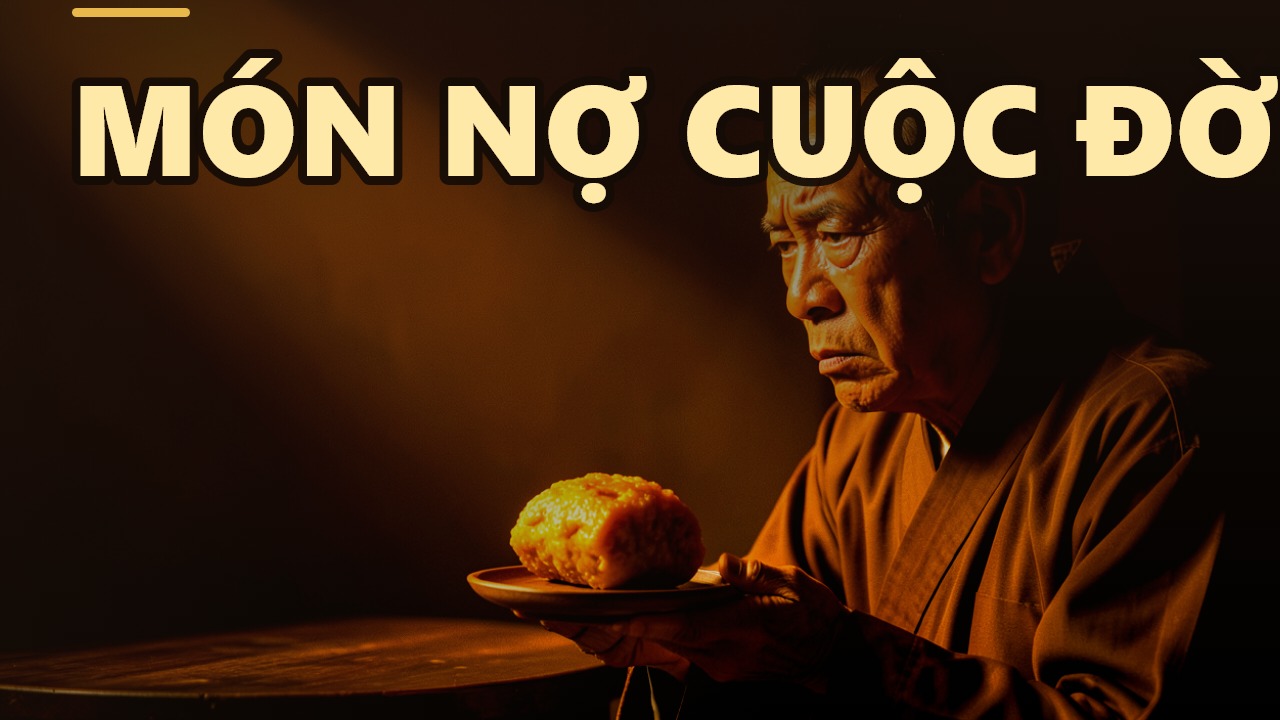
Upon seeing a delicious dish on the table, an ordinary person immediately thinks of its taste and price. A more knowledgeable person considers the chef's effort. But a person of deep practice sees the kindness and the debt behind it. Venerable Chan Quang teaches:
We owe this life in many ways, including being indebted to the blood and sweat of sentient beings within it. The blood and tears of sentient beings are within it.
Therefore, one who consumes flesh and blood should live a life of service and contribution to repay that debt, while one who merely seeks nourishment for pleasure will quickly exhaust their blessings from merit. The same food elicits three different thoughts from three different kinds of people.
**Receiving Gold from Your Father**
Imagine you return from working far away to visit your father, and your elderly father pulls out three bars of gold for you. A superficial child is happy to receive money. A filial child feels pain, knowing the sweat and toil it took to acquire them. Venerable Chan Quang says:
One bar of gold held in the hand represents countless liters of our father's sweat.
Instead of joy, we feel a heavy sense of gratitude and deeper love for our parents. This is the way of the virtuous and the filial.
**Power and Status: Glory or Burden?**
People see power and status as the culmination of a life of contribution. But for the sage, they are merely a burden, a responsibility. The Venerable teaches:
Power and status are the intoxicating passion of many ordinary people. But for the sage, they are only a burden.
An ordinary person feels glorious upon receiving a position, while the sage only worries about fulfilling the responsibility. If we learn to see in this way, we will desire power less, compete less, and live more lightly.
**Beauty: Instinct or Affliction?**
Beauty and desire are natural human instincts. Yet they have left behind countless tears. Ordinary people nurture their attraction and seek pleasure; the sages do not. The Venerable clarifies:
The sage sees it as a disturbance, a weariness. Anything that stirs the mind even slightly is wrong.
Happiness is not a feeling of excitement and intoxication, but an inner state of serene emptiness. When we understand this, we can face beauty with tranquility, without letting our mind be shaken.
Today, through these few examples, we see how far apart the vision of the ordinary person and the sage truly is. Let us begin to practice: trust your own thoughts a little less, cultivate humility to learn, and allow your mind and heart to find peace, drawing closer to true awakening. May you have a peaceful new year, with blessings from merit and wisdom made complete.
AI-assisted translation from the Vietnamese original.
Read in Vietnamese →