
Everything in Moderation: The Middle Way in Daily Life
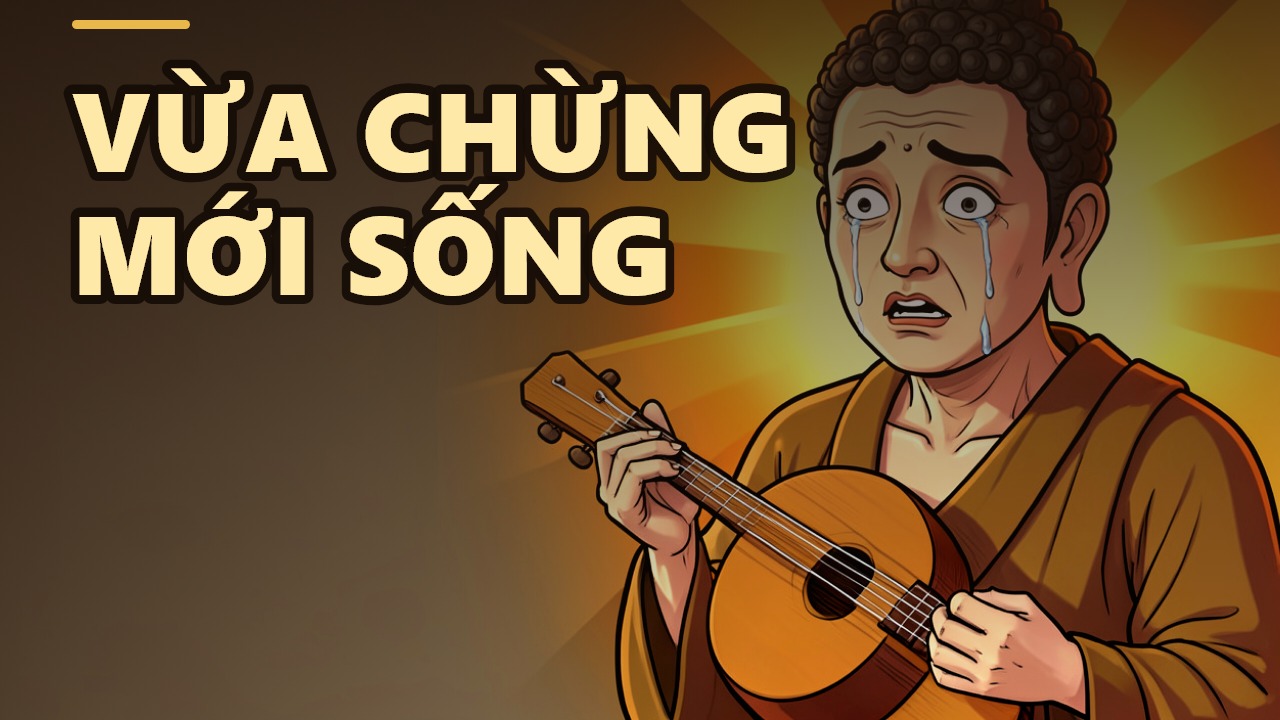
**Summary:** This article shares the principle of the Middle Way through the teachings of Venerable Thích Chân Quang: a person needs to live in balance in eating, loving, working, and practicing to achieve true peace and happiness.
Have you ever found yourself falling into extremes? Have you ever dieted so strictly that you ended up exhausted? Or perhaps you loved your children so intensely that they became spoiled as a result? This question was answered by the Buddha over 2,500 years ago with a profoundly simple lesson: everything in moderation.
**The Buddha and the Lesson of the Middle Way**
When the Buddha began teaching at the Deer Park to the five ascetics, he did not immediately teach the Four Noble Truths. First, he taught the Middle Way. He saw the five ascetics revering the path of harsh asceticism, believing that the more one suffered, the more advanced they were. Yet the Buddha himself had practiced extreme austerities for six years before abandoning them, finding that living in moderation led to enlightenment. He likened it to a lute string: too tight and it snaps, too loose and it makes no sound. We are the same—if we veer to either extreme, whether through suffering or indulgence, we lose everything.
In life, everything must be just right in order to reach the truth.
**Eating in Moderation – Do Not Turn Food into Poison**
Venerable Thích Chân Quang recounted a trend where brown rice with sesame and salt became popular as a healing regimen. Many believed that eating only this would bring health, seeing the austere diet as part of their spiritual practice. However, he tried it and realized that when eating too meagerly, the body loses its strength and becomes unable to perform meritorious duties. Over time, this could lead to kidney failure, hair loss, and damage to the nervous system. Conversely, eating too indulgently leads to diabetes. Food is like a tonic medicine—used in the right dose, it is beneficial; in excess, it becomes poison.
Everything can lead to harm. Therefore, the key is simply moderation.
**Loving in Moderation – For Lasting Happiness**
Love is a precious thing, but excessive love can destroy the one we cherish. Every parent wants their child to be their everything, pouring all their resources and affection into them. Yet a child who is given boundless indulgence becomes rude, selfish, and even spiritually deformed. In romantic relationships, grandiose vows and extreme adoration can inflate the other person's ego, eventually turning them into a "ghost." The teaching is that by loving in just the right measure, we can extend our love to everyone.
Our love can make our child happy, but our love can also ruin our child's life.
**Disliking Evil, but Without Excessive Hatred**
The Buddha taught that we should not hate people, only dislike evil actions. A person can change, but evil actions must be eliminated. However, even the dislike for evil must be measured. Because every negative trait also has a positive aspect. For example, individualism—a petty, selfish habit—when taken too far, leads to conflict and strife. But in moderation, it becomes the motivation for a person to tend their fields and build a good life. Therefore, dislike it, but only just so.
Dislike it only just so, for excessive dislike begins to become a sickness.
**Work and Rest – Balance for a Peaceful Life**
The human body needs physical training, but overdoing it can cause physical ruin. The teacher mentioned the story of Jet Li's training—practicing so intensely that he developed hyperthyroidism, leaving him unable to move under doctor's orders. In contrast, great masters in the forests practice gentle, soft qigong, "practicing as if not practicing," yet achieve extraordinary power. Balance between work and rest is the key to a peaceful life, free from illness and capable of much good.
Keeping this balance throughout our lives is how we can live peacefully, stay healthy, and accomplish much for the world.
**Planting Seeds and Reaping Results – Do Not Sacrifice the Present at All Costs**
Everyone knows the principle of cause and effect: plant a seed, reap a result. But if we pour all our energy into planting for the future while forgetting to enjoy the present, it is also not right. The teacher compared it to a rice farmer: if they refuse to eat any of the rice to save it all for next season's seed, they will starve to death within a few days. Similarly, if we deny ourselves and dare not enjoy any of the blessings we currently have, we will not have the strength to continue creating merit and investing for the future. Therefore, we must learn to balance between the present and the future.
If we do not enjoy the present, if we do not use the blessings in the present, we will lose the opportunity to invest for the future.
So it is, that everything is just right in moderation. This is not about living superficially or blandly, but about the art of maintaining balance to reach the peak. When we know sufficiency in food, emotions, work, and practice, we will find life lighter and happiness more enduring. Start practicing today, from the smallest things: eat one less bite, love one person a little less, work wholeheartedly but do not exhaust yourself. This is the Middle Way in everyday life, the path that leads us to true peace and happiness.
AI-assisted translation from the Vietnamese original.
Read in Vietnamese →