
Which Knowing Leads You Astray? Lessons from the Root of All Things
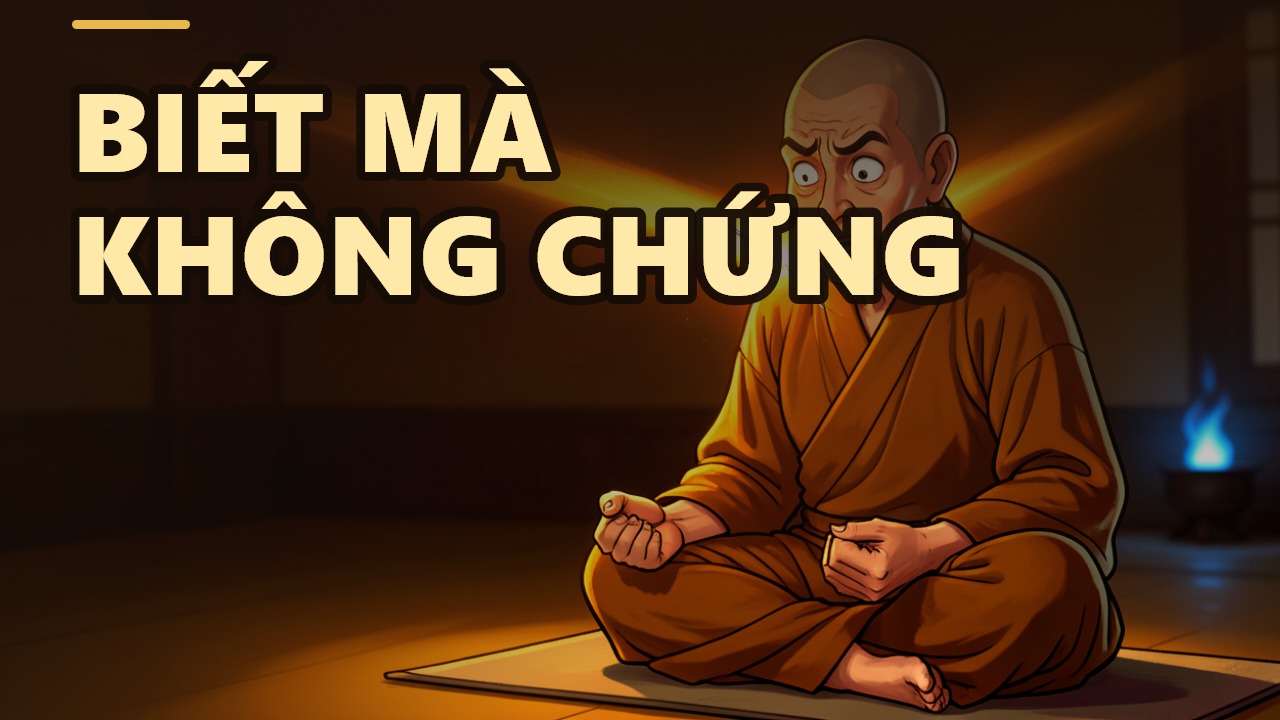
Imagine you are sitting and listening to a teaching on impermanence (anicca) regarding the body. You nod in agreement, feeling convinced. Suddenly, someone behind you pricks your skin with a needle. You startle, becoming irritated and angry. The concept of an impermanent body that you just heard, believed, and praised seems to vanish completely in that moment. This is when you realize that knowing and realizing are two different things. The first sutta in the Middle Length Discourses, known as the Root of All Things, was taught by the Buddha to illuminate this very distinction between superficial knowledge and deep realization.
Why is this sutta placed first?
Within the Nikaya canon, the Middle Length Discourses are considered the most important collection, containing the core ideas of Buddhism. Yet, the very first sutta is titled the Root of All Things. Venerable Thich Chan Quang once shared that this text is extremely concise and dry. Without proper preparation, it can be difficult to teach or understand, even for advanced monastic students who often dread studying the Nikayas. So why did the elder Arhats place it at number one? It serves as a specific remedy for the most dangerous illness among practitioners: pride and boasting. During the Buddha’s time, as the Sangha grew, many people ordained out of admiration for his virtue but had not truly practiced. They learned the Dharma and spoke fluently, yet used their knowledge to boast and compete. The Buddha taught this sutta to cure that affliction.
Conceiving and Direct Knowledge: Two Very Different Ways of Knowing
In the sutta, the Buddha uses repeated phrases to describe three types of people. Ordinary beings "conceive" – they know through imagination, imposition, and attachment. Trainees and Arhats possess "direct knowledge" – they see beyond comparison and ego. Venerable Thich Chan Quang explains that if you learn something and do not feel superior or proud about that understanding, you may have direct knowledge. However, if you speak with arrogance and look down on others, you are merely conceiving. Once, I asked a lay Buddhist about the impermanence of the body. He answered smoothly, saying the body is a temporary combination of conditions. I praised his memory. But when I teased him slightly, he became angry immediately. That was mere conception. Correct intellectual knowledge is not enough to free oneself from clinging.
The Illness of Pride in Modern Times
Today, this illness remains widespread. Many people study meditation for a while and then quote Zen principles to everyone they meet, claiming that knowing greed, hatred, and delusion is sufficient practice. When discussing cause and effect (karmic law), they speak provocatively, asserting that the connection is obvious and undeniable. Such attitudes reveal underlying ego-pride. The Buddha calls this conception. How do we know if we are conceiving or possessing direct knowledge? Look at how you speak. If you understand a teaching without feeling superior, it may be direct knowledge. If your attitude is arrogant, it is certainly conception. To achieve direct knowledge, hearing lectures or reading books is not enough. Venerable Thich Chan Quang emphasizes the need for practice and the aspiration for supreme enlightenment. We must contemplate the body through meditative concentration, seeing its dissolution moment by moment. Only then does our clinging to the body gradually fade.
Practicing to Transcend Superficial Knowing
The Buddha offers a simple formula: correct knowing leads to non-clinging, while incorrect knowing leads to clinging. Clinging is the root of suffering (dukkha). Try applying this to daily life. When you clearly understand that anger is impermanent and lacks self-nature, you will no longer be swept away by it. But this clarity must reside deep within the mind/heart, not just on the lips. The Buddha’s teaching here is a profound warning for all of us: be careful with what you think you know. Do not rush to claim understanding after merely hearing the words. The more you learn, the more you should recognize your own limitations. Recognizing these limitations makes practice easier. This is the fundamental path leading to liberation. From now on, please contemplate this body so it does not deceive us. Contemplate cause and effect, nirvana, and all phenomena with a transcendent view – direct knowledge. Then, we will no longer be trapped by our own arrogant understanding, allowing our hearts to open wide toward true realization.
AI-assisted translation from the Vietnamese original.
Read in Vietnamese →