
A Whole Family Goes Forth: Why Sincere Buddhist Disciples Are Always Torn Between Two Worlds
The story of Elder Damika and his whole family going forth, along with five cases on the path of practice, and advice on living rightly through virtue and wisdom.
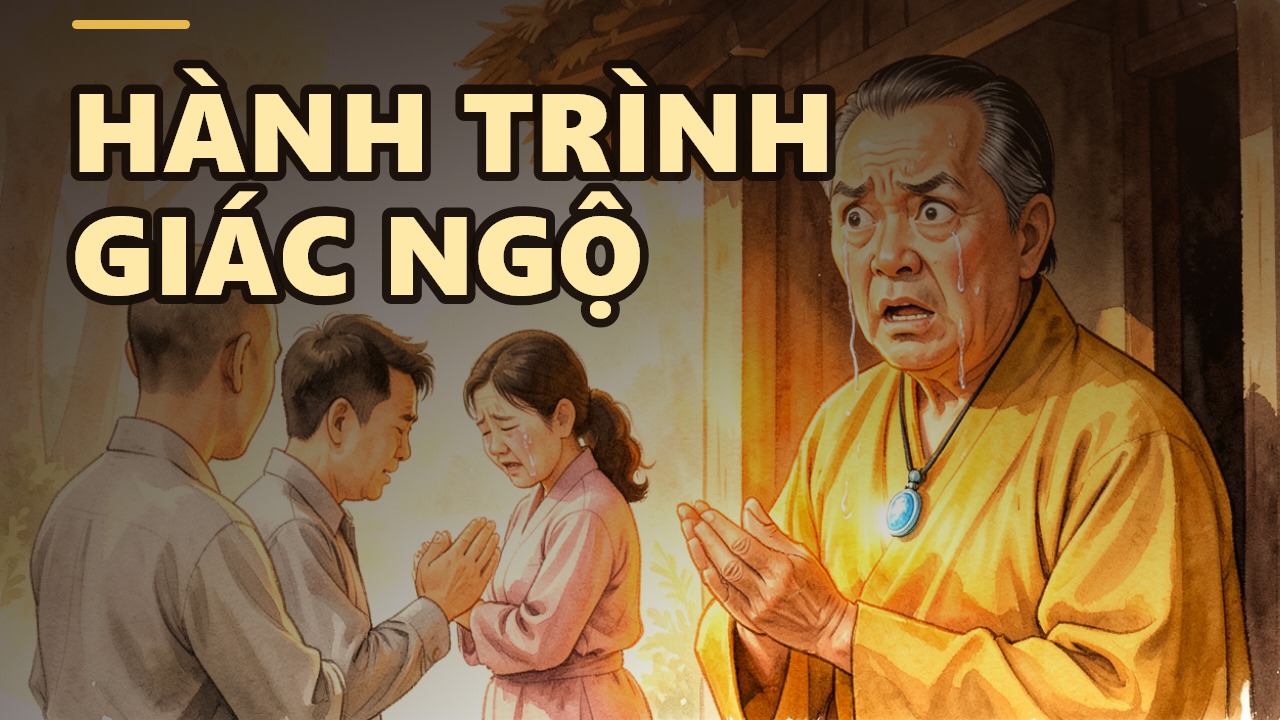
Today, just after the Buddha's birthday celebration, many places held solemn ceremonies. Yet in each person's heart remains a question: Why is the path of practice so full of obstacles? It is because sincere Buddhist disciples are always torn between two worlds: on one side, worldly aspirations; on the other, the ideal of enlightenment. The story of Elder Damika and his whole family going forth will offer us profound answers.
The Story of Elder Damika: When the Whole Family Goes Forth
Elder Damika was originally a devout, virtuous layman who wished to become a monk. When he told his wife, she stopped him: "There may already be a little one on the way, so let us wait until the child is born." He had to accept. After the child was born, he said it was time to go forth, but his wife said again: "Wait until the child is grown, so he can look after the family property." Knowing his wife had a scheme, he resolutely left. Twenty years later, having attained realization, he returned, persuaded his son to become a monk, and then his wife also asked to join the order of nuns. The Buddha praised him as one who was wholehearted in the Buddha's teachings (Dharma), who knew how to transform his family through the Dharma, leading everyone to practice together.
The Buddha praised him with a verse: "One must not benefit anyone through unrighteous means. One does not long for children, or for wealth and kingdom. Such a person practices rightly, and attains accomplishment through virtue and wisdom."
The Inner Struggle of the Sincere Buddhist Disciple
Once we become disciples of the Buddha, two opposing currents arise within our mind/heart: on one side, the longing for property, family, and children; on the other, the ideal of enlightenment and liberation. Everyone is torn by this. Those who treat the Buddha's teachings (Dharma) as mere decoration feel nothing, but those who are sincere in the path can never be at ease.
"But anyone who comes truly to the Buddha's path will naturally be torn at once."
This inner struggle is precisely the mark of a person who is sincere in the Dharma. It is the force that draws us toward the path of going forth, or helps us recognize what the true priorities of our life are.
Five Cases on the Path of Practice
Thầy Thích Chân Quang pointed out five cases in which people face the ideal of practice:
Case one: The aspiration to practice is strong and circumstances are favorable, so that person goes forth. This is the most fortunate case.
Case two: Wisdom is strong, but circumstances are not favorable. For if we go forth while leaving others hungry and suffering, that is not permitted. Hunger is the most basic suffering (dukkha) of human beings.
Case three: Wisdom is weak, but circumstances are favorable. Some parents wish for their child to go forth, but the child does not dare. That is because the conditions (dependent origination) are not yet sufficient.
Case four: Both are lacking—the person does not wish to go forth, and circumstances do not allow it either.
Case five: Wisdom is strong and circumstances are favorable, yet the person remains a layperson to fulfill a rightful vow. Outwardly they appear as a worldly person, but their heart is no different from one who has gone forth.
Thầy feels special tenderness for those in the fifth case:
"Thầy cherishes them very, very much... Thầy knows that such a person has the ability to go forth—their wisdom is sufficient, their circumstances are favorable—but because of some duty toward the Buddha's teachings (Dharma) or toward a temple, they accept remaining a layperson."
Transforming the Family Through the Dharma: Do Not Enjoy the Benefits Alone
If you know the Buddha's teachings (Dharma) are the truth, you have no right to enjoy them alone. Those who are stingy with the Dharma will bear the karmic result of encountering the path slowly in future lives. Some people do not meet the Dharma until they are sixty years old, regretting all the years spent in darkness.
"Whatever is good, we love to share with everyone—and especially the Buddha's teachings (Dharma)."
Share as the old neighbor once brought over a bowl of sour soup. When you hear a good dharma talk, bring it to others. That is how you plant wholesome conditions (dependent origination) for yourself and your family.
Do Not Benefit Others Through Unrighteous Means
The Buddha taught that one can help others through "unrighteous means"—that is, in ways contrary to the Dharma—but that is a transgression. For example, wanting to give a car to a poor person by breaking into someone else's car. Or the story of the electric blanket that Thầy Chân Quang told: A Buddhist bought an electric blanket for Thầy, but lied that he had reserved it in advance, taking away the blanket that someone else had already purchased. Lying under that blanket, Thầy did not know whether to laugh or to cry, wondering whether the other person might have died from the cold.
"Do not benefit others through unrighteous means."
For later, that other person will suffer and will have to repay that debt. Even within a family, having a delinquent child is sometimes the result of having accepted the protection of a gangster, or of raising fierce dogs to stalk prey in a past life.
Do Not Long for Children or Property
The Buddha taught not to long for children. This coincides with today's family planning policies. Having many children depletes resources and causes global crisis. But the deeper meaning is this: love for one's children is instinct, yet one who practices has been liberated from that instinct and no longer longs for descendants.
Property, too, is an illusion of pleasure. The more money people have, the more they grab, even though they can never use it all. Only those with virtue and wisdom know how to use wealth rightly. When they have much money, they feel weary from the burden of spending it properly. One who rejoices at winning the lottery shows they are still an ordinary person; one who feels anxious at winning has the qualities of a noble one.
Virtue and Wisdom Support Each Other
Wisdom helps us know what is right and what is wrong. The precepts turn that knowing into action: doing only what is right, not doing what is wrong. These two elements support each other. In the early days, the Buddha did not establish the precepts for thirteen years, because his disciples were all noble ones who naturally knew right from wrong. Only when someone who had not yet attained realization committed a fault did the Buddha establish the first precept.
"Wisdom makes a person know this is right, this is wrong. The precepts turn it into action, so that one does only what is right and does not do what is wrong."
Therefore, keeping the precepts is not merely a formality; it must go together with wisdom. One who has wisdom will surely keep the precepts, and one who keeps the precepts will surely have wisdom.
The Far Shore: Few Reach It
The second verse in today's dharma talk reminds us: Few among humanity reach the far shore, while the many remain circling on this near shore. The story took place at Savatthi: People in a certain neighborhood invited one another to the monastery to make offerings and asked the Buddha to teach the Dharma through the night. But when the moon rose, some missed their wives, some grew sleepy, some grew hungry, some worried about household matters, and one by one they slipped away home. By midnight, only a few remained.
The Buddha remarked with a verse:
"Few among humanity reach the far shore. The rest, so many, keep circling on this near shore. But those who devote themselves to practicing the true Dharma will reach the far shore, escaping the dangerous net of Mara."
The far shore is an Indian idiom pointing to extraordinary attainment, the path of liberation. To cross to the other shore, we must devote ourselves to practice, and not let worldly concerns sweep us away.
Conclusion
Each person's life is a journey. If you feel torn between the world and the Dharma, see it as a good sign—your heart has already learned to resonate with the path of enlightenment. Do not turn away. Begin by keeping the precepts, cultivating wisdom, and sharing the Buddha's teachings (Dharma) with everyone. A whole family going forth is a beautiful ideal, but what matters most is that each of us steps onto the far shore within our own life.
AI-assisted translation from the Vietnamese original.
Read in Vietnamese →