
Protecting Your Practice: Why Practitioners Must Not Seek Happiness
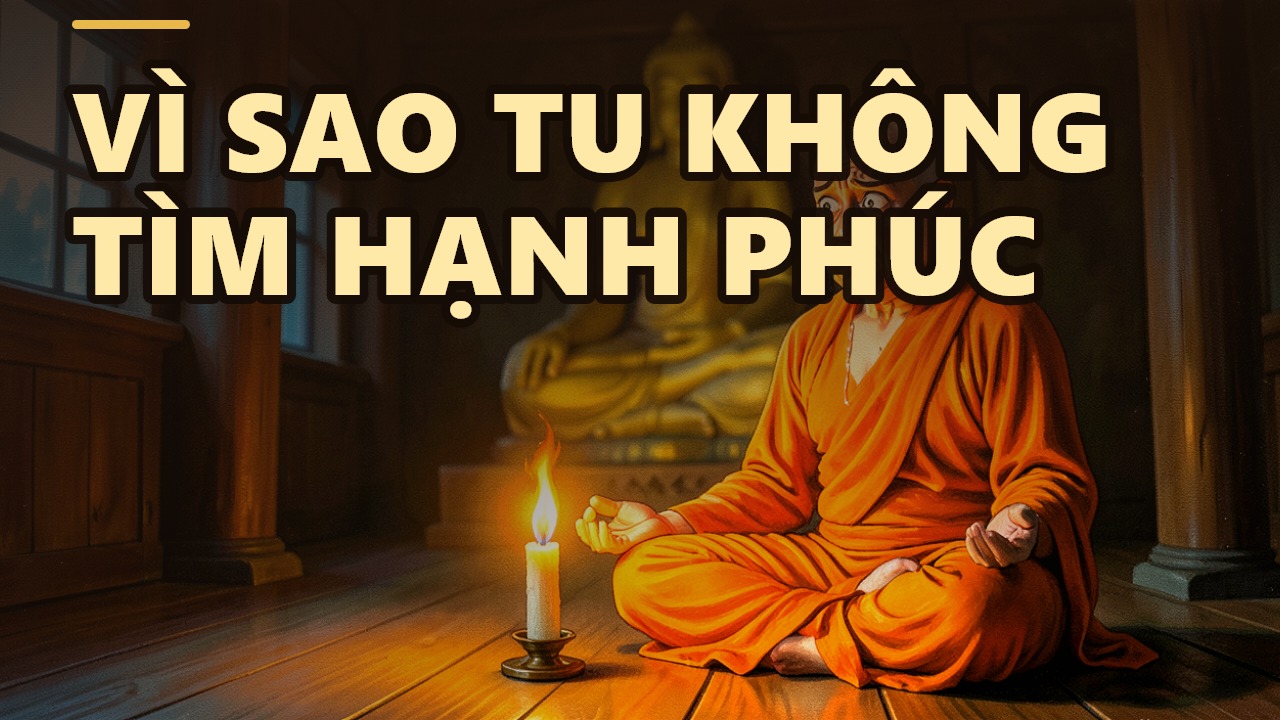
In the dharma talk "Protecting Your Practice," Venerable Thich Chan Quang teaches that the goal of cultivation is non-self (anatta), not the pursuit of happiness. This article summarizes five factors that help you protect your spiritual practice sustainably across many lifetimes.
Have you ever felt your practice losing momentum? There are days of great diligence, and days when you wish to let go of everything. Why do some practitioners remain steadfast throughout their lives, while others break down halfway along the path? The answer lies in the teachings of Venerable Thich Chan Quang on protecting one’s practice.
## Do Not Seek Happiness While Practicing
During a charity meeting, Master Chan Quang said something that startled many listeners: "Anyone who listens carefully to my teachings will know that I never allow my disciples to seek happiness." He explained that if the mind still holds the intention to find happiness, it still harbors the desire for enjoyment, leaving a foothold for the ego. Since we follow the Buddha’s path to realize non-self (anatta), practice is not about gaining happiness, but about dissolving the very "self" that seeks it.
A true disciple is never permitted to chase after happiness. If there is an intention to seek pleasure within the heart, then the ego still has a place to cling to.
## Practice Breaks Easily Without Protection
Cultivation is a long journey spanning many lifetimes. In each rebirth, we may forget our ideals and vows, starting over from scratch. Without methods to protect our practice, we risk being distracted by heavenly blessings or breaking down entirely in this life.
Practice requires traversing many existences. However, if we lack a method to safeguard our spiritual progress, we may stumble midway or wander onto a different path.
The Master emphasized that meditative concentration is the core of Buddhism, the pinnacle of practice. Reaching meditative concentration means entering the main hall of the Buddha’s house. Yet, maintaining this path is the true challenge.
## Factor One: The Ideal of Practice — The Goal of Non-Self
The first and most crucial element is a firm spiritual heart and a clear ideal. It is not merely practicing to become a Buddha, to achieve enlightenment, or to attain liberation—though these are correct, they are not yet precise enough. The exact goal is to realize non-self (anatta). As the Master stated, "Practicing to attain non-self" is the accurate answer for any practitioner.
When we truly understand the goal of non-self (anatta), we genuinely comprehend the Buddha’s teachings. If we have not established that practice is about finding non-self (anatta), then all the sutras we study remain misunderstood.
Buddhism is unique—it teaches us to practice until even the "self" disappears. While other religions often teach us to preserve the ego, Buddhism instructs us to let go of it completely. Only those who grasp this truth understand the essence of the Dharma.
## Factor Two: Unceasing Accumulation of Merit
Another indispensable factor is making merit. The Master taught: "If we run out of merit in a single day, our minds immediately begin to think wrongly." When merit is depleted, we fall into deluded thinking, speak carelessly, and commit unwholesome actions. Our spiritual resolve vanishes. Therefore, we must make merit every day, no matter how small. In ancient times, seeing a water jar empty in the temple, monks would immediately carry water. Today, though we have taps, we can still create merit in countless ways.
Losing merit means losing the protection of our practice; our ideals fade away instantly. Thus, merit is extremely important.
## Factor Three: Protection from the Triple Gem Through Daily Prostrations
Internally, we often hold wrong views without anyone knowing. But if a right thought suddenly flashes through, helping us awaken, it is due to the protection of the Triple Gem. The Master shared a story: A monk in a temple saw worldly people living luxuriously and his heart wavered, tempting him to return to lay life. Suddenly, another thought arose: "Wealth and status are impermanent (anicca); can you take them with you when you die? Only the monastic life brings peace." That thought did not come from himself; it was the power of the Triple Gem’s protection.
We are protected by the Buddha. This is a secret. What we think is not necessarily our own brilliance. At that moment, we were truly being guided by the Triple Gem.
Therefore, Buddhists should never neglect daily prostrations to the Buddha. Even Bodhisattva Samantabhadra made honoring the Buddhas his first vow, so how much more should we? Prostration is not just an expression of devotion; it is a bridge to receive divine support.
## Factor Four: Teachers, Ancestors, and Dharma Brothers — An Essential Environment
The Master reminded us that only Pratyekabuddhas cultivate alone. For us, isolating ourselves means losing the guidance of teachers and the support of fellow practitioners. The story of a tiger leaving the mountain and being frightened by dogs illustrates this vividly. The Master once heard the saying, "A tiger leaving the mountain loses its strength; a monk leaving the Sangha loses his spirit," and doubted it. But after witnessing a captive tiger cower before barking dogs, he understood the wisdom of the ancestors.
"A tiger leaving the mountain loses its strength; a monk leaving the Sangha loses his spirit." Just as a tiger becomes weak outside its habitat, a practitioner’s spiritual resolve fades when separated from the community.
Thus, do not prefer solitary practice. Unless you are a reincarnated Pratyekabuddha, choosing isolation is merely arrogance.
## Factor Five: Support from Lay Donors and Legal Protection
On the path of practice, we cannot ignore social conditions. Monastics rely on offerings from lay supporters. Laypeople need national laws to protect religious freedom. In Vietnam, we are fortunate to practice pure Buddhism without mixing it with other traditions. This is a great blessing. However, we must also contribute to society so that laws and donors continue to support practitioners.
Having the support of lay donors and legal protection is a blessing that allows us to practice with peace of mind.
## Protecting Practice Means Protecting the Spiritual Heart
Safeguarding your practice is not a one-time task but a daily process of refinement. Always remember the goal of non-self (anatta), make merit ceaselessly, prostrate to the Buddha daily, live within a supportive community, and be grateful for societal support. Do not look far for happiness; true happiness arises when you stop seeking it.
May every practitioner maintain a steadfast spiritual heart, as the Master taught: "Practice is not for gaining happiness, but for sacrifice, service, and dedication until even oneself ceases to exist." Namo Shakyamuni Buddha.
AI-assisted translation from the Vietnamese original.
Read in Vietnamese →