
Why Do You Help Others? The Four Motivations of Generosity
According to Venerable Thich Chan Quang, there are four motivations for giving: seeking blessings, forming karmic connections, strengthening one’s moral character, and helping simply because it is right. These motives serve as a precise measure of one’s level of spiritual practice.
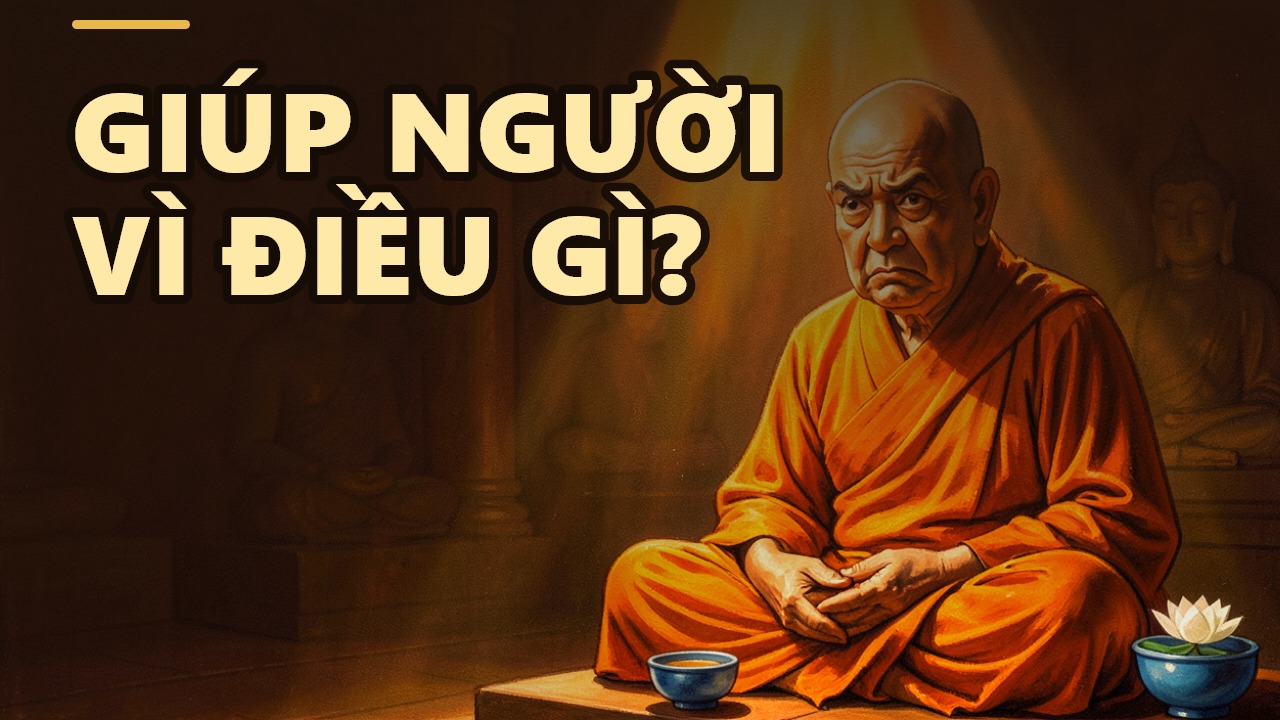
Have you ever asked yourself what is truly in your heart when you help someone? Some people give because they want blessings from merit. Others give to form good conditions (dependent origination). Still others give to perfect themselves. Yet, there is a deeper motivation that transcends all these desires.
In a dharma talk, Venerable Thich Chan Quang revealed the four motivations behind generosity and helping others. While this may seem simple at first glance, it serves as an incredibly accurate gauge of each person’s progress on the path.
One. Helping others to seek blessings from merit for oneself
This is the most common motivation. When we help others, we believe that performing acts of merit will bring positive results, much like planting seeds for a future harvest. Although this may sound slightly self-centered, it is entirely beneficial for society. It encourages people to turn toward goodness and live for others rather than merely seizing opportunities for personal gain.
If you wish to be happy, ensure the happiness of others first. If you wish to have wealth, practice generosity by giving to others first.
Consider the story of a farmer sowing seeds. To reap a bountiful harvest, he must plant good seeds in the soil. Sowing blessings works the same way. If everyone became wealthy through the act of giving, how beautiful our world would be!
Two. Helping others to form good karmic connections
This reflects the bodhisattva path. When we help others, we create favorable conditions (dependent origination) with them. Why is this necessary? Because in the future, if we wish to teach the Dharma and guide sentient beings, we need these connections. Without them, our words fall on deaf ears. There are those who understand the teachings deeply, yet no one listens to them because they lack these good karmic connections.
The reason I can sit here and speak, and why you listen, is solely because I have formed good karmic connections with you and the assembly.
Venerable Chan Quang also shared that in past lives, he served as a benefactor, providing food and care for many people. This is why, today, he feels affection upon meeting others. That is a good karmic connection. However, this remains the second motivation, which still involves a subtle desire: the hope to help the world in the future.
Three. Helping others to strengthen one’s own moral character
This is the motivation taught by the Buddha: “Practice generosity to adorn the mind.” Many find this strange. How can helping others be about strengthening one’s own morality? It may seem trivial, but this is actually the core essence of spiritual practice.
Helping others to fortify one’s own virtue. The Buddha calls this adorning the self-mind.
Venerable Chan Quang admitted that he did not understand this phrase for decades. Only later did he realize its profound greatness. Morality is the invisible lifeblood that sustains the world. Just as blood nourishes the body, without morality, the world would collapse. So, how do we strengthen our morality? Through generosity and service. Each time we help someone, we refine our mind, making it purer and more virtuous.
Here is a vivid example: If an ordinary citizen climbs over a fence to steal a pot, neighbors might laugh it off. But if the village chairman does the same, it becomes a scandal. Everyone understands that the higher one’s position, the greater the expectation of moral integrity. And this integrity must be cultivated through small acts of generosity.
Four. Helping others because failing to help would be wrong
This is the highest motivation, found only in enlightened beings who have realized the truth. There are no longer any desires—no longing for blessings, no need for karmic connections, no aim to train one’s virtue. One simply acts because it is right, helps because it is needed, and refrains from harm because doing otherwise would be wrong.
We help others simply because not helping would be incorrect. That is all.
This may sound irrational, but it is the perspective of enlightenment. We ordinary beings always act based on some motive or desire. But saints no longer operate from wanting; they act solely for the sake of truth and righteousness.
Venerable Chan Quang offered an analogy: If you ask someone to give three million dong to a poor elderly woman, they will ask, “Why?” If you answer, “Because not giving would be wrong,” they might think you are unwell. But if you say, “Giving brings blessings,” they will readily open their wallets. Therefore, we cannot yet fully embody this fourth motivation. However, we should remember it and reflect upon it throughout our lives.
Reflection and Practice
These four motivations represent four levels of spiritual cultivation. Where do you stand? Initially, we may help others to gain blessings. Gradually, we rise to the level of forming good karmic connections. Then, we realize that helping others is the very method to train our morality. Eventually, one day, we may help completely naturally, without any ulterior motive, simply because it is the right thing to do.
Venerable Chan Quang advises us to slowly nurture these noble motivations within our hearts. Consider King Tran Nhan Tong, an enlightened Zen master. He still led armies against invaders and worked to abolish harmful customs to guide his people toward practicing the ten wholesome deeds. All of this was done to cultivate morality for himself and for the nation.
Today, whenever you perform any act of kindness, pause for a moment and ask your heart: “Why am I helping?” Your answer will reveal exactly where you are on the path. Remember that every act of generosity, every moment of service, adorns the mind and strengthens virtue. This is the path that leads to enlightenment.
AI-assisted translation from the Vietnamese original.
Read in Vietnamese →