
What are you wanting right now? That is what determines your next life
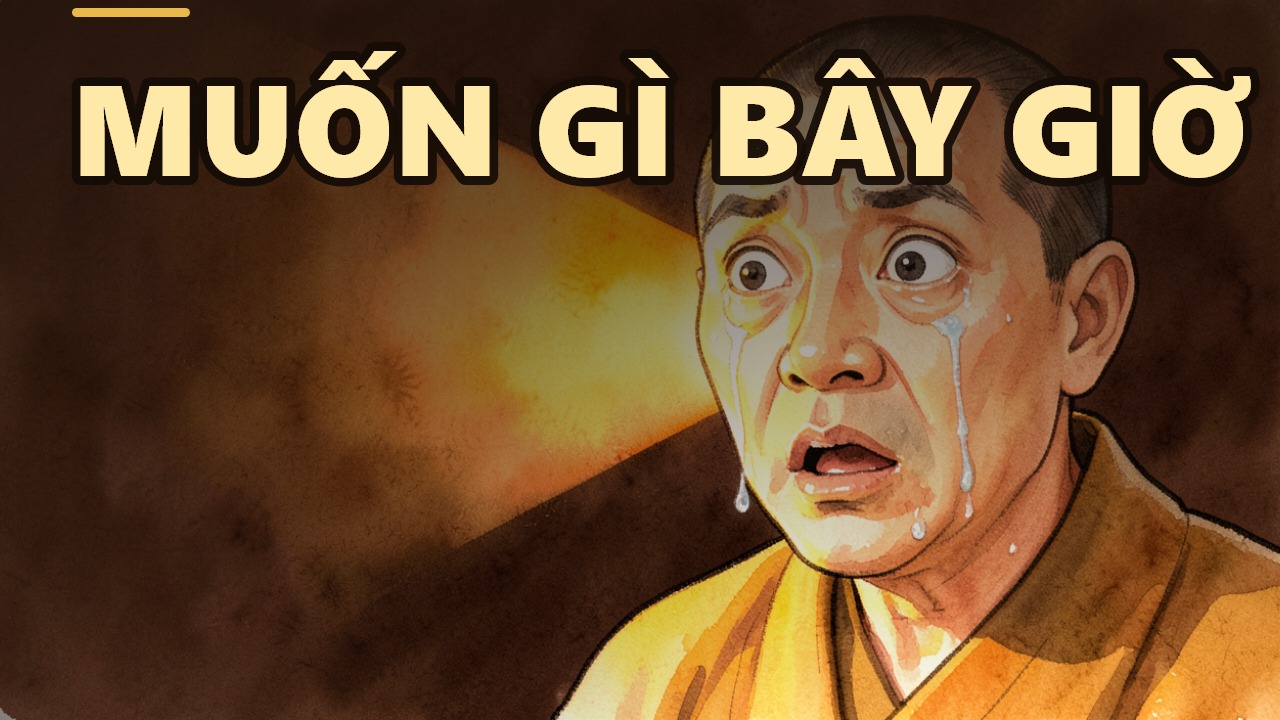
Today, do you have any desires? Perhaps you want a cup of coffee, praise, or to go home early. But has anyone asked you which of these desires is truly worth having? In a heartfelt dharma talk, Venerable Thich Chan Quang explores this simple yet profound question, revealing it as the root of every choice in our lives.
Why do we always want something?
Take a moment to look into your mind. You will likely find at least ten desires: hearing the Dharma, feeling comfortable, eating, or seeing loved ones happy. Venerable Chan Quang affirms that existence itself means desiring something. There is not a single fleeting second where desire is absent. This desire, whether obvious or hidden, is core to the ego and drives us through samsara (cycle of rebirth). When an Arahant attains enlightenment, this subtle desire ceases, and the cause for rebirth disappears.
Two sources of desire: physical needs and knowledge
Where does desire come from? The teacher identifies two main sources. First, basic bodily needs like hunger, thirst, cold, and instinctual cravings. Second, knowledge. Hearing about smartphones makes us want them; seeing others dye their hair makes us want to do the same. As knowledge expands, so do our desires. However, learning spiritual truths can lead to noble desires, such as altruism and charity. Yet, not all desires are good. Without discernment, we may be led by lower impulses.
Desire is karma and cause and effect (karmic law)
The teacher teaches that desire is the cause, leading to corresponding effects. Hating someone creates a wish for their suffering; loving them creates a wish for their happiness. Both generate karma, but whether it is wholesome or unwholesome depends on our choice. If we love someone, we wish for their beauty, success, and happiness. When we cultivate compassion, wishing well for all beings becomes a precious gift and generates merit for ourselves. We must observe what we silently wish for when interacting with others.
The most worthy desire: the wish to practice
Among countless desires, one stands out as fundamental and noble. The teacher asks, "What is the most essential thing you want?" The answer cannot be wrong: "I want to practice." He shares a story of an elderly man who came to ordain. When asked what he wanted, he replied, "I want to practice." This vow calms all conflicts because it is a return to the Buddha. The wish to practice is the best cause for liberation, opposing the desire for sensual indulgence. This wish must become a deep, unwavering oath before the Triple Gem.
Maintaining the vow amidst temptation
To keep this wish alive, the teacher advises making vows before the Buddha, sharing them with others, and testing oneself against old habits. When friends invite you to drink, do not flee. Instead, quietly observe your mind. Watch how the desire to drink rises and falls. Once your resolve is firm, you can smile and say, "I have lost the battle; I can no longer compete with you." Then add, "When you find something more noble than a glass of wine, come find me." This protects your mind and plants seeds of goodness in others.
Choosing a true teacher and the responsibility of monastics
In practice, we must seek a teacher. Do not choose based on appearance or sweet words, but rely on a true master. Some are beautiful but lack integrity; others possess integrity but are not attractive. We must distinguish between them. We should take refuge with a genuine teacher to avoid false guides. Monastics also bear great responsibility. They must strive diligently to serve as a refuge for sentient beings. If the Sangha lacks integrity, the world loses its light. Seeing one’s own faults is already a great achievement. Fighting against one’s own errors is a difficult but meaningful path.
When we realize that every desire is a seed for the future, we begin to live with greater mindfulness. Ask yourself daily, "What am I wanting?" Transform narrow desires into noble ones: wishing for peace for yourself and all beings, and practicing for enlightenment. This is the greatest gift you can offer to life.
AI-assisted translation from the Vietnamese original.
Read in Vietnamese →