
What Is Your Motivation for Giving? Four Drives That Transform a Life
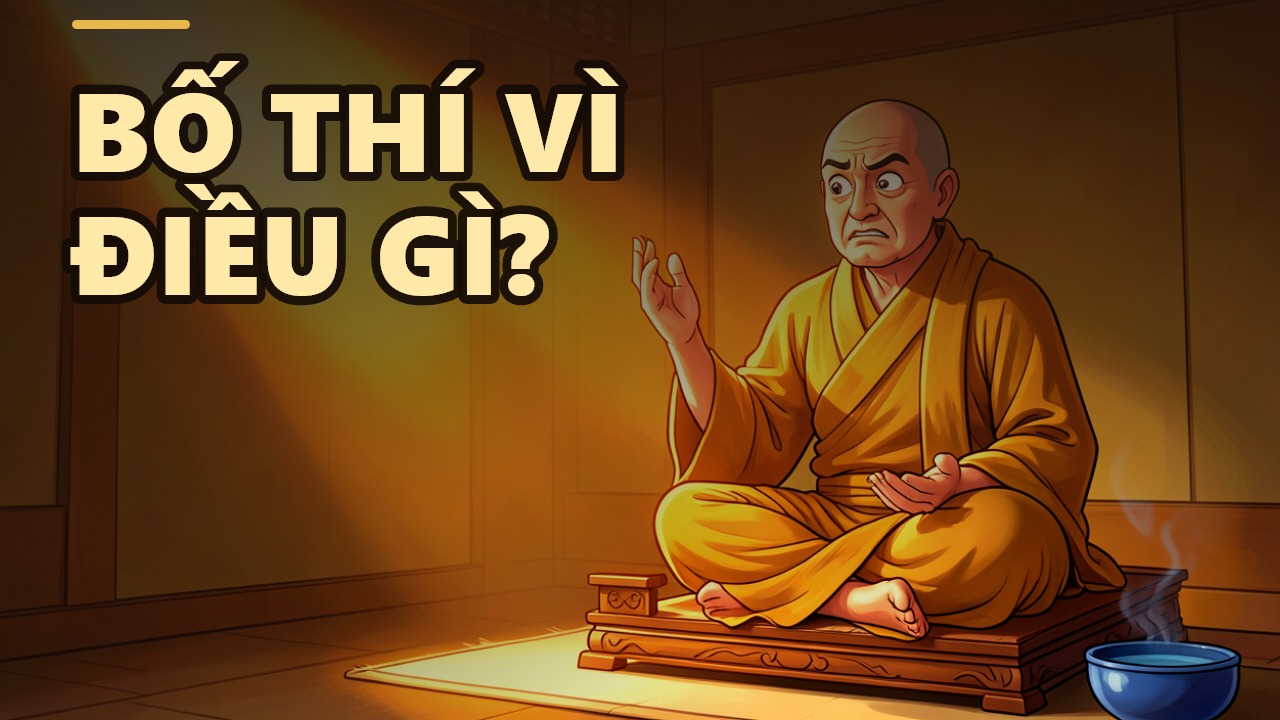
In the past, before we knew how to practice, we lived only for ourselves. If there was something delicious, we ate it first; if there was a benefit, we reserved it for our own family. But when we begin spiritual cultivation, a great revolution occurs within: we gradually shift from thinking only of ourselves to considering others. Venerable Thich Chan Quang opens his dharma talk on the four motivations for giving with this familiar image, inviting each of us to reflect on where we stand on the path of transformation.
Why is helping others so difficult? The teacher recounts that before knowing the Dharma, we lived selfishly, prioritizing our own comfort and gain. This is the natural instinct of ordinary beings. However, turning toward altruism is a profound and challenging change. If we fail to overcome this self-centeredness, we risk falling into the three lower realms: hell, hungry ghosts, and animals. Conversely, by thinking of others, we block those paths and open the way to holy realms, rebirth as noble humans, or ascension to heavenly worlds.
For those who easily embrace compassion upon encountering the teachings, the teacher understands they have cultivated merit over many lifetimes. For those who still struggle, always thinking of themselves first in every situation, he offers reassurance: this is quite natural. The journey from selfishness to altruism is long, and the path from altruism to enlightenment is even longer. Without transforming the mind, we remain ordinary beings facing uncertain futures, not knowing where we will go after leaving this body.
The first motivation is seeking blessings for oneself. While this may sound selfish, the teacher affirms its value: "To be happy, one must first ensure the happiness of others." Everyone desires wealth and well-being. Instead of stealing from others and causing social chaos, we give first to receive positive karmic results. This motivation benefits society, because if everyone became wealthy through generosity, the world would be beautiful. Though traces of self-interest remain, this intention is worthy of respect and encouragement.
The second motivation is forming good connections to teach the Dharma. This is the conduct of a bodhisattva. The teacher explains, "We help others to create positive conditions for future interactions across lifetimes." Some people understand the teachings and speak eloquently, yet when they call out, people ignore them. Why? Because they lack sufficient good connections. The teacher uses himself as an example: "When I sit on the teaching seat, you listen willingly. But if someone random were placed here, would you listen? No. It is mysterious like that."
One builds these connections by serving others—bringing food, offering water, attending to needs. The teacher shares, "In past lives, I served as a servant, bringing meals and drinks to many. I knelt to offer food and water, so now when people see me, they feel affection." Thanks to this, today’s listeners are present. This motivation is nobler, as it aims to bring wisdom to sentient beings in the future.
The third motivation is strengthening one’s own moral character. Similar to the first, but deeper, the teacher emphasizes: "The Buddha calls this adorning the mind. Do not underestimate it." He struggled with this concept for decades. Helping others to solidify one’s virtue may seem small, but it is actually the core issue.
He uses the metaphor of morality as an invisible bloodline nourishing the world: "We think money sustains the world, but it does not. We think rice sustains the world, but it does not. Morality is the invisible blood that nourishes this world." People at all levels need virtue, from sanitation workers to kings. If a citizen steals petty items, we might laugh it off, but if a local leader steals, it is shocking. The higher the position, the greater the required virtue. To strengthen this virtue, nothing is better than practicing generosity. Thus, do not dismiss these small acts—they are the true path, the profound truth.
Often, we believe grand gestures are superior. Yet, the subtle teachings of the Buddha are the most deep and exalted.
The fourth motivation is acting simply because failing to act would be wrong. This sounds unusual: we help others solely because neglecting to help is incorrect. The teacher notes, "Only enlightened saints can operate from this level. Most of us need motivations that feel significant."
Human actions usually involve desire—wanting blessings, connections, or moral growth. All have purposes. But the fourth has no desire attached. If asked to give an elderly woman three million dong simply because "it is wrong not to," people might think the requester is insane. But if told, "Give to receive blessings," they will pay. This difference reveals the height of each motivation.
We help others simply because it is right. Nothing more.
The teacher cites King Tran Nhan Tong, an enlightened Zen master who personally led troops against invaders despite having capable generals. He did so because he knew the generals would slaughter the enemy, whereas he could stop just enough to repel them without excessive killing. "This is a secret morality that no one understood for a thousand years. Until today, this humble figure explained it." This is the fourth motivation: acting because it is correct—not for profit, fame, or any other reason.
These four motivations are not ranked as better or worse, but represent stages of soul evolution. If you are new to the path, rejoice in seeking blessings. If you have practiced longer, aim for connection and moral strength. If you resonate with the fourth motivation, congratulations—you have touched the true path.
Remember the teacher’s words: "From today until that day, reflect slowly. We must do good because failing to do so is wrong." Each time you perform a small kindness, ask yourself which stage you occupy. Do not despair if progress seems slow, for the transformation from selfishness to altruism is a great revolution. Persist step by step, for while "it is not easy," those who walk this path will transform their lives.
AI-assisted translation from the Vietnamese original.
Read in Vietnamese →