
The Math Problem of Merit and Sin: Are You Solving It Correctly?
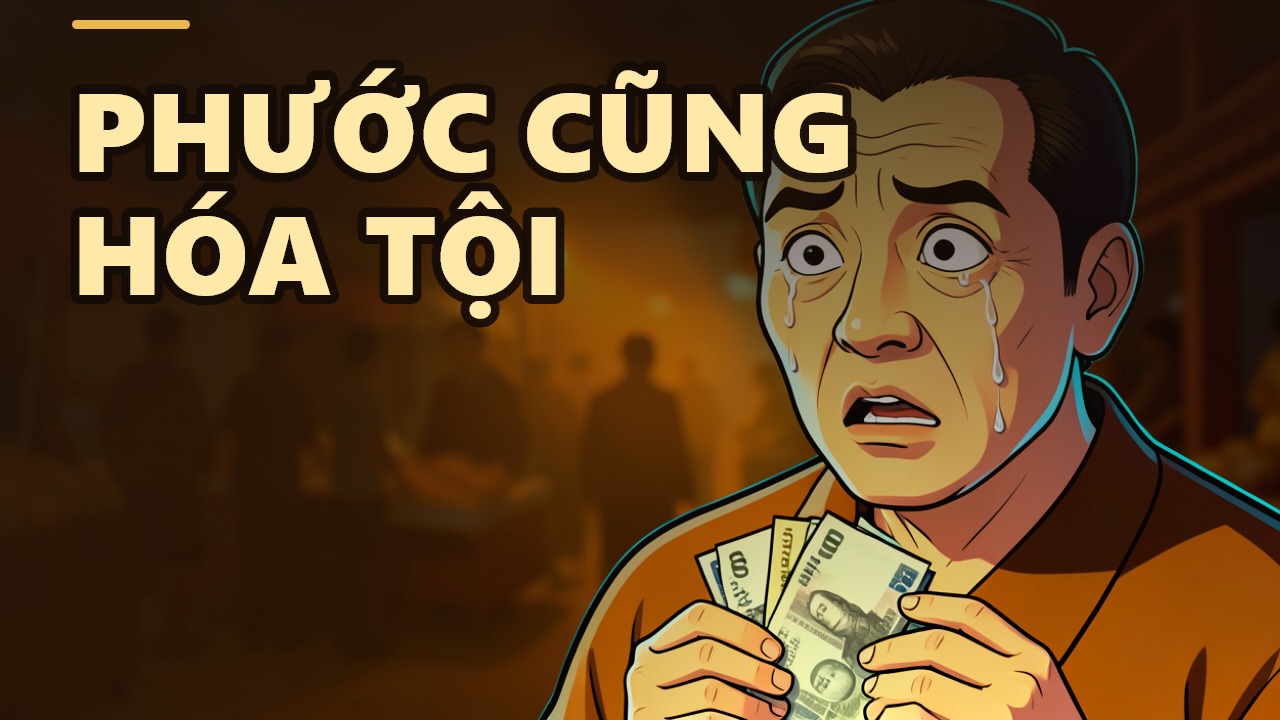
This dharma talk by Venerable Thích Chân Quang offers a profound perspective: our life is a complex math problem of merit and sin, yet whoever learns to solve it will attain a glorious result. Let us explore how to solve this equation.
We suddenly find ourselves in this life, not knowing where we came from or what we live for. These two unknowns are our fundamental ignorance. Because of this ignorance, we make many mistakes, and these mistakes accumulate into sin. Today's dharma talk by Venerable Thích Chân Quang opens a deep view into the math problem of merit and sin—a problem every person must solve throughout their lifetime.
## Where Do We Come From, and What Is Our Purpose?
Venerable Thích Chân Quang began by stating: We appear suddenly in this life, truly not knowing our origin, nor knowing the purpose of our existence.
Because we do not know, we remain in ignorance and make mistakes. But if we are fortunate enough to encounter the Buddha's teachings, we begin to understand the law of cause and effect (karmic law) and realize that the cycle of rebirth is endless. At that point, we can define our life's goal. A person of wisdom will set their purpose as bringing happiness to others, and ultimately, to attain enlightenment and liberation.
## The Wise and the Unwise
The problem of merit and sin is solved by two entirely different kinds of people. The unwise are preoccupied solely with living comfortably: eating well, dressing fashionably, traveling far, and spending lavishly. The wise, however, are focused on how to create abundant merit. Venerable Quang clarified: The unwise are most concerned with living comfortably... And what concerns the wise? How to create much merit.
Yet, there are those who desire both comfort and merit—these are the indecisive, incomplete people. They are caught in a dilemma, advancing when creating merit but retreating when enjoying its fruits.
## When Merit Transforms into Sin: The Subtlety of Karmic Law
The law of cause and effect (karmic law) is extremely complex, not as simple as we think. What seems like merit can turn into sin. He gave an example: If you give someone money and they use it to buy rice and food, nourishing themselves, you gain a little merit... If they take your money, buy a knife, and harm someone else, your money immediately becomes sin.
Similarly, building a road that only benefits robbers only creates sin. Therefore, the wise see far, considering the consequences behind every seemingly good deed. Initial merit can be like great physical beauty—attracting too much attention and disturbing beings' minds. As the ancient saying goes, "Beauty often brings much hardship."
## Merit and Sin in Every Thought and Word
Venerable Thích Quang emphasized that merit and sin are not only in actions but also in our hidden thoughts. Someone may come to the temple with a good heart but harbor a negative thought: "They're all just here for a free meal." You think this but do not speak it aloud, and no one knows. But is this thought right or wrong? Wrong. Is it sin or merit? Sin.
This sin lodges in the mind. Without repentance, it will surface later, causing illness and mental afflictions. Merit and sin also reside in speech: if you see someone filling a pothole and call them a "hypocrite," then later, when you wish to do good, you will face obstacles. Therefore, be cautious with your every thought and word.
## Eyes Reveal the Merit and Sin of a Lifetime
He shared an interesting experience: by looking into someone's eyes, you can tell if they are rich or poor, blessed with merit or not. Looking into eyes that are full of warmth and friendliness... you know for certain that person is wealthy. If the gaze is sharp, intense, or fierce, rest assured that misfortune is coming their way.
The eyes are windows to the soul, a portrait of each person's karmic history. Thus, practice living with kindness, sending compassionate glances to everyone, to accumulate merit for the present and future.
## Eating at the Temple: A Debt to the Buddha—Merit or Sin?
Many people hesitate to eat at the temple for fear of incurring debt. Venerable Thích Quang smiled and explained: Temple food is the Buddha's food. When you eat one meal of the Buddha's food, you owe a debt to the Buddha. And owing a debt to the Buddha must be repaid by practicing diligently. To owe the Buddha and strive to practice is excellent. But to fear owing the Buddha and refuse to practice—that is an unbearable sin.
Therefore, do not hesitate to eat at the temple, but do so with gratitude and with the determination to practice sincerely. In this way, owing the Buddha becomes a great blessing.
The math problem of merit and sin is not easy to solve. But if each day we live with mindfulness, carefully considering our actions, words, and thoughts, we will gradually walk the right path. At the end of our life, as the Venerable said, we may not score a perfect ten, but at least we will not score an eight or nine. And to achieve an eight or nine throughout our lifetime guarantees a glorious next life. Let us begin today: examine our hearts, choose a purposeful life to create merit, and solve the problem of merit and sin completely.
AI-assisted translation from the Vietnamese original.
Read in Vietnamese →