
Is Eating Meat a Sin? Venerable Thich Chan Quang on Precepts and Resolving Karmic Debt
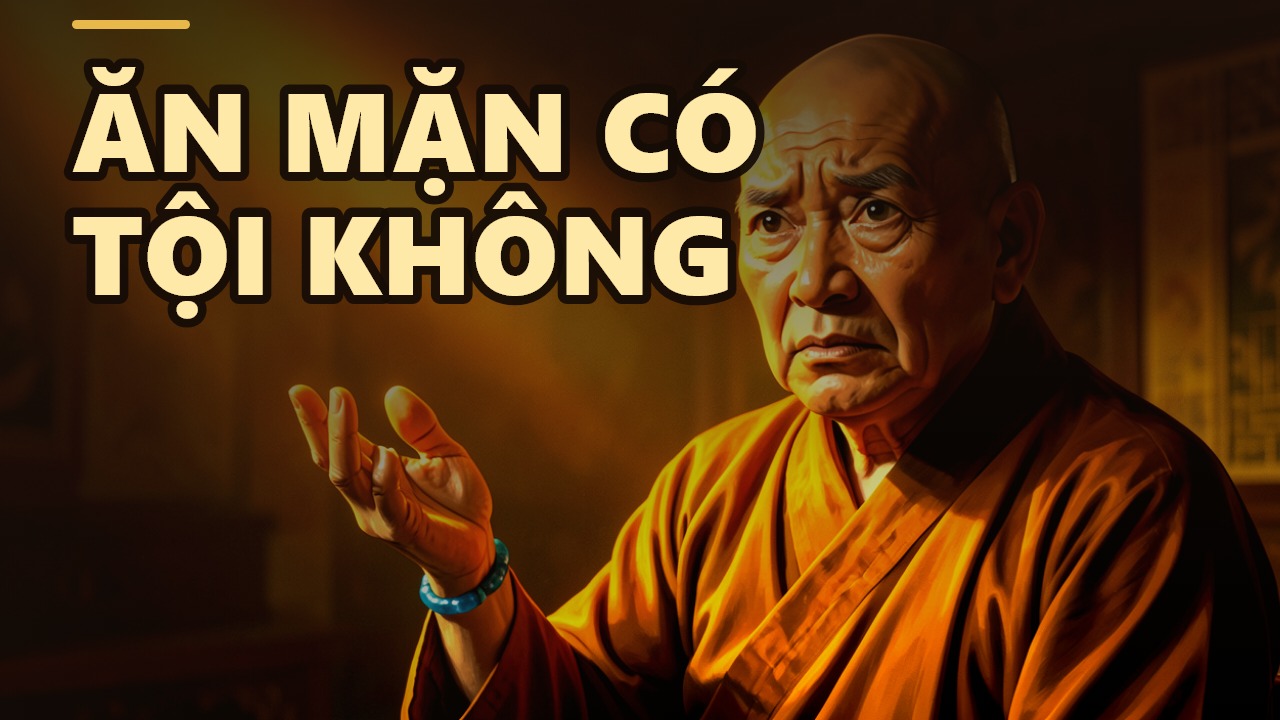
Sister Lan has been strictly vegetarian for five years. Yet, every week, she still buys meat and fish to cook for her young nephew. Her heart is troubled: Does this create negative karma? She also remembers the ants she accidentally killed before understanding the Dharma. Was she paying off karmic debt? These questions kept her awake at night. Today, we listen to Venerable Thich Chan Quang’s answers in his dharma talk, "Clarifying the Precepts," to find peace of mind.
### Eating Meat – A Partial Transgression and How to Make Amends
Venerable Thich Chan Quang affirms that while eating meat does not involve direct killing, it still contributes to negative karma because consumption creates demand for slaughter.
He explains, "We do not have the direct sin of killing. However, generally speaking, anyone who eats meat contributes to pushing others to kill. By consuming meat and fish, we create a demand for their production, leading people to hunt and slaughter. Therefore, although we are not directly killing, eating meat is still a partial transgression."
How can we make amends? The teacher shares, "When we eat meat, if we use our health to benefit life and help others, we compensate for the sin of eating meat." Thus, if one eats meat but knows how to generate merit, practice the Dharma, and help others, the blessings from merit balance out the transgression. But if one eats meat without doing good deeds, they bear the full weight of the karma, with no offset.
### Wise Resolution of Karma – Do Not Let Karma Pile Upon Karma
When facing mistreatment or suffering, we should not endure blindly. When a lay Buddhist asked about a husband causing financial distress, the teacher explained this as karmic debt. However, one must navigate wisely to avoid adding more negative karma.
He said, "A person constantly tormented by her husband regarding money... First, she owes him a karmic debt, so he keeps demanding money. But if she indulges him completely, she adds more sin to her own. In experiencing karmic results, one must be wise. Try to accommodate only his legitimate needs to avoid bearing extra guilt. If you give in to his demands for drinking, gambling, or improper pleasures, you exhaust your blessings and incur additional sin alongside him."
In life, "experiencing karmic results" does not mean silent endurance of everything. We must be wise enough not to enable wrongdoing, while maintaining a peaceful mind and preserving our merit.
### Should We Speak About Our Good Deeds? The Mind Matters Most
Many worry: If I tell my children about my charity work, will it be seen as boasting, thereby losing merit? The teacher clarifies that context matters, but the most important factor is a mind free from pride.
"If we perform many acts of generosity but never tell our descendants, how will they learn to follow suit? Yet, speaking out can seem like claiming credit, which stops the flow of merit... The first priority is that our mind must not boast. Sometimes, sharing stories is necessary to set an example. As long as there is no intention to show off, it remains harmless and avoids creating bad karma."
Therefore, if we share our good deeds hoping our family will emulate them, it becomes a skillful means to guide them toward virtue. But if done with a desire for praise, it generates unwholesome states. Keep the mind pure, and speak when truly needed.
### Monastic Life or Lay Life? Merit and Practice Are Key
Many believe monastic life is the superior path. Venerable Thich Chan Quang points out that the path itself is less important than the mind and the merit accumulated.
"In truth, some monks die and go to unfortunate realms because their practice was poor and they generated little merit during their ordination. Conversely, some laypeople pass away and reach very blissful states. Although they lived as householders, they generated abundant merit and practiced steadily, thus arriving at happy destinations."
The teacher advises that if one lacks a strong ideal, they should not ordain. If one has the aspiration to help others understand the Dharma, being a lay practitioner is excellent. Live according to conditions, but always prioritize saving sentient beings. Maintain a state of "non-contamination"—dignified and pure in heart.
### Do Not Let Pride Destroy Your Practice
Spiritual practice carries hidden dangers, especially when pride arises and one feels superior to others. The teacher warns of psychological disorders that can occur when meditation is practiced incorrectly.
"Meditating until hearing voices and going mad has deep roots... usually caused by arrogance and boasting. When practicing, if one feels excessively profound, the result may eventually be madness. Therefore, when choosing a teaching method, select one that cultivates humility. If your practice makes you feel lower than the earth, respecting everyone more, you are on the right path and safe from madness. But if you feel 'great' or better than others, you are walking toward insanity."
Thus, in all spiritual efforts, maintain humility. Only when we view ourselves as humble as the earth do we truly grow large.
Through these answers, we see that practice lies not in external forms but in the mind. Treating others kindly, staying humble, and compensating for mistakes with good deeds is the path to liberation. Start today with a gentler perspective and kinder actions, allowing your heart to become light and your life peaceful.
AI-assisted translation from the Vietnamese original.
Read in Vietnamese →