
Everyone must die, so why argue?
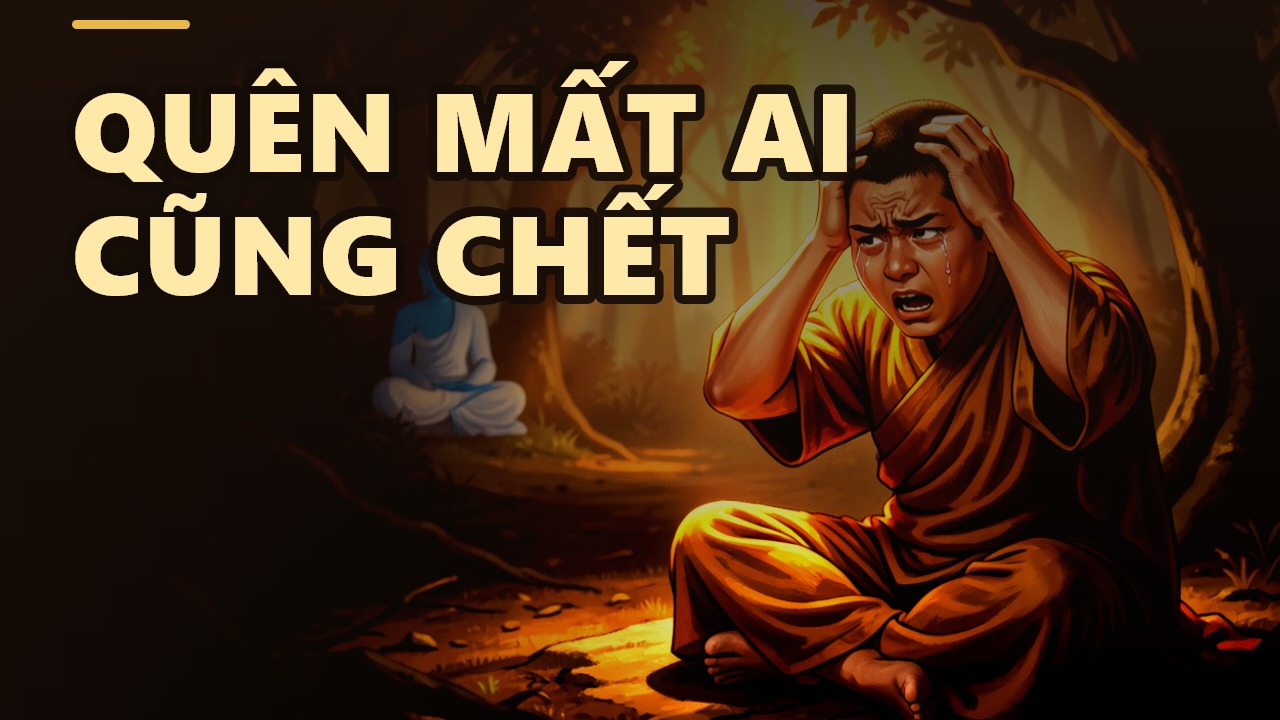
From a basin of leftover water in the bathroom, a group of monks split into two factions and argued fiercely. This is a lesson on impermanence (anicca) and the power of silence.
Have you ever quarreled with family or friends over something tiny? A misunderstood sentence, a basin of leftover water... From such small matters, life can become suffocating, even divided. In the Dhammapada, there is a story about monks from the time of the Buddha who fell into that very spiral of dispute. Let us listen to this precious lesson shared by Thầy Thích Chân Quang.
The story begins with a basin of water in the bathroom
At the Kosambi monastery, a dharma teacher, after bathing, left a basin upside down with a little water still remaining. A teacher of the monastic rules saw this and pointed out the fault. The dharma teacher humbly admitted his mistake and performed repentance. It seemed the small matter had ended. But no — the teacher of the rules told his own students, and a rumor spread: "He committed a fault and refuses to admit it!" Simply because of a mouth that did not know when to stay closed, a trivial matter turned into a great battle between two factions within the Sangha.
When attachment burns up every teaching
When the Buddha heard the news, he came to advise the monks to reconcile and to unite. But they would not listen. They even showed their attitude: "World-Honored One, please just focus on your practice. This is a small matter — let us handle it." Even when the Buddha spoke of the light of liberation and the responsibility of being an example, they held their ground.
"You are the ones who carry the light of liberation to illuminate the whole world, yet over such a tiny matter you cannot reconcile and instead argue like this — how can you serve as an example for everyone?"
Thầy Thích Chân Quang observes: Within us, each person is exactly like those monks. When we first take refuge, we revere our teacher, but the moment we step into the work, we begin to feel we are better than the teacher, then we argue with the teacher and criticize the teacher. That is the ego growing.
The Buddha departs, and the lesson of the silent teacher
Because they could not be moved, the Buddha left the monastery. He went into the forest to live with three arahants — Kimila, Anuruddha, and Nandiya — those who lived in perfect harmony. He was also attended by a noble elephant for three full months. Meanwhile, the monks at Kosambi were forbidden offerings by the lay devotees and nearly starved to death. That hunger taught them a lesson: no more arguing!
The Buddha did not step in to punish. He let cause and effect (karmic law) run its own course. This is what distinguishes Buddhism: no authoritarian power, no coercion — only the law of cause and effect (karmic law) and a heart of compassion.
Impermanence — the medicine that dissolves every dispute
When the group of monks finally came to repent, the Buddha taught them this verse from the Dhammapada:
"We compete to win because we forget that everyone must die. If we knew death was waiting, why would we still argue?"
The Buddha's meaning is this: We forget impermanence (anicca). We keep thinking we will live forever, so we protect our "self" and refuse to lose even a single word. But if everyone knew that they will die — that "winning" would mean nothing — no one would want to compete anymore. Remember: each day that passes is one day closer to our death.
The practice: Knowing how to be silent and living in harmony
Thầy Thích Chân Quang advises: From this story, let each of us make this vow before the Buddha:
"Let me know how to be silent, not speak of others' faults, and quietly use only words of prayer that others may be free of their faults."
The three arahants lived in harmony like "water mixed with milk" because they lived in non-self (anatta), were self-aware of their responsibility, and always thought of their brothers and sisters. We can learn from them: in the family, if there is discord, let us recite the names of those three venerable ones, or simply ask ourselves: "How would I want others to treat me? Let me treat them that way."
Today, if you are in the middle of an argument, please pause for just a moment. Remember that everyone has a day when they must depart. Let go, be silent, and wish each other peace. What does winning or losing matter, when in the end we are all nothing but dust?
AI-assisted translation from the Vietnamese original.
Read in Vietnamese →