
Willpower: The Silent Strength Shaping Your Life
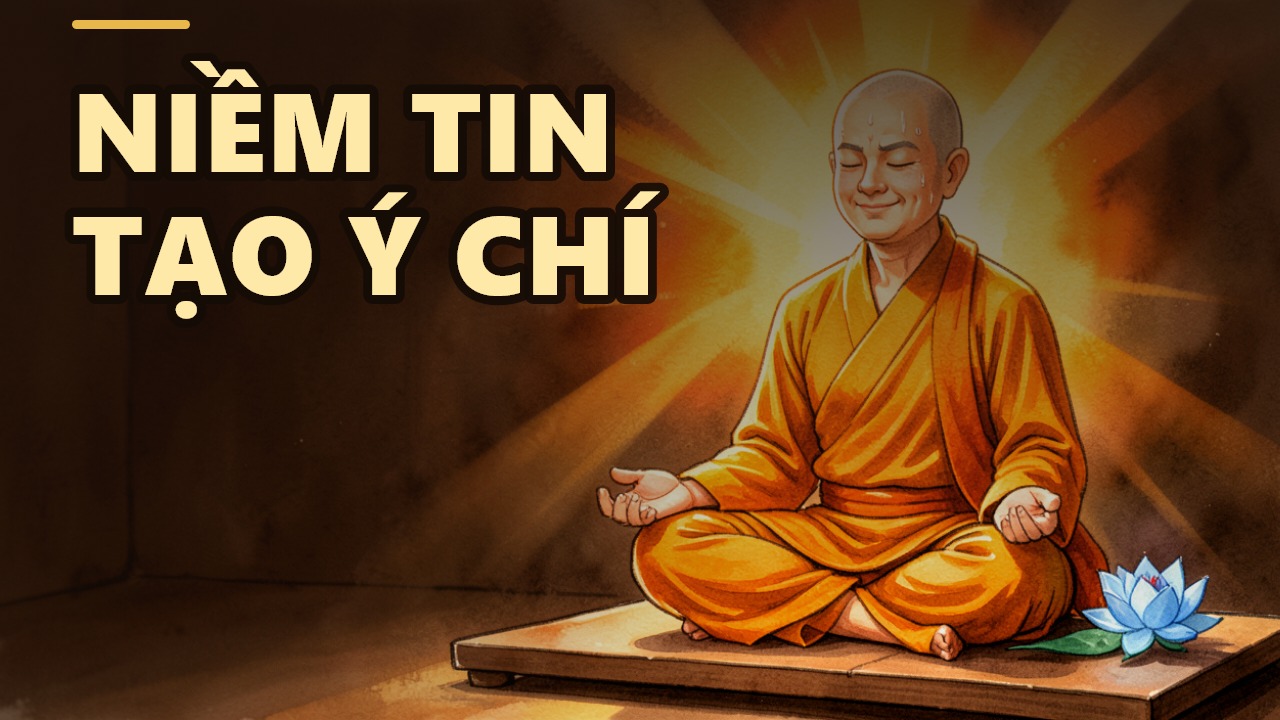
**SUMMARY:** Explore the nature of willpower through the lens of the Dharma: from sitting in meditation to overcoming temptation. Learn how to cultivate inner strength for a more resilient life.
Life constantly presents us with choices: to continue or to stop, to overcome or to give up. Sometimes, what makes the difference lies not in our circumstances, but in an invisible inner strength — what people call willpower. But what is willpower, truly? Let us listen to the sharing from Thầy Thích Chân Quang in the dharma talk “Willpower and Perseverance” to find the answer.
**When Definitions Seem Elusive**
In life, there are concepts we use our entire life without ever understanding them thoroughly. What is love? What is happiness? And what is willpower? When asked, many can only respond vaguely. Thầy Thích Chân Quang once shared: “I’ve used it my whole life, but now if you ask what willpower is — it’s very difficult to define.”
“It is strange, isn’t it? We talk about many concepts throughout our lives, but when asked for a definition, no one knows exactly how to define them.”
It is like using the concept of a square meter — few can explain it precisely. Willpower is the same; it is not a tangible object, yet its presence is clearly evident in our actions and choices.
**Willpower Manifests in Small Actions**
We cannot see willpower directly, but we can observe its expressions. When meditating and our legs go numb with pain, yet we strive not to leave the seat of practice; when making offerings through meritorious deeds, we willingly give our time and resources; when faced with a hot summer, we accept the hardship to continue our cultivation. This is willpower.
Thầy Thích Chân Quang shared: “For example, just now we were sitting in meditation. Sitting through the entire session is also willpower. Sitting even though our legs are numb and painful is a form of willpower.”
Once a practitioner reaches stages of inner peace, they discover true happiness in stillness, and willpower becomes a natural, self-sustaining motivation.
**Conviction – The Source of Willpower’s Strength**
The strength of willpower arises from conviction. Because we have faith in the Buddha and in our teacher, we possess a clear goal and a right path. However, Thầy emphasizes a special point: he never claimed to be enlightened or to have supernatural powers. “I am also just an ordinary person like everyone else,” he said. So why do so many people still follow him? Because what he teaches aligns with truth and awakens their wisdom.
“The things I say seem reasonable, so people follow me not for my personal sake, as I have nothing special. But the things I say have reason.”
When conviction is built upon logic and the true Dharma, willpower becomes more enduring than if it were based merely on emotional feeling or an obsession with an external image.
**Four Manifestations of Inner Strength**
Thầy summarizes that willpower can be understood through four manifestations:
* Persisting diligently in performing a task. * Enduring adverse conditions. * Overcoming temptation. * Aspiring towards a noble goal.
A person with strong willpower is one who embodies all four elements. Those who retreat at the first sign of difficulty and dare not face challenges are mentally weak, regardless of how physically strong they may be.
**Three Great Obstacles: Physicality, Adversity, and Temptation**
On the path of self-perfection, there are three constant obstacles: physical exhaustion, adverse circumstances, and enticing temptations. Among these, temptation is far more dangerous than suffering. Suffering makes us alert, but temptation seduces and deludes us.
“Pleasure is much more dangerous than pain. Pleasure is far more dangerous than pain.”
Thầy recounts a story of two monks: one endured hardship and persevered, while the other encountered a comfortable life and temptations of wealth and beauty. The second monk might abandon the path of practice. People often praise the monk who endures hardship, yet they forget that refusing temptation is truly a greater feat.
**The True Dharma as a Lasting Refuge**
Finally, Thầy recalls the Buddha’s teaching: “Take refuge in the true Dharma; do not take refuge in any person.”
After many years of practice, Thầy has deeply absorbed this teaching. When willpower is founded upon right understanding, we do not become dependent on anyone, and our path toward liberation will be solid and unshakable.
**Conclusion: Cultivating Willpower Every Day**
Willpower is not a gift of fate, but the result of daily training. Begin by sitting in meditation, practicing the precepts, abandoning bad habits, and persevering towards noble goals. Despite the difficulties, remember that each time we overcome, we become stronger. And with firm conviction in the Buddha’s teachings (Dharma), we will surely attain the most wholesome outcomes.
AI-assisted translation from the Vietnamese original.
Read in Vietnamese →