
Little Joy, Much Suffering, and Even Greater Danger: A Lesson from the Simile of the Snake
**Summary:** This article explores the profound meaning of the *Alagaddūpama Sutta* (The Simile of the Snake) through the teachings of Venerable Thích Chân Quang: about sensual pleasures, wrong views, and the right attitude when giving feedback to correct one another.
Have you ever wondered why the Buddha said, "Sensual pleasures give little joy, much suffering, and even greater danger"? While everyone desires lots of money, passionate love, or moments of ultimate bliss? This question has troubled countless generations. Today, let us explore the answer through the *Alagaddūpama Sutta* (The Simile of the Snake), with the commentary of Venerable Thích Chân Quang.
**The Wrong View of the Monk Ariṭṭha: Misunderstanding the Buddha's Words**
In the sutta, there was a monk named Ariṭṭha. Before ordaining, he had been a falconer—a livelihood that involves killing, which is considered a wrong livelihood. Perhaps due to this karma, when listening to the Buddha, he misunderstood entirely. Ariṭṭha asserted: "Even though the Blessed One has said that sensual pleasures are an obstacle to the path, as I understand his teaching, they are actually not an obstacle." The other monks advised him, but he stubbornly refused to listen.
A person with blessings (phước báu) finds it easier to understand the teachings and discover the truth. A person lacking blessings easily misunderstands what is right and the truth.
Venerable Chân Quang points out that blessings and karma are not abstract matters. They directly influence each person's ability to comprehend the truth. If our conditions are favorable, we are easily moved when hearing the truth. If we are obstructed by karma, we remain indifferent to what is right.
**Why Are Sensual Pleasures an Obstacle to the Path? The Mind's Formula**
The Buddha was not ignorant about sensual pleasures. He clearly understood the great joy that people seek. But he pointed out that all pleasures lead to a selfish mind. Selfishness is the seed of suffering. The formula is: indulgence → selfishness → suffering. Even in meditative concentration (thiền định), if we cling to feelings of joy and bliss, we will be tainted by selfishness.
"Sensual pleasures give little joy, much suffering, and even greater danger."
In many suttas, the Buddha used various images to illustrate desires. Some representative images are:
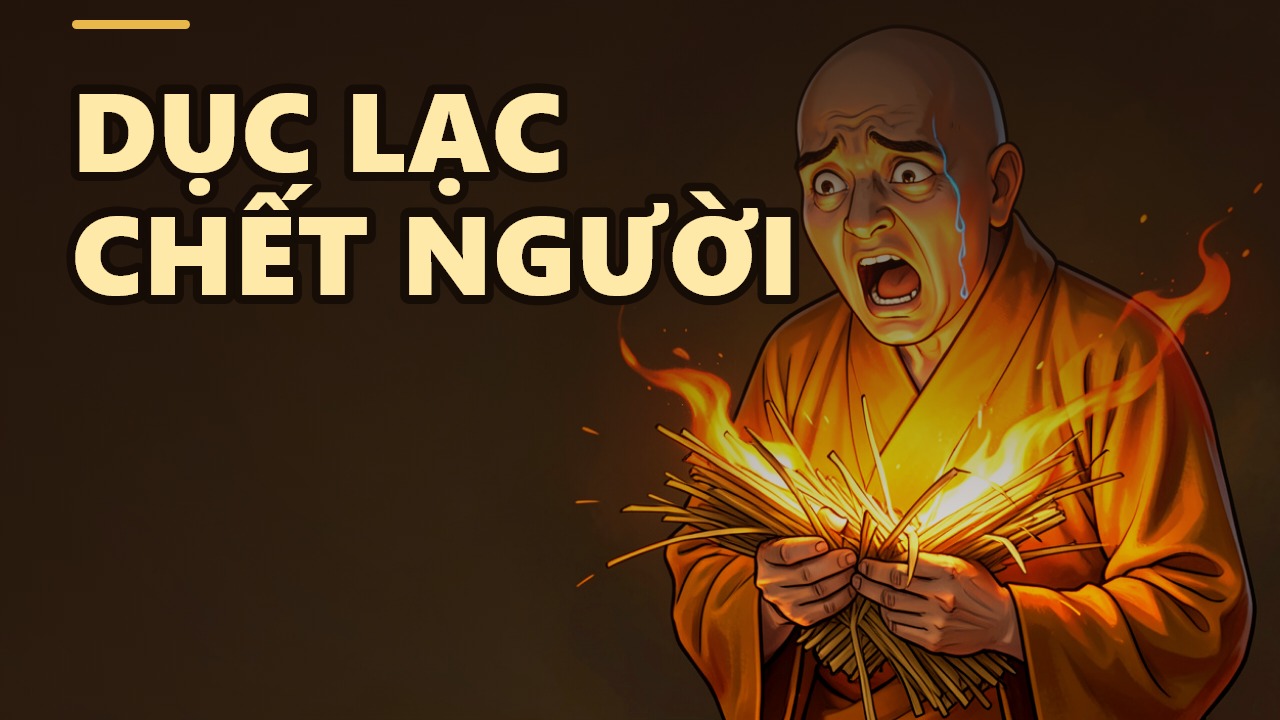
* Like a bone with no meat—craved for but cannot be swallowed. * Like a piece of meat—coveted by predators but ultimately unattainable. * Like a bundle of dry grass—burning and destroying the one who carries it. * Like a pit of live coals—whoever falls in is destroyed. * Like a dream—not real, vanishing upon waking. * Like a borrowed object—its return comes at a very high price.
In summary, the Buddha taught that sensual pleasures obstruct the path because they fuel greed (tham) and selfishness, leading us away from the path to liberation.
**From Money to Drugs: Relatable Examples**
Venerable Chân Quang offered very vivid examples. An unemployed person prays fervently for a job. Once he has money, he must work eighteen hours a day to protect his assets, lives in fear of theft, and worries about his children fighting over inheritance. He eventually wishes to be poor again for the freedom. A drug addict must struggle for money, face withdrawal symptoms and the police—a whole life buried in that fleeting pleasure. This is "little joy, much suffering, and even greater danger." Wealth or pleasure brings only a very brief feeling of happiness, while the cost paid is long-lasting.
**Do Not Remain Silent Before Each Other's Faults: A Lesson from the Sangha**
In the sutta, after failing to persuade Ariṭṭha, the other monks reported him to the Buddha. This is a great lesson: when we see someone at fault, we must not overlook it. Venerable Chân Quang emphasizes:
Seeing another's fault and ignoring it is a heavy karma for oneself.
If we remain silent, we will bear the consequence: later, when we ourselves make mistakes, no one will remind us. And the environment we live in will be full of wrong people. Therefore, we must courageously offer feedback with compassion (từ bi), not to humiliate. If that person does not listen, we should report to the teachers for guidance. This is how to build a wholesome community.
**Listening to Both Sides: The Fairness of the Wise**
An interesting point is that when the monks reported, the Buddha did not conclude hastily. He called Ariṭṭha and questioned him to hear his voice. This is a model of fairness. Venerable Chân Quang teaches:
The Buddha did not draw a conclusion immediately. Even though the Buddha fully knew, on the principle of working, he still called the other person to ask, so they could voice their side.
In life, we often hear one side and believe it immediately, causing injustice to others. We should learn to listen to both sides before judging. This applies not only to the path but to all social relationships.
**The Buddha's Scolding: Firm yet Calm**
When Ariṭṭha admitted his view, the Buddha rebuked him severely: "Foolish man, why do you understand the Dhamma taught by me in such a way?" But according to Venerable Chân Quang, the Buddha spoke those words with calm and composure. This is the art of teaching: the words can be strict, yet the attitude remains serene and compassionate. We learn that to help others correct their mistakes, we do not need to be angry. Gentleness and composure actually make people more receptive.
The *Simile of the Snake* reminds us to be careful with misunderstandings, not to let craving and attachment bite us painfully like a snake. We should take responsibility for each other's faults and always listen to both sides. Each day, let us ask ourselves: Am I truly understanding the Buddha's teachings correctly? The path is not about escaping suffering, but about transforming it with compassion (từ bi) and wisdom (trí tuệ). May you find the truth within each page of the Dharma.
AI-assisted translation from the Vietnamese original.
Read in Vietnamese →