
Vu Lan Is Not Just a Day of Filial Piety: A Lesson in Gratitude You May Have Never Heard
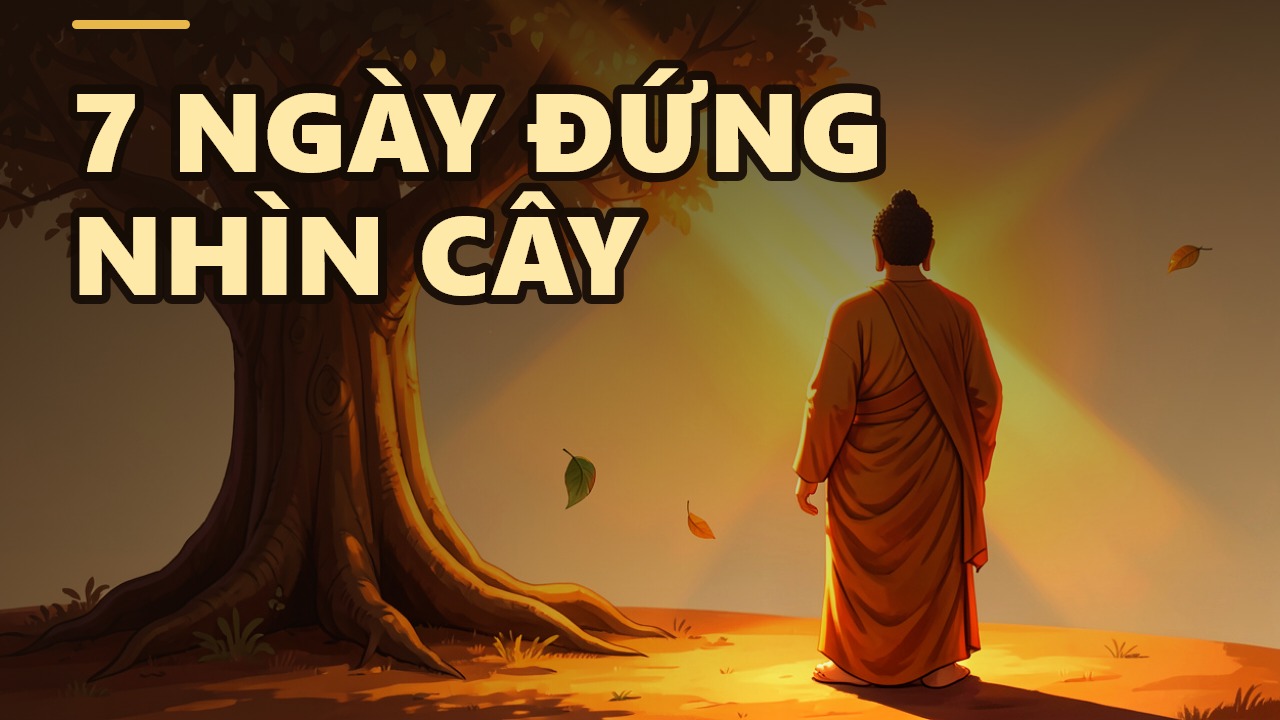
From the bodhi tree where the Buddha gazed for seven days to gratitude as an attribute of the enlightened ones – profound reflections for the Vu Lan season.
Imagine: You have just spent forty-nine days and nights in meditative concentration beneath a tree, thereby attaining enlightenment. Upon rising, would you turn back to look at the tree just once in gratitude?
According to the scriptures, after his enlightenment, the Buddha walked about twenty steps from the bodhi tree, then turned back and stood gazing at it for seven days and nights, motionless. This seemingly small act reveals an immensely great lesson about gratitude – a lesson that many people, even long-time Buddhists, may have overlooked.
Why did the Buddha stand gazing at the bodhi tree for seven days?
We often forget small acts of kindness. Who gave us shade when we rested? Who offered us water, a potato when we were hungry and thirsty on the road? We consider these trivial matters and forget them. But for the enlightened one, nothing is trivial. The Buddha stood gazing at that insensate tree for seven days and nights simply to express his profound gratitude. This is a symbol of deep gratitude, without distinction of its object – even if it is just a tree.
The Buddha stood looking at that tree, motionless, for seven days and nights. We cannot fathom the mind of a saint, but this symbolizes gratitude toward a tree we might call unconscious.
Gratitude: Going Against Natural Instinct
Each of us carries a natural instinct: we remember forever those we help, but immediately forget those who help us. This is as natural as breathing. Only when we come to the Buddha's teachings (Dharma) do we learn to reverse this – to forget those we help (without clinging to our merit), and to remember those who help us for our entire life. This is not easy.
All sentient beings are mostly governed by a natural instinct... It is to remember forever those we help, and to immediately forget those from whom we receive aid. This is perfectly natural. It is the same for everyone.
Yet in the animal world, there are species that have learned to reverse this instinct. People tell of an injured seagull that was rescued and returns every year to visit its benefactor. Or a tiger that escaped a trap, occasionally bringing prey to leave before the woodcutter's door. Even fierce lions, when reuniting with an owner who raised them years later, will embrace them instead of attacking. These stories remind us: gratitude is not only a human morality, but a deep awakening within all sentient beings.
Vu Lan: Three Intertwined Meanings
The Vu Lan festival is not just a day for absolving the souls of the deceased or praying for those who have passed. In Buddhism, Vu Lan also connects with the day monks complete their three-month summer retreat, and is an opportunity for everyone to practice gratitude. In particular, the meaning of absolving the deceased teaches us to have compassion for beings in the invisible realms – suffering that the ordinary eye cannot see.
Some ask: Having compassion for the suffering before our eyes is fundamental morality; but to have compassion for suffering we cannot see at all is a higher morality. Therefore, Vu Lan is an opportunity for us to expand our boundless compassion, encompassing even beings we cannot see.
We show compassion for visible suffering and also for suffering we cannot see. Thus, this has a very profound meaning that helps us understand the invisible world more deeply.
Parents Are the Greatest Grace, But Not the Only One
When speaking of gratitude, we first remember the immense debt of our parents' nurturing. No matter how virtuous we are, if we do not remember our parents' kindness, all other relationships in life are false. If we cannot love our parents, how can we sincerely love friends or colleagues?
But beyond parents, there are other great kindnesses. Confucius once placed the grace of leaders above that of parents because they care for an entire society, for many people. There is a very pertinent detail: when we hear our mother is ill, we jump in the car and rush home. In our mind at that moment, we only remember our mother's grace, but we forget one thing – the road that allowed us to drive home to our mother: who invested in it, who directed it, who supervised its construction? That is the grace of those who hold the reins, silently immense.
What do we remember in our hearts and what do we forget? We remember one thing: the grace of our mother, our father, correct? What do we forget? There is one thing that in such a situation we all forget: who opened and built the road from our house to our mother's house?
Gratitude Is an Attribute of the Enlightened
In the Aṅguttara Nikāya, the Buddha taught: "Monks, gratitude, when cultivated, maintained, and developed, is a quality of a noble, enlightened one." At first, this may seem surprising, as those on the path often aim toward letting go; but in truth, remembering kindness is part of liberation.
"Monks, gratitude, when cultivated, maintained, and developed, is a quality of a noble, enlightened one."
Thus, it is the same for us – although we are not yet enlightened ones, let us learn the practice of gratitude. This is the path that leads us to noble values. And the Vu Lan season is the perfect time to practice this virtue, starting with our own loved ones.
When the Heart of Gratitude Awakens
Look back at your life in this very moment. The kindnesses you have received that you never thought about: the roof over your head, the road you walk every day, clean water from the tap, electric light, even the sanitation worker sweeping at dawn... All are kindnesses. If we are grateful for everything, our mind will become lighter and happier.
On the Vu Lan holiday, do not forget to bring your children and grandchildren to the temple so they can listen to these simple yet profound truths. For youth is drawn to fun and forgets the hearth fire in the corner of the home, the warmth on a winter's night. Tell them about the debt to our parents, about gratitude for all. This is how we continue the precious moral tradition of our nation and of the Buddha's teachings (Dharma).
As Master Chân Quang has reminded: "We celebrate Vu Lan to remind each other about gratitude, to reflect on the morality of gratitude which is truly difficult, not easy at all. And if we lack gratitude, we lose a vast part of our morality, of our own soul."
Let us start today: thank someone, remember a benefactor, or simply look at your parents with a heart of gratitude. All begins with a single gaze.
AI-assisted translation from the Vietnamese original.
Read in Vietnamese →