
Martial Arts and the Philosophy of Yin and Yang: The Secret Lies in the Hidden Part
**Summary:** A dharma talk by Master Thich Chan Quang reveals the yin-yang philosophy within martial arts: the formless is the root, defense precedes attack, and yielding overcomes hardness. Applying this to life helps us live with greater stability.
Have you ever wondered: what makes a punch truly powerful? Is it the angle of the arm, the speed, or something else lying deep within? In the talk 'Yin and Yang in Martial Arts,' Master Thich Chan Quang offered a surprising perspective: the source of strength does not lie in the external form, but in the formless energy within.
**Yin and Yang: The Two Faces of All Existence**
Yin is what is concealed and hidden, while yang is what is revealed outwardly. The Master explained: "What does the word 'yin' mean? It means to recede, to bow inward... And yang is what appears outward." From the universe to a human being, everything has two faces: a visible part and a concealed part. The ancients called this yin and yang.
**In Martial Arts, Force is Yin**
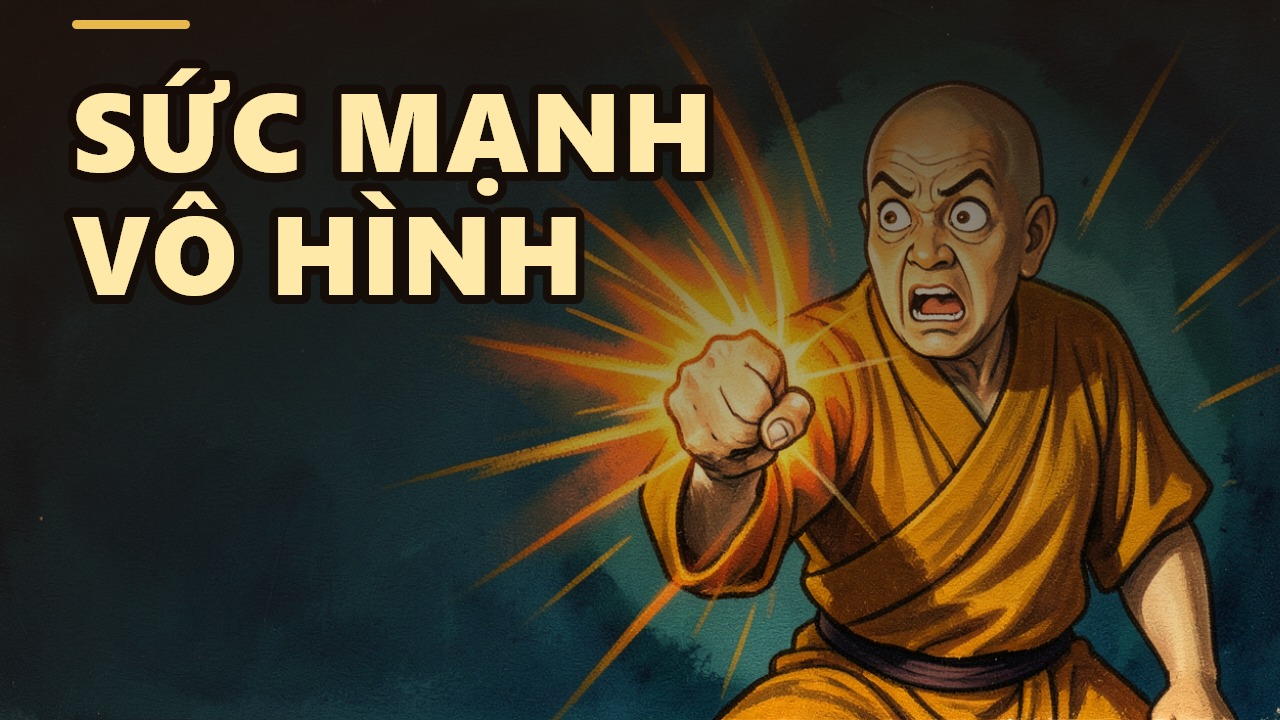
When you throw a punch, the shape of the fist is yang—everyone can see it. But the power that creates the strength is the force—and that is yin. The Master taught: "When a strike is delivered, the force is yin, and the shape of the strike is yang." A strike that has only yang without yin is like a puppet dance—it may touch without causing any harm.
**Internal Force: A Deeper, Hidden Force Within**
Beyond muscular force, Eastern martial arts also recognize another type of power: internal force, or *jìn lì*. It arises from *qì gōng* and does not depend on body weight or physical health. The Master emphasized: "This internal force, this *jìn lì*, is an even deeper, more hidden force." There are martial masters who can run on a bamboo mat, light as a bird in flight—physics cannot explain it—and this is thanks to this internal force.
**Defense is Yin – The Foundation of Every Attack**
In martial arts, *shǒu* is defense and *gōng* is attack. The Master taught: "Defense is yin, and attack is yang." Therefore, to attack effectively, one's defense must be solid. A martial arts student must first learn to dodge and block strikes properly. Only when "one must build a solid, excellent defense before beginning to attack" can one then unleash techniques. An elderly martial artist from Russia once said: "I do not hit anyone, but no one can hit me."
**Yielding and Hardness: The Secret of the Underdog**
Yielding (*nhu*) is soft, and hardness (*cương*) is rigid. Yielding belongs to yin, hardness to yang. Women are physically at a disadvantage compared to men, so they must rely more on yielding—dodging, twisting, and deflecting rather than meeting force with force. The Master advised: "If a woman wants to learn martial arts, she must learn five times faster than a man to be able to defeat a man." Thanks to their suppleness, they can neutralize powerful strikes by harmonizing with them, transforming the opponent's own force.
**Look at the Hidden Part in Daily Life**
This yin-yang philosophy is not just for martial arts; it is a reminder for daily life. The Master taught: "When observing anything, you must look a little deeper into its interior, rather than looking shallowly at the external appearances." Behind every face lies a soul; behind every success lies a hidden process of silent practice. Understanding this, we will no longer be hasty in judging others or ourselves.
Let us start from today: observe the hidden part within our own mind, cultivate internal force, and build our defense before thinking of attack. When yin is solid, yang will naturally shine. This is an ancient philosophy that remains profoundly valuable for the modern person.
AI-assisted translation from the Vietnamese original.
Read in Vietnamese →