
The King Who Was a Zen Master: The Miracles of Emperor-Phật Hoàng Trần Nhân Tông
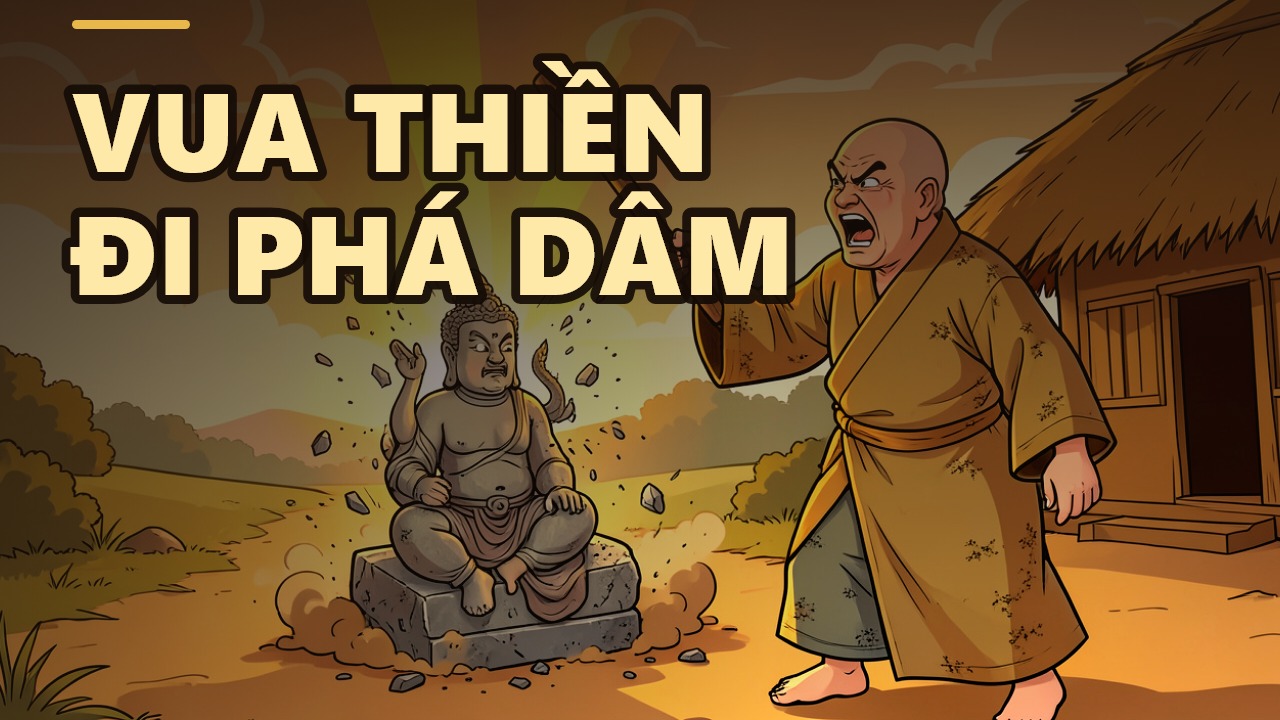
When he renounced the world, this retired emperor had just led armies to defeat invaders. He also carried his alms bowl everywhere to eradicate false teachings. The life of Trần Nhân Tông is a vivid lesson in wisdom and compassion.
Do you believe that a king who attained enlightenment was still willing to lead troops into battle and slay enemy generals? Yet later, he carried his alms bowl and leaned on a staff, walking through the countryside to destroy shrines dedicated to illicit worship? This is the story of Phật Hoàng Trần Nhân Tông. His actions inspire generations to admire and reflect deeply.
## Hương Vân – A Name That Awakens Remembrance
During a dharma talk at the Hương Vân Meditation Retreat, Venerable Thích Chân Quang explained why he chose this romantic name. "Hương Vân" means more than just fragrance and clouds. It was the title people gave to Trần Nhân Tông: Hương Vân Đại Đầu Đà. The story unfolds like a meeting of kindred spirits separated by seven hundred years—a senior monk and a wise king. The name reminds us of a saint who lived fully in both the spiritual path and worldly life.
## Enlightenment Amidst War: Wisdom Is Not Passivity
People often find it hard to understand how Trần Nhân Tông attained enlightenment while very young, before the Mongol-Yuan wars. Yet when the country faced danger, he directly commanded the army. For Venerable Thích Chân Quang, this is a profound lesson. An enlightened person does not sink into passivity. Instead, they clearly understand cause and effect (karmic law).
He said, "An enlightened person understands cause and effect (karmic law) without confusion. Because they understand it so well, they bear a great responsibility for their country."
When duty rests on one's shoulders, he did not hesitate to act, even if it required taking life. This corrects a common misunderstanding. Buddhism is not about escaping responsibility. It is about engaging with wisdom and compassion.
## Defeating Enemies with Wisdom: Balancing Victory and Sin
The invasion by the Ai Lao army in 1294 remains somewhat mysterious. However, according to the Venerable, this mystery is solved only when viewed through the eyes of a Zen master.
He stated, "When he led the troops, the subtle wisdom of a Zen master and a saint allowed him to win exactly to the necessary degree, and then stop."
Instead of letting a general fight by instinct, he chose to fight enough to block the threat, avoiding unnecessary loss of life. This teaches us mindfulness amidst war—knowing when to stop so that victory does not become sin.
## Destroying Illicit Shrines, Cultivating Ten Virtues: The Great Journey of a Monk-King
After becoming a monk, Trần Nhân Tông did not stay in the temple waiting for offerings. He walked everywhere with his staff, destroying shrines for sexual rituals, known as "dâm từ," and encouraging people to practice the ten virtues. The Venerable recounted that this work was incredibly difficult. Yet, because of his virtue, villagers feared him and changed their ways.
He said, "He went everywhere to destroy these illicit shrines and encouraged the people to cultivate the ten virtues... The merit was truly great and moving."
His actions were not just about removing wrong practices. They rebuilt cultural foundations using the Buddha's teachings (Dharma). The image of a king in yellow robes and brown garments, carrying his alms bowl through rain and sun, teaches humility and cultural responsibility to every practitioner.
## Guards Wearing Monastic Robes
Many wonder how King Trần Anh Tông protected his father during his wandering. The Venerable offered an interesting answer. The king selected outstanding disciples to become monks, serving as bodyguards in monastic robes. This was the origin of the Trúc Lâm Yên Tử Zen school, which included a martial arts tradition. These individuals supported the Buddha's teachings (Dharma) while secretly protecting their revered teacher.
## Lessons for Modern Buddhists
Today, we do not need to fight wars. But we must be brave enough to advise a friend addicted to gambling. We must not fear offending relatives when urging them to avoid false paths. The Venerable affirmed this clearly.
He said, "If we are too cowardly to speak up to anyone, we are going against the spirit of King Trần Nhân Tông."
Let the life of Phật Hoàng Trần Nhân Tông illuminate our own lives. Each day, practice a little compassion. Learn to act with wisdom. Do not let small fears obscure opportunities for great blessings from merit. By doing this, we walk in the footsteps of a bodhisattva.
AI-assisted translation from the Vietnamese original.
Read in Vietnamese →