
Why Can Vietnamese People Never Leave Buddhism Behind?
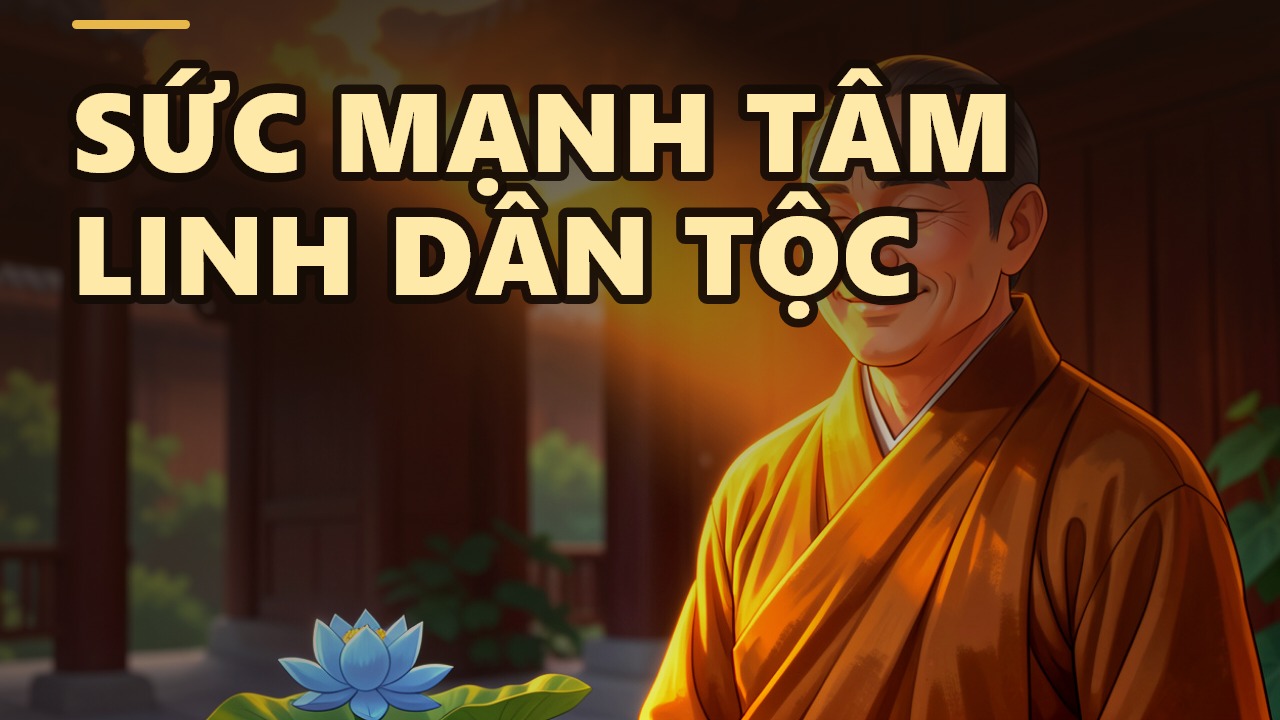
Discover the spiritual strength of our nation through the teachings of Venerable Thich Chan Quang. From the law of cause and effect (karmic law) to our heroic history and daily spiritual life, these are essentials for preserving both our country and our own integrity.
Have you ever wondered why, in this digital age, temples remain crowded with seekers? Why do people turn to spiritual values when they face failure, suffering, or exhaustion? The answer likely lies deep within the subconscious of every child of Vietnam, as an indispensable way of living. Let us listen to the insights of Venerable Thich Chan Quang to understand why Buddhism is the eternal spiritual source of our nation.
## The Twenty-First Century – The Century of Spirituality
Many once believed that science and technology would completely replace spiritual life. However, the opposite has occurred. As humans conquer space, reach the moon, and explore the ocean depths, the need for spirituality becomes even more intense. Sociologists have predicted that the twenty-first century will be the century of spirituality. Vietnam is no exception to this flow. Buddhism, with its profound humanistic values, is gradually reviving and becoming a solid refuge for countless souls.
"When science advances to great heights, flying to Mars, sending submarines to the bottom of the sea, and accomplishing all sorts of things in this world, it is then that religious spirituality develops very strongly."
## The Law of Cause and Effect – The Moral Foundation of Vietnamese People
What creates the magical attraction of Buddhism? It is the law of cause and effect (karmic law). Our ancestors often said, "You reap what you sow," or "If you plant melons, you get melons; if you plant beans, you get beans." This is the core thought of Buddhism. The law of cause and effect (karmic law) is not punishment from any deity, but the fair operating principle of the universe. When we sow good deeds, we harvest blessings from merit; when we sow evil, we receive suffering (dukkha). This belief helps people restrain themselves and live virtuously, not out of fear, but out of clear understanding.
"Even Heaven, however powerful, only acts according to the law of cause and effect (karmic law); it cannot exceed it."
## Buddhism – The Invisible Strength Protecting the Nation
Our national history proves the immense power of Buddhism. The story of King Tran Thai Tong abandoning his throne to become a monk, only to be advised by National Master Phu Van to return and shoulder the responsibility for the country, changed an entire dynasty. The Tran Dynasty, initially doubted by the people for usurping the Ly Dynasty's throne, won the complete love of the populace through actions born from the Buddha’s heart. This created the unity needed to defeat the Mongol army three times—the most powerful force in the world at that time. Buddhism is not just a religion; it is the thread connecting the souls of the nation and the spiritual foundation for protecting the Fatherland.
"Just because the king followed Buddhism did he gain the love of the entire people. And having gained the love of the entire people, he achieved a glorious victory unlike anything else in the world."
## Spiritual Life – An Indispensable Need
Humans have three needs: material, mental, and spiritual. Material goods help us survive, mental pursuits help us develop, but spirituality is the peak that connects us to the deeper meaning of life. Science has not yet proven spirituality, yet each of us feels that death is not the end. Even President Ho Chi Minh wrote in his testament that he would "go meet the elders Marx and Lenin." This shows that even great thinkers believe in existence after death. Buddhism clearly explains rebirth and karma, helping people live more responsibly toward themselves and all beings.
"The body may decay, but thoughts, inner feelings, and the karma we have created do not disappear with the body. They continue to drift on for another period of time."
## Practice – The Path to Eradicating Greed, Hatred, and Delusion
Believing in cause and effect (karmic law) is a starting point, but it is not enough. When greed, hatred, and delusion arise, people can still commit wrongdoings. Therefore, going to the temple to practice, listening to dharma talks, and practicing meditative concentration are extremely important. Through practice, we gain the mindfulness necessary to recognize and transform the afflictions (kleshas) in our mind/heart. This is why Buddhist practitioners must maintain regular practice, not for formality, but for deep internal transformation.
"There are many people who believe in cause and effect (karmic law) yet still do evil. Because when greed, hatred, and delusion arise, their vision becomes clouded and they act wrongly. That is why we must practice."
Buddhism is not a distant religion, but a method of living, a moral code for being human, and the spiritual strength of our nation. Preserving and promoting Buddhism means preserving our cultural identity and protecting our country. Let each of us nurture our spiritual life through study, practicing cause and effect (karmic law), and living with compassion and wisdom. This is the most practical way to contribute to a peaceful and prosperous society. Start today with a smile, a kind word, or a decent action—sowing beautiful seeds for your own future and for generations to come.
AI-assisted translation from the Vietnamese original.
Read in Vietnamese →