
Why Do Meditation Practitioners Radiate a Natural Charisma?
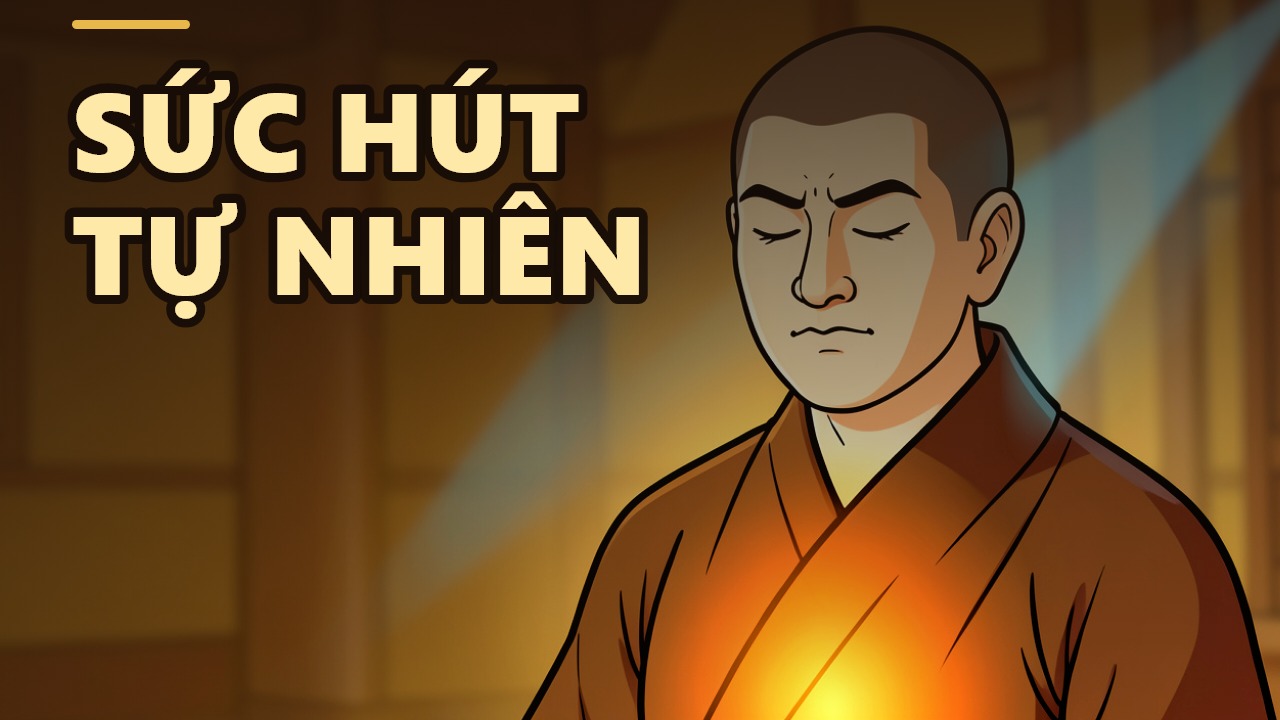
Have you ever met a monastic who, simply by being seen, inspired a strange attraction and natural faith in you? Meanwhile, others wearing the same robes seem to lack vitality and charm. What creates this difference? It is meditative concentration.
## The Natural Charisma of the Meditation Practitioner
Those who practice meditation do not boast or seek attention, yet their spiritual power and virtue naturally radiate outward. When we are near a genuine meditator, we feel an instinctive affection and trust. As Venerable Thich Chan Quang once said:
"When one practices meditation, their virtue manifests, bringing with it a natural charisma and vitality. A meditator does not need to show off or reveal their practice to anyone. Yet, their spiritual power and conduct shine forth on their own."
It is through meditative concentration that monastics become the future seeds of the Buddha's teachings (Dharma). In Theravada countries, meditators attract Western intellectuals to Buddhism. However, when people visit temples where only chanting occurs, they often turn away, finding nothing that meets their needs. Meditation is an invisible strength that everyone recognizes.
## Meditative Concentration Is Not Just Sitting Still
Many believe meditation is merely about calming the mind into purity, but Venerable Chan Quang emphasizes that purity alone is not the final goal. If we stop there, we may go astray. He teaches:
"Meditation is for gathering the mind into purity. But what is the purpose of this pure mind? If one stops at purity, it is not Buddhist meditation. From this pure mind, many other qualities arise. True Buddhist meditation aims toward non-self (anatta), which is the path of liberation and enlightenment. Purity alone is incomplete and can even lead one astray."
Buddhist meditation is not just about stilling the mind; it is a journey toward non-self (anatta) and ultimate liberation. We should not blindly revere someone who sits quietly, for they may not have attained the Way. One must pass through purity to realize non-self (anatta).
## Cause and Effect (Karmic Law) for the Meditator: Merit and Demerit
In meditation practice, merit and demerit are clearly defined. Venerable Chan Quang teaches that merit is making others feel secure, while demerit is causing others anxiety or unrest. He explains:
"Anything that causes others to feel unsettled or anxious is demerit. Anything that brings peace and security to others is merit."
For example, if someone steals five hundred thousand dong from a street vendor, causing her fear and distress, that is demerit. If someone gives her five hundred thousand dong so she feels secure, that is merit. Burning down a temple or house, leaving people homeless and panicked, is demerit. Rebuilding the temple with bricks and cement to restore peace is merit. Everything ultimately returns to the mind/heart.
## When Teachings Are Incomplete
The teacher warns that meditators must be cautious of incomplete teachings. Many masters have attained realization but teach partially, leading practitioners into spiritual sickness. He states:
"Teaching incompletely, missing even a small part, is wrong. It prevents the practitioner from succeeding. The greatest danger is deficiency, for deficiency is also error."
This is why we must rely on the words of the Buddha, especially in the Nikaya sutras—teachings that are simple, humble, yet complete and accurate. The Buddha is the Fully Enlightened One; no one teaches more completely than Him.
## Return to the Buddha’s Words
The Buddha taught many small details that we easily overlook, such as: "See the danger in even the smallest faults." This brief sentence contains a vast universe of ethics and merit. The teacher shares a story of a worker digging a trench for water pipes. Though a minor fault, it caused every passing vehicle to jolt. The karmic result could be leg disabilities across many lifetimes. Similarly, washing hands poorly after using the restroom before touching a Buddha statue, holding incense, or shaking hands with a monk creates impure karma, potentially leading to lower rebirths.
The Buddha’s teachings in the Nikaya sutras are the key to meditative concentration and liberation. To understand them deeply, we must strive to practice. Do not neglect these simple teachings in favor of elaborate doctrines that lack foundation.
Begin today. Sit in meditation, even for a few minutes, to calm your mind/heart. From there, move toward non-self (anatta). Do not fear hardship or pain. As the teacher advises, we must resolve to uphold the true Dharma of the Buddha, without blaming the decline of the age. Our practice and the proper cause and effect (karmic law) of the meditator will carry us to the shore of enlightenment.
AI-assisted translation from the Vietnamese original.
Read in Vietnamese →