
Why the Law of Cause and Effect Needs No Proof – Karma Demands Repayment, Merit Demands Cultivation, the Path Demands Practice
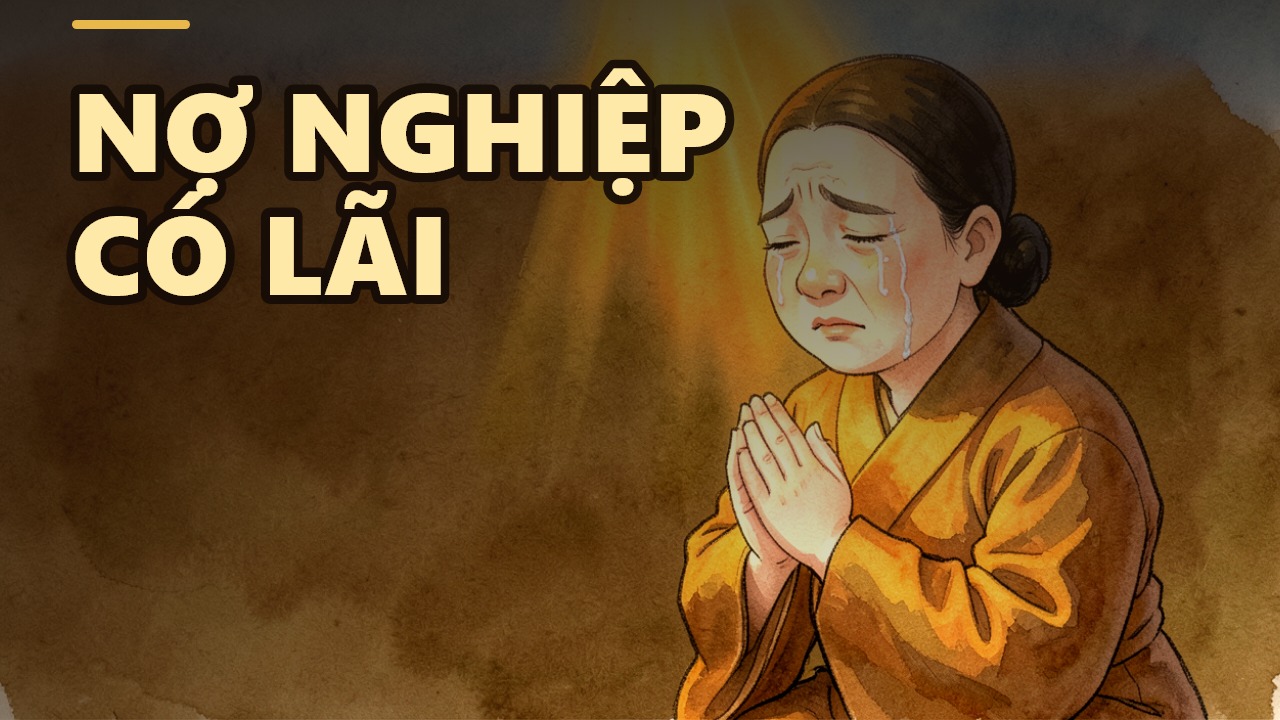
This dharma talk by Venerable Thích Chân Quang offers a profound understanding of the law of cause and effect – an axiom that requires no proof, helping us live more delicately and virtuously each day.
Imagine in the heart of a bustling city full of car horns and a hurried pace, a large monastery suddenly rises. The abbess is just a nun, always lamenting poverty, yet the structure becomes ever more magnificent. What created this wonder? Perhaps it is blessings from merit accumulated over many lifetimes, the virtue of a heart free of calculation.
**The Attraction of Virtue – From the Story of a Monastery Rising in the City**
When speaking about Vạn Phước Monastery, Venerable Thích Chân Quang remarked about the abbess: "She possessed immense merit from the past... she has such great virtue that she was able to attract the creation of such a magnificent stupa." The nun did not have much money and worked only with what she had, yet the result was incredibly vast. Merit is not the money in one's pocket, but rather a selfless heart, wholehearted effort, and faith in the law of cause and effect.
**Science is Not Everything – A Remark Full of Pride**
Many people often say: "This has no scientific evidence." The Venerable teacher states: "That is one of the most arrogant and narrow-minded statements." Why is that? Because what is science? Science does not know everything in the universe; it is only gradually learning.
The more we learn, the more we see our own limits. The universe is vast, and there remains much that no one can explain. Therefore, instead of denying, let us open our hearts to receive the truth.
**The Law of Cause and Effect: Close Yet Distant**
Our ancestors, without needing degrees, recognized that "sow the wind, reap the whirlwind" and "do good, meet good." This is the law of cause and effect in daily life. But when we delve deeper, science has yet to touch the mechanism of karmic retribution for good and evil. The Venerable explains:
If we cause someone a feeling of suffering, it creates a karma stored for later. Then someday, we too will experience that exact feeling of suffering in return. And usually it comes with interest – cause one instance, and you must repay a hundred, a thousand. If we create a feeling of joy for someone, it generates merit.
Thus, the law of cause and effect is both very close because everyone can feel it, and very distant because it cannot be proven by experiment. But a Buddhist does not need proof – only faith and practice.
**The Axiom of Buddhism – The Thing That Needs No Proof**
In mathematics, to build an entire system, one must begin with axioms – truths that are correct but cannot be proven. The Venerable teaches:
All things provable by science must begin with one unprovable thing, an axiom. Our Buddhism is the same... it also begins from one unprovable axiom, which is the law of cause and effect.
So what is the law of cause and effect? It is that when we cause suffering to others, we incur karma; when we cause happiness to others, we gain merit. Simple, yet it operates in every moment of life.
**Cause and Effect is Not Just Theory – It is How We Live Each Moment**
Those who understand cause and effect deeply dare not do evil, not only for fear of karmic retribution, but because their hearts have transformed. The Venerable speaks of the young people at the monastery: they have never studied communication, yet when they see guests arrive, they naturally invite and attend to them with the courtesy of hotel staff. Why?
Without training, their conduct has become refined and delicate, which we call politeness... because after deeply understanding cause and effect, people become delicate.
They look at others with eyes of love, smile, and speak kind words. These things are not skills, but the sweet fruit of a mind that has absorbed the teachings.
**Karma Demands Repayment, Merit Demands Cultivation, the Path Demands Practice**
Life has stumbles due to old karma, but we must not be afraid. Karma demands repayment – repay it all. Merit demands cultivation – cultivate it endlessly, never enough. The Path demands practice – practice until the day our spiritual work is complete. This is the purpose of a child of the Buddha. Therefore, starting today, let every word and every thought be a wholesome seed being planted. When we recognize the law of cause and effect as a truth needing no proof, we will naturally live better, suffering will lessen, and happiness will begin from the smallest of things.
AI-assisted translation from the Vietnamese original.
Read in Vietnamese →