
Why Did the Buddha Say 'The Foolish Hesitate to Give'?
Through the story of the Buddha's silence after King Pasenadi's making of offerings, Thầy Thích Chân Quang explains giving and wisdom, while reminding us how to use money in a truly meaningful way.
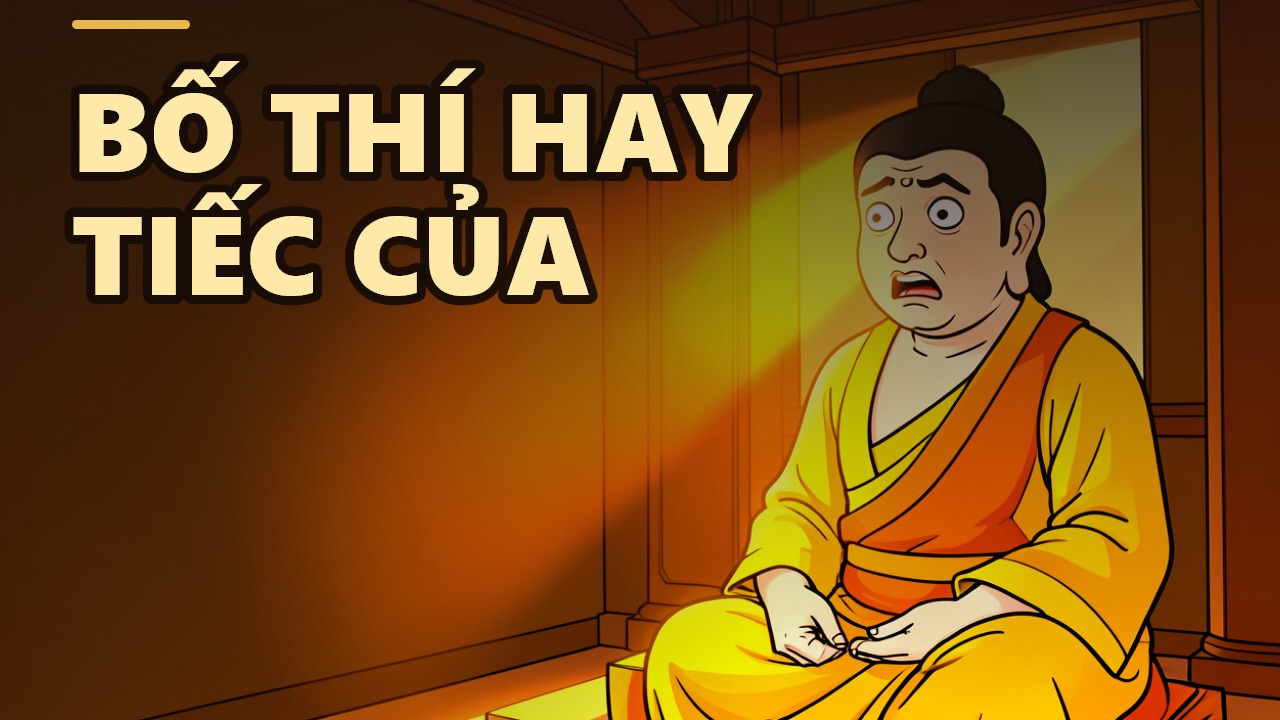
Have you ever felt regret when you had to give something away? That feeling of loss, of being shortchanged? Yet the Buddha taught that "the foolish hesitate to give, while the wise delight in sharing." Why is that? Let us listen to the following story through a dharma talk by Thầy Thích Chân Quang.
The Story of King Pasenadi's Making of Offerings
After taming the killer Angulimala, King Pasenadi was overjoyed and decided to organize a grand ceremony of making offerings to the Buddha. There were full rituals, delicious food, and even elephants standing in attendance. But strangely, after finishing the meal, the Buddha did not speak a single word of blessing or teach any Dharma. He quietly departed. The king was utterly bewildered and saddened, and went to ask the Buddha why. The Buddha then said:
"Great King, do not be troubled. The reason the Tathagata said nothing is that among those at the offering ceremony was an official named Kala. He felt regret over the expense of public funds. So if the Tathagata had praised and congratulated you, he would have thought one more bad thought... Therefore the Tathagata had to leave in silence, so that he would not think another unwholesome thought."
The Buddha did not teach the Dharma in order to protect the mind/heart of one person — that is sublime wisdom. And during that very ceremony, another high minister named Chun rejoiced. When the Buddha spoke the verse: "The foolish hesitate to give, the wise delight in sharing. Those with stingy hearts cannot be born in heavenly realms," Mr. Chun attained the fruit of Stream-Entry.
The Foolish and the Wise: Morality and Wisdom Are One
In his dharma talk, Thầy Thích Chân Quang emphasized that the Buddha did not use the word "moral" but rather the words "foolish" and "wise." Why? Because morality and wisdom are in fact one:
"A person with wisdom is a person of morality. A person of morality is a person with wisdom."
Thầy gave a very ordinary example. Two people are blocked by a car. One angrily blames the driver, while the other stays calm, seeing that arguing would only cause a traffic jam, and lets it go. The latter person looks at the situation from all sides — that is wisdom, though outsiders see it as morality. As for the angry one who scolds the moment he thinks the other is wrong, he may think he is "clever," but in truth he is "foolish."
So when we meet someone who is suffering (dukkha) and want to help, that kindness contains wisdom: we know that in this life we cannot abandon those who suffer, and that turning our backs would haunt our soul forever. Helping is not only morality — it is clear understanding.
Money: Keep It for Yourself or Share It?
Thầy Chân Quang also shared his philosophy on money. When you have surplus money, saving it is right — that is financial security. But if the surplus exceeds a safe level, it becomes "useless idle money" and can become a disaster. At that point, we should use that money in three ways:
Direct investment: creating jobs for society.
Depositing in banks: so banks can lend to others for investment, stimulating the economy.
Making offerings and giving: doing meritorious deeds in life.
Thầy compared those who choose the third way to "daredevils" — but ones who live long, with blessings from merit that never run out. Consider carefully so that your money becomes useful and creates blessings from merit.
Helping the Right Way: Bringing Peace and Joy to Another's Mind/Heart
One of the most important definitions Thầy emphasized: helping is only truly a meritorious deed when it brings peace and joy to others. He said:
"The effect of helping is to make the other person's mind/heart peaceful and joyful. When we help someone in a way that brings them peace and joy, that is doing merit."
For example, giving a piece of bread to a hungry person allows them to feel at ease from morning until noon — that is doing merit. But giving money for drinking or gambling leaves them amused but not at peace — that is not doing merit. Conversely, if throughout our lives we keep helping others and bringing them peace and joy, that peace and joy will crystallize into a diamond within our soul, leading us to firm meditative concentration.
A Lesson for Each of Us
Through this story of conditions (dependent origination), Thầy also reminded us not to see issues one-sidedly. Making offerings is not always right, nor always meritorious — it depends on the recipient. Monastics today need to "conserve their merit" — they should not crave receiving offerings when they are not yet worthy, as this can become a debt that hinders their practice. And for the wealthy, the richer one becomes, the more one must feel responsibility toward the community, rather than indulging in pleasure.
The most profound point is the lesson about trust. If there are things our teacher does that we do not yet understand, let us humbly think that our teacher is right and our own thinking is wrong. Do not rush to judge, for a single mistaken thought about one's teacher can heavily damage one's merit.
So from today, let us practice opening our hearts and sharing. Do not let money become a burden. And remember: every act of giving done rightly, bringing peace and joy to others, is precisely the way to accumulate wisdom and blessings from merit for this life and all lives to come.
AI-assisted translation from the Vietnamese original.
Read in Vietnamese →