
Why Could the Buddha Not Save the Shakya Clan?
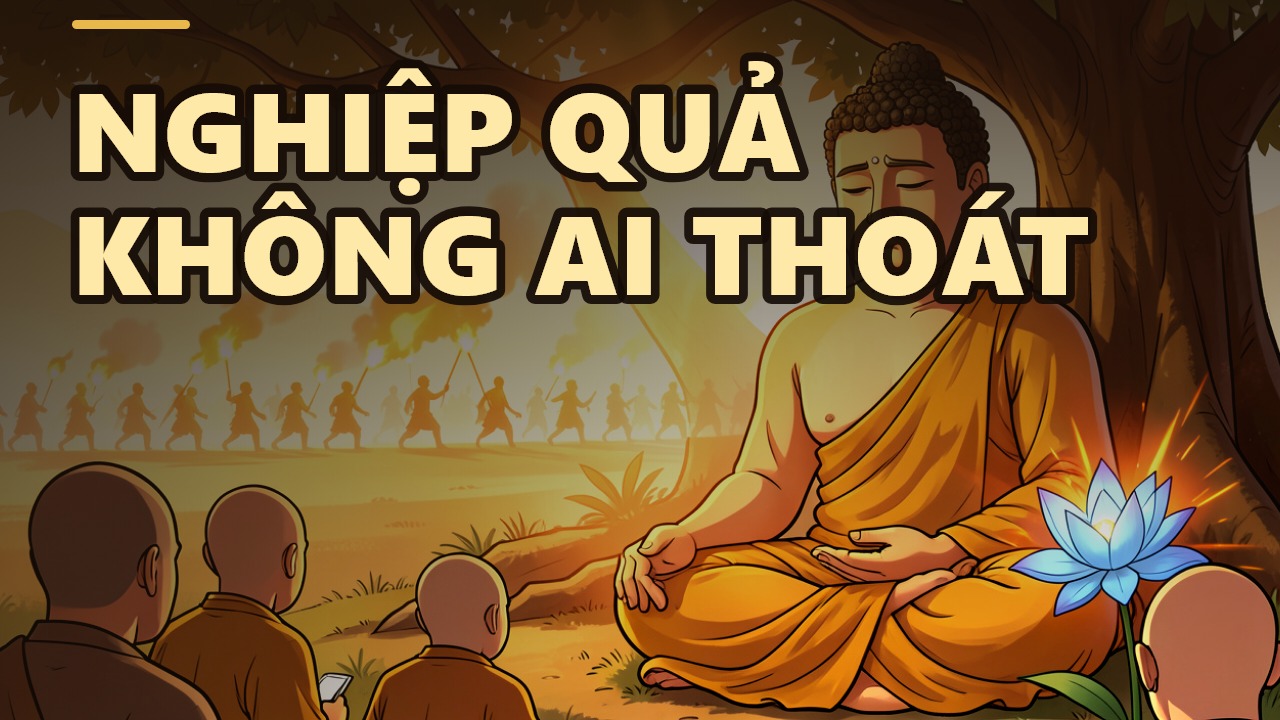
Have you ever wondered why the Buddha—a being of miraculous powers and boundless wisdom—could not save his own clan from the tragedy of annihilation? This is not merely a historical question, but a profound lesson about cause and effect (karmic law), the arrogance of the heart, and the serenity of one who has attained enlightenment. In a dharma talk on the Nikaya sutras, Venerable Thich Chan Quang recounted this heartbreaking and deeply meaningful story.
The Origin: A Lie from a Thousand Years Ago
The kingdom of Kosala and the Shakya tribe were two lineages with close ties. King Prasenajit, out of his admiration for the Buddha, wished to form a marriage alliance with the Shakya clan. But the clan considered itself nobler than kings, and so they deceived the monarch. They took a beautiful slave girl, dressed her up as a princess, and sent her off as a bride. That lie seemed to fade into the past, yet it quietly planted the seeds of resentment. The son of the slave girl—Prince Virudhaka—later discovered the truth, and out of humiliation, his heart filled with hatred. Venerable Chan Quang observed:
The seed was sown long ago, decades before, and decades later it grew into a catastrophe.
Arrogance: The Silent Killer
The deep root of the tragedy was not merely the lie, but the arrogant heart of the Shakya clan. They looked down on King Prasenajit, believing their lineage to be more noble than others. That arrogance turned into acts of contempt and deception, which in turn drew in the karma of killing. Venerable Chan Quang analyzed:
We see that the karma of killing ripened through the conditions of an arrogant heart.
In modern life, we also see many people who are proud and conceited, looking down on others because of wealth, education, or status. They fail to realize that every scornful word, every disrespectful act, can become a seed of hatred. When disaster strikes, they wonder why. But in truth, they have sown the wind, and in the end they reap the storm.
How Did the Buddha Face Cause and Effect?
Knowing in advance that the catastrophe was coming, the Buddha went again and again to block King Virudhaka's path. Through the power of his virtue, Virudhaka was forced to retreat. But the karmic law had fully ripened, and Virudhaka found another route to attack, ultimately slaughtering the entire Shakya clan. Strangely, after the tragedy occurred, the Buddha remained as calm as if nothing had happened. Venerable Chan Quang described:
He was just as usual—going on his daily alms round, sitting in meditation, teaching the Dharma—as though nothing had happened.
The Buddha did everything within his power. When he could not change the karma, he accepted it with serenity and compassion. This was not indifference, but wisdom—understanding that every action bears its fruit, and that beings wandering in karma are simply so. From him we learn: when nothing more can be done, we should practice letting go so that the mind may be at peace.
A Practical Lesson for Us Today
The story of the Shakya clan reminds us of a great lesson: live humbly, speak truthfully, and never look down on others. Every word of contempt, every act of pride we commit today may become the seed of tomorrow's disaster. At the same time, when facing adversity, let us remember the Buddha's serenity. He experienced the heights of glory as well as the cruelest persecution, yet he continued walking the path of awakening. Let us bring that same mind into our lives: in glory, no complacency; in hardship, no fear.
Each of us carries a "Shakya clan" within—our attachments and arrogance. When we learn to open our hearts and practice letting go of the self, we can avoid tragedy and live in peace and joy. May all beings learn this lesson, so that life holds less hatred and more love.
AI-assisted translation from the Vietnamese original.
Read in Vietnamese →