
Why Did the Buddha Teach, "Be an Island Unto Yourself"?
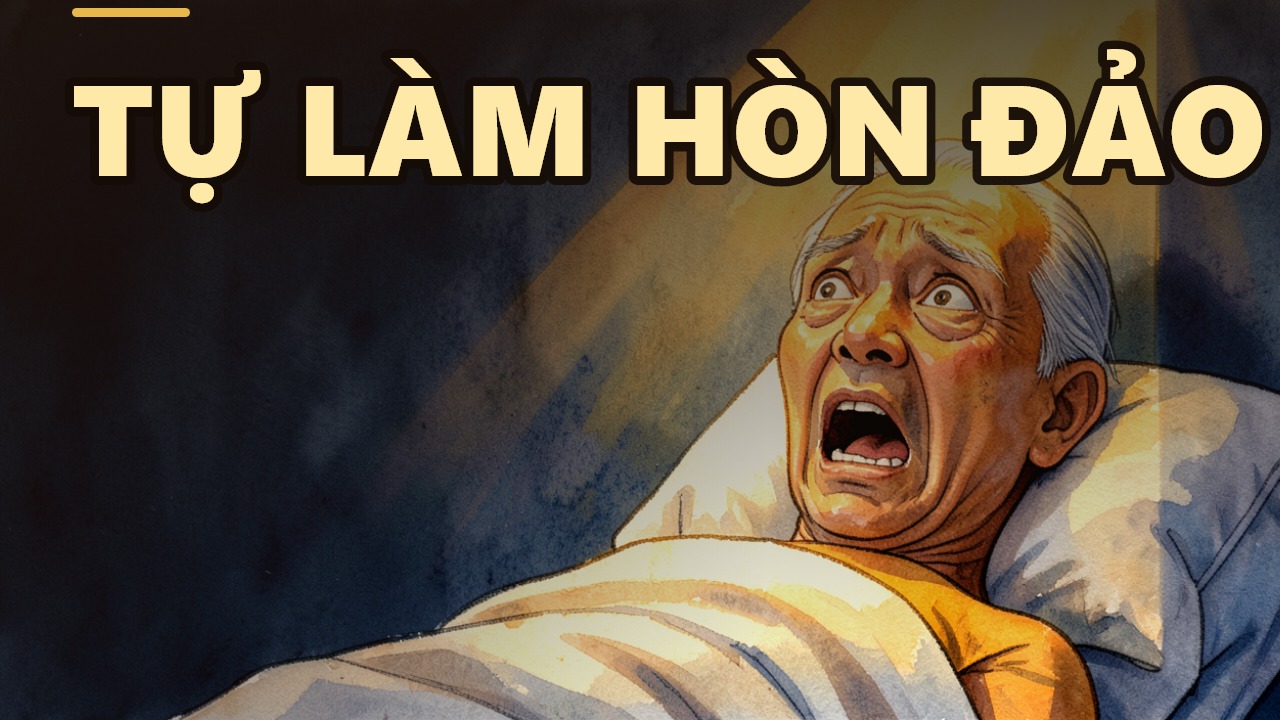
This article recounts the story of a butcher and the Buddha’s teaching: be an island for yourself, create your own blessings, and keep your mind pure so that you face death without regret. Do you believe that a person who spends their life slaughtering cows will die with a bellow like a cow? It may sound like a curse, but the Buddha used this very story to teach us a profound lesson about self-reliance and the value of spiritual preparation. Today, let us listen to the dharma talk by Venerable Thich Chan Quang to understand why the Buddha said, "Be an island unto yourself."
### The Story of the Butcher and His Final Bellow
Long ago, there was a man who spent his entire life as a butcher. He ate only the finest cuts of beef and always saved a special piece for himself. One day, a close friend unexpectedly came to ask for that reserved piece because he had important guests waiting. The butcher flew into a rage. He dragged a living cow into its pen and cut out its tongue while it was still alive, then ate it. Immediately after finishing the meal, his own tongue fell off. Blood gushed forth uncontrollably, and he died screaming like a cow in terrible agony.
His son witnessed this horrific death. Terrified, he fled to the city of Pataliputra to learn jewelry making. He became successful in life, and eventually, his children returned to Shravasti to follow the Buddha. When their father grew old and frail, they invited the Buddha to their home to make offerings and pray for his well-being.
### The Buddha Visits the Dying Old Man
When the Buddha arrived, He looked at the old man and said that he was like a yellowing leaf about to fall. The gates of death were wide open toward the realm of Yama, the lord of death. Yet, throughout his life, he had prepared no spiritual baggage to take with him. Therefore, the Buddha taught:
"Be an island of clarity and diligence. Quickly guard your pure heart to return among the devas."
Venerable Thich Chan Quang explains that this is a warning for all of us. While children making offerings to the Sangha generate merit, those blessings cannot replace one’s own personal practice. Each person must build their own island.
### Be an Island – Do Not Rely on Others’ Merit
Venerable Chan Quang emphasizes:
"Each person must be an island for themselves. Truly, whoever creates merit enjoys it; whoever practices attains realization."
People often hope their children will perform good deeds and dedicate the merit to their parents. However, in this story, the Buddha did not praise the offering. Instead, He rebuked the old man for having never practiced during his lifetime. This shows that we cannot live dependent on others, even our closest relatives. Our own island must be built through our actions, speech, and thoughts every single day.
### Blessings and Freedom – An Unexpected Connection
In the dharma talk, Venerable Chan Quang also points out the correlation between blessings from merit and freedom:
"Blessings and freedom are directly proportional. Those with great merit enjoy much freedom. Those with little merit have no freedom."
If we live without accumulating wholesome merit, we remain bound by karma and circumstances. But when we practice and cultivate merit, our minds become light and free, like a solid island amidst storms. This is why we need diligence—practicing earnestly and maintaining a pure mind in all situations.
### Transforming the Karma of Killing and Living in Peace
Venerable Chan Quang reminds us that eating animal flesh creates heavy karma of killing, which covers the earth and leads to war, natural disasters, and epidemics. He states:
"The world has too many people consuming animals excessively, creating a massive karma of slaughter that obscures the entire earth."
Therefore, for the sake of global peace, we should encourage one another to eat vegetarian food and live virtuously. This is how we protect the environment, ourselves, and all sentient beings.
### What Should We Do Starting Today?
Begin with small steps: set aside time to listen to the Dharma, recite sutras, practice meditative concentration, and adopt a vegetarian diet. Every day, remind yourself to live with mindfulness, preventing the mind from chasing desires or harboring resentment. Build your own island with positive energy, compassion, and wisdom.
Do not wait until the moment of death to feel regret. Life is short, but if we know how to practice, we can turn it into a meaningful journey, transcending all suffering.
Be an island of clarity and diligence. This is the Buddha’s message, and it is also Venerable Thich Chan Quang’s reminder for each of us today.
AI-assisted translation from the Vietnamese original.
Read in Vietnamese →