
Why Is "Life Is a Sea of Suffering" the First Enlightenment?
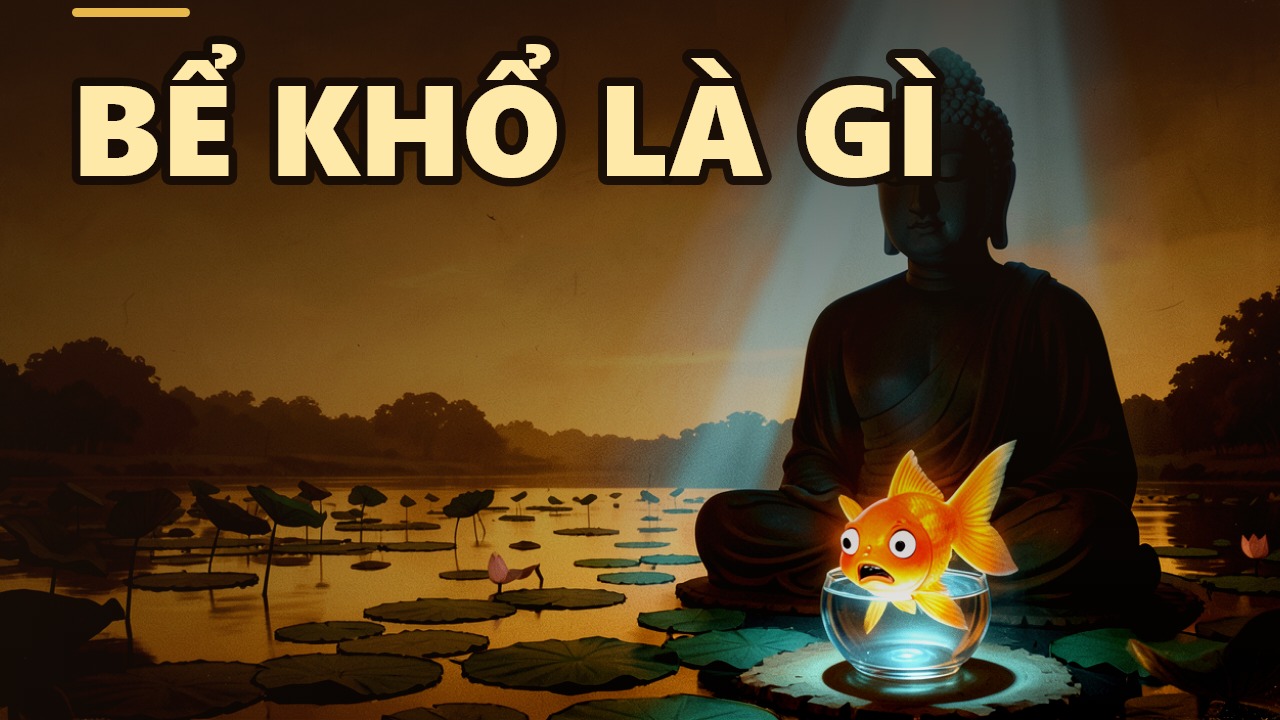
Have you ever sat amidst the busy flow of life, suddenly feeling your heart heavy with an unnamed sorrow? We often hear that life is a sea of suffering (dukkha), yet we sometimes feel happy: we have money, praise, and love. So what is this "sea of suffering" really? And if we do not fully understand this saying, are we practicing correctly?
## The Perspective of the Noble Ones
Venerable Thich Chan Quang begins with a simple question: "When we come to the temple, why do we come? To practice, right? But why do we come to practice? Because we understand one thing: life is a sea of suffering." However, he frankly points out that many people hear this but only grasp it vaguely, without deep realization. Why? Because we stand from the perspective of beings living within life, unable to see our full condition. Only when we transcend this condition and look down like a noble one can we see the whole picture clearly.
"Only those who realize that life is too painful will exert themselves in practice. If we see life as only slightly painful, how will we practice? We will only practice slightly."
He offers a vivid example: a fish in a pond struggles all day for food, facing competition and being driven away. From the outside, we see the fish’s life as entirely painful. But if asked, the fish would say, "There are times of joy and times of pain." This is because the fish does not see its full condition; it has become accustomed to its own suffering. Humans are the same. Having lived in the sea of suffering for so long, we become numb to our pain, failing to recognize that it is far deeper and heavier than we imagine. What we consider pleasure—luxury cars, delicious food, romance—is seen by the noble ones as mere trash, temporary and clumsy distractions.
## Four Sources of Pain
The teacher identifies four sources of suffering throughout his talk. The first is circumstances: poverty, failure in work, being despised, or even having an unattractive appearance. The second is the body: pains from touch during collisions, accidents, and illness. Our body itself is a nest of suffering.
"The entire body is a waiting suffering. Sitting for a while brings fatigue, numbness, aches, and various discomforts."
The third is concepts. He emphasizes: "Heaven and earth did not say these things; we invented them ourselves." We create rules such as needing a son, needing wealth, needing trendy hair dye, or needing to marry at the right age, then torment ourselves with these notions. The fourth, and most profound, is inner turmoil and anxiety. This is the root of all suffering. As he teaches: "A rich person also cries if their mind is anxious, while a poor person may be happy because their mind is peaceful."
## Correct Understanding Leads to True Practice
The teacher instructs that when we come to the temple, if our intention is to seek enlightenment and liberation, we are truly "children of the Buddha." But if we come only to pray for successful business, passing exams, or healing from illness, the Buddha still loves us, but we have not entered the core of the path. Therefore, starting now, let us reflect on ourselves: With what motivation do we come to the temple?
"What the Buddha desires most from us is that we come here seeking enlightenment. When we arrive, we must clearly realize one thing: life is a sea of suffering."
Let us begin by practicing awareness of suffering, not to become pessimistic, but to clarify wisdom. By understanding where pain comes from, we will know how to overcome it. Today, when stepping into the temple, before every sutra chant, ask yourself: "Am I seeking enlightenment, or am I merely begging for trivial things?" Only when we are clearly aware of this do we step onto the path of liberation.
AI-assisted translation from the Vietnamese original.
Read in Vietnamese →