
Why Does Buddhism Need to 'Plow the Soul'? Lessons from Thầy Chân Quang on Reform
Temples are emptying of young people because mere chanting is not enough. Thầy Chân Quang points to meditative concentration and the fourfold community practicing together as the path of reform.
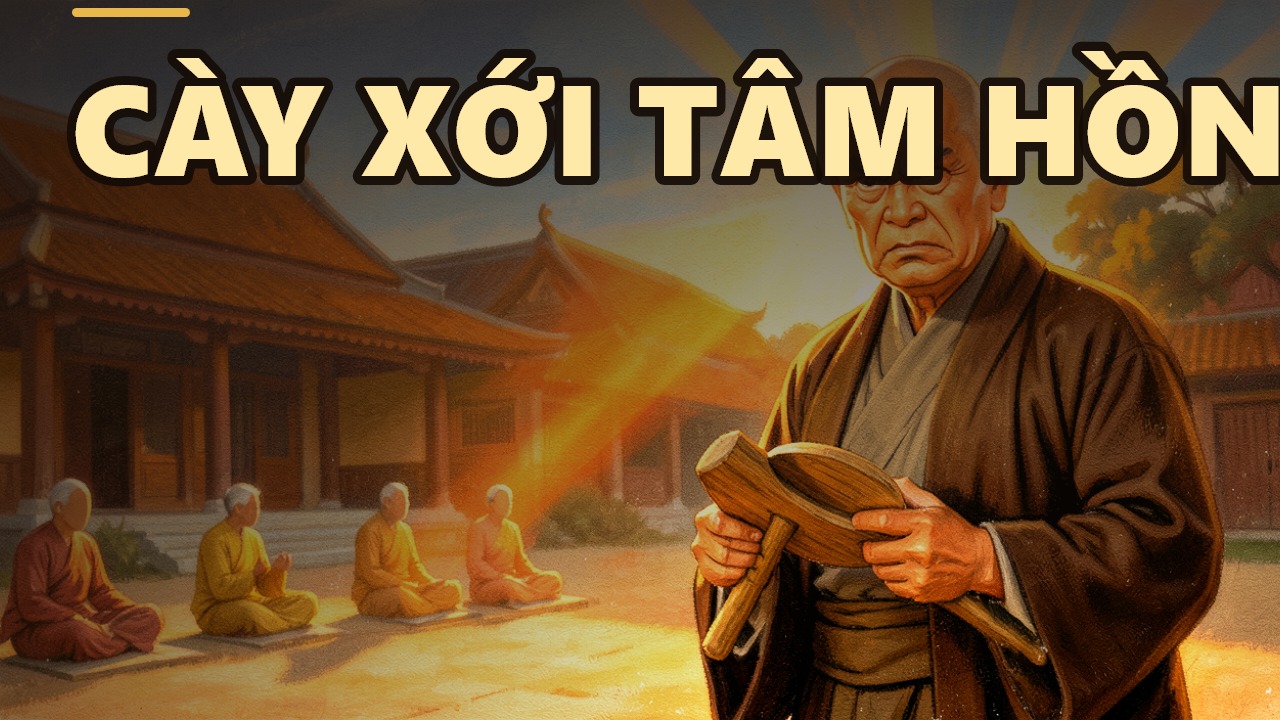
In a recent sharing session, Thầy Thích Chân Quang posed a question that struck directly at the state of modern Buddhism: "Last night when you went home, did you sit in meditation? Many people say they like it, but do they truly like it?" That question leads us into a larger issue: are we practicing on the path the Buddha taught, or are we merely chasing empty rituals?
Signs of Buddhism's Decline Today
Thầy Chân Quang acknowledges that in recent centuries, Buddhism has shifted toward Pure Land practice. The rituals and chanting all revolve around faith in the Western Pure Land, but this no longer seems to attract the younger generation. He said:
"Then the temples no longer have young people coming. Most temples are just women and the elderly. Do you see that this is true?"
While young people leave the temples for churches, with their modern music and lively gatherings, Buddhism continues to be conservative, stubbornly holding on to old ways. This is a crisis that must be faced squarely.
The Trap of Slogans: Chanting Without Practicing
Thầy Chân Quang strongly criticizes the habit of treating chanting as the goal of practice. The sutras we recite can be read in a droning voice, but they fail to transform the soul. He said:
"Our chanting rituals, let me say it plainly, are just shouting nice slogans without transforming the soul."
We chant sutras vowing to liberate all beings, but then we close the sutra, go to sleep, and do nothing at all. Between the ideal floating in the clouds and the reality of zero action lies this very gap. It is this false sense of satisfaction that robs practitioners of the motivation to act.
Meditative Concentration: The Plow of Wisdom That Turns the Soul
The Buddha compared practice to plowing a field. When a landowner mocked him as a "freeloader," the Buddha replied:
"The Tathagata has a field, and that field is the soul. The Tathagata has a plow of wisdom to turn over that soil, to flip up all the weeds... The Tathagata has an ox, which is the strength of diligent effort, pulling that plow of wisdom along."
Thầy Chân Quang explains that this plow of wisdom is meditative concentration. When we chant sutras, it is like placing a painting over a field full of thorns to hide it. But meditative concentration plows deep down to the roots, uncovering and transforming our negative instincts. Meditative concentration is the main path; only it can elevate the spirit to sublime heights.
The Fourfold Community Practicing Together: How to Practice So That All Buddhists Can Join In
Thầy recalls the four verses from the sutra:
"How joyful that the Buddha has appeared in the world. How joyful that the Dharma shines forth. How joyful that the Sangha lives in harmony. How joyful that the fourfold community practices together."
Thầy explains that the "fourfold community" consists of monks, nuns, laymen, and laywomen. If the monks chant in ancient language that lay Buddhists cannot understand, that is not practicing together. If the monks can sit in meditation but the lay Buddhists cannot, that is also not practicing together. In ceremonies, monastics and laypeople must chant and practice in the same way. Only then can it be called the fourfold community practicing together.
Thầy tells of a ceremony held at Phật Quang temple, where lay Buddhists were given copies of the sutra to chant along. They felt uplifted and moved. That is precisely the meaning of "practicing together."
Reform from the Roots: Caring for Every Generation of Buddhists
Thầy believes that for Buddhism to flourish, beyond plowing the inner landscape, reform is needed in many areas. He speaks of the need to offer care from the time a child is still in the mother's womb:
"Whenever I see a Buddhist with a pregnant belly, I go to them. I ask them to sit down, and I give a blessing... wishing for a safe mother and healthy child, wishing for this little one to carry the seed of the Buddha's teachings (Dharma) in their soul."
Thầy emphasizes that every Buddhist is a point of connection for teaching an entire family. We must care for people thoroughly, letting no one fall out of the network. From children to young adults to the elderly, each age group needs a method of practice suited to them. Do not wait until someone has died before coming to chant sutras for the departed.
The lesson from Thầy Chân Quang is not meant only for monks and nuns, but for all of us. May every Buddhist begin to sit in meditation each day, so that the soul may be plowed and wisdom may blossom. Let us together create a community of the fourfold community practicing together, where everyone practices, transforms, and spreads the Buddha's teachings (Dharma) far and wide. Let Buddhism no longer be the religion of the elderly, but the path of every generation, of every heart longing for enlightenment.
AI-assisted translation from the Vietnamese original.
Read in Vietnamese →