
Why Did the Patriarchs Teach 'Dual Practice of Chan and Pure Land'? A Story of Unity in Buddhism
This article explores the origin and meaning of the dual practice of Chan and Pure Land through a dharma talk by Venerable Thích Chân Quang, and how to apply it in modern life.
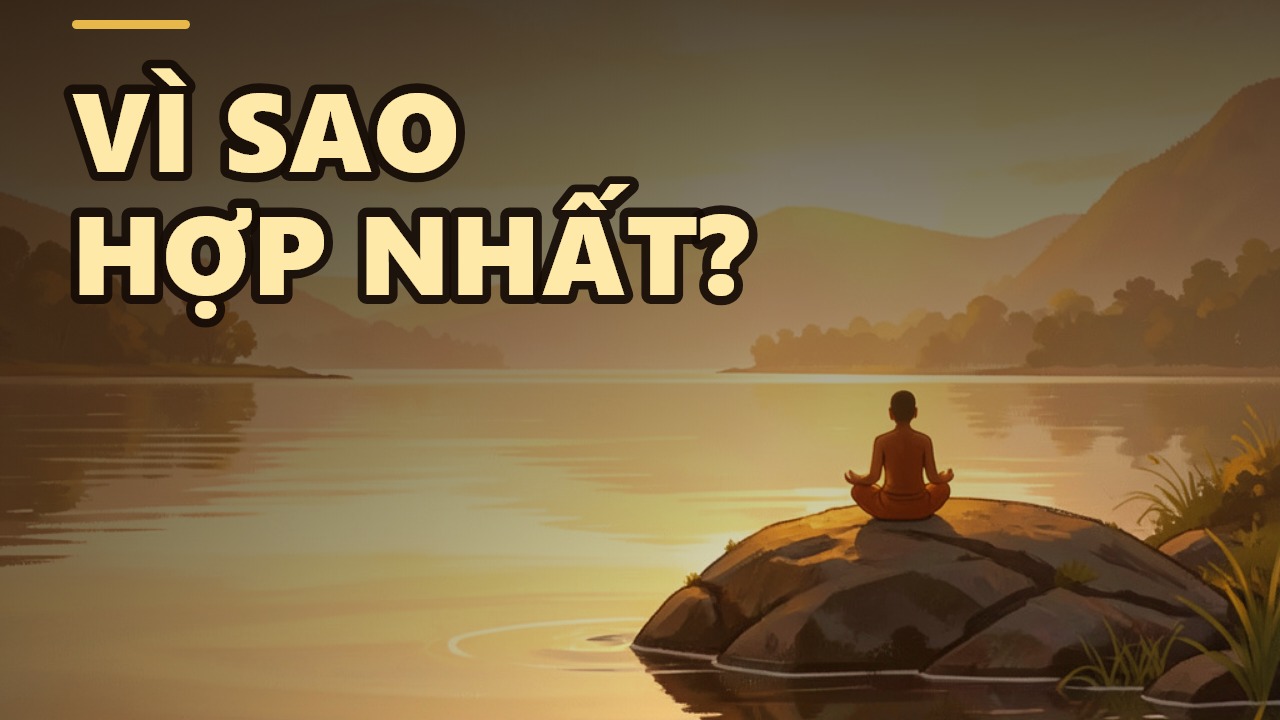
Have you ever wondered why in Vietnamese temples, the early morning chanting session recites the Shurangama Sutra, while the evening session recites the Amitabha Sutra? And why do we both sit in meditation and recite the Buddha's name? These may seem like two different methods, but in fact the great masters deliberately placed them side by side, creating a complete path of practice: the dual practice of Chan and Pure Land.
The Origin of a Wondrous Combination
The story begins in Phú Yên, where an orphaned boy who lost his mother at age six and his father at age twenty-one made his way to the Buddha's gate in search of enlightenment. He was Patriarch Liễu Quán. The Patriarch was an enlightened meditation master, yet when we look at the flow of Vietnamese Buddhism today, we see that most daily practice leans toward Pure Land: reciting the Buddha's name, chanting sutras, and making offerings. This shift surprises us. In his dharma talk, Venerable Thích Chân Quang raised the question: "The Patriarch was an enlightened meditation master. Yet we today practice only Pure Land..." He explained that this came about through the influence of Meditation Master Ngọc Lâm Quốc Sư, who compiled the liturgy for the two daily chanting sessions, weaving together three schools: Chan, Pure Land, and Esoteric Buddhism. Thanks to this, reciting the Shurangama in the morning and Amitabha in the evening became a tradition, marking the blending of Chan and Pure Land in daily practice.
A Picture of Two Streams: Chan and Pure Land
The Chan school and the Pure Land school may sound opposed to each other. One side teaches "pointing directly to the mind, seeing one's nature and becoming Buddha" — a path of wisdom that transcends written words. The other side teaches "single-minded recitation of the Buddha's name, rebirth in the Land of Ultimate Bliss" — a path of faith and devotion relying on other-power. Yet the patriarchs recognized that the two complete each other. Those who love stillness may practice meditation. Those who are busy need reciting the Buddha's name to keep the mind at peace. Pure Land is easy to practice, but not everyone can devote themselves to it fully. That is precisely why the great masters skillfully built a bridge between the two streams.
Why Do We Need Dual Practice of Chan and Pure Land?
In his dharma talk, Venerable Thích Chân Quang emphasized: "The masters wanted to blend Chan and Pure Land so that Buddhism would have less division, and so they initiated what is called the dual practice of Chan and Pure Land." This unity keeps practitioners from being trapped in a rigid mold. Meditators can become dry if they lack compassion, joy and equanimity; Pure Land practitioners can waver if they lack mindfulness. When combined, we can sit in meditation to contemplate the mind while reciting the Buddha's name to nurture faith, all while keeping the shared life of the temple and the community alive and vibrant.
"The Chan school is meant for those of keen, superior faculties who attain enlightenment. The Pure Land school is meant for more ordinary people. The patriarchs discovered that, in the end, only those of superior faculties truly devote themselves to reciting the Buddha's name."
Indeed, every one of us has moments of being busy with work and family; but if we know how to combine the two, we will find a wonderful balance.
Dual Practice of Chan and Pure Land in Modern Life
You do not need to enter a temple to practice. Each morning upon waking, spend five minutes sitting quietly, observing your breath, then gently recite "Homage to Amitabha Buddha." In the afternoon, while walking along the road, you can recite silently in your heart, letting the Buddha's name fill the meaningless gaps of the day. A mother at home can recite the Buddha's name while washing vegetables, working while keeping mindfulness. A worker can practice at the machine, breathing more evenly, feeling lighter in the heart. This is the very spirit of Chan and Pure Land dual practice, never separate from daily life.
The Benefits of Unity
This combination helps us go further on the path of liberation. Meditation brings wakefulness, stability, and wisdom; Pure Land brings faith, gratitude, and harmony. In a stressful society, when the mind is no longer scattered, practice becomes easier. For this reason, the teaching of the patriarchs is not merely a religious principle, but a living lesson to practice each day.
"This method is easy to practice. Ordinary people, anyone, can practice it."
But did you know that easy to practice does not mean easy to master? It is precisely through the support of meditative concentration that the recitation of the Buddha's name becomes deep and steady. We need both.
Conclusion
Like a small stream flowing into the great ocean, Chan and Pure Land flow in the same direction, toward enlightenment. Try beginning your day with five minutes of quiet meditation, then let the recitation of the Buddha's name arise in your heart as you work. You will feel the difference — not in the outward form, but in your very soul. May you be at peace with every breath.
AI-assisted translation from the Vietnamese original.
Read in Vietnamese →