
Why in Ten Years, People Will Ask You If You Practice Meditative Concentration
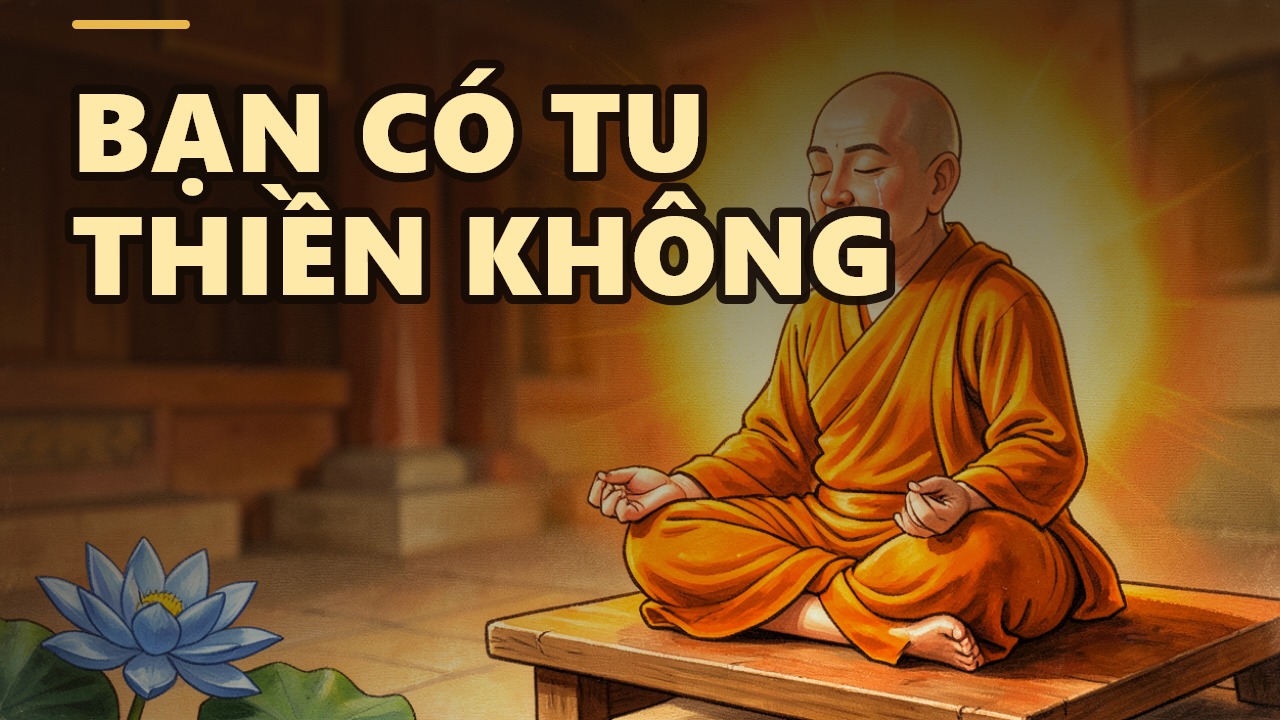
**Summary:** A dharma talk by Most Venerable Thích Chân Quang envisions a spiritual era where meditative concentration becomes a measure of civilization and the path to verifying the Buddha's teachings.
Imagine it is ten years from now. When you meet a stranger, what will you ask them? Today, we often inquire about money, jobs, or foreign languages. But according to Most Venerable Thích Chân Quang, in the near future, the most important question will be: "Do you practice meditative concentration?" This will be a hallmark of people in a new era of civilization.
**Meditative Concentration: A Gift for All Religions**
Today, intellectuals worldwide are rushing to study meditative concentration. They realize it opens a spiritual path that elevates humanity to new heights. Master Thích Chân Quang shares:
Meditative concentration does not belong exclusively to Buddhism. That mind of emptiness, that pure mind without thoughts... it benefits all of us, whether we follow a religion or not.
Meditative concentration is like a gentle rain that nourishes every kind of tree. Whether you follow a particular religion or none at all, it still brings peace, awakening, and profound happiness. Therefore, every one of us can practice and receive its benefits.
**A New Era: Those Who Do Not Practice Are Left Behind**
Master Thích Chân Quang makes a bold prediction: in ten to twenty years, people will judge one another based on whether they practice meditative concentration. Someone who does not know how to sit in meditation will feel out of place meeting international peers. He says:
The coming era will judge a person as civilized or not based on whether they practice meditative concentration.
To embrace this new standard of civilization, we should begin diligently practicing now. Let us not wait until others ask and we have to shake our heads in embarrassment.
**Meditation Is Truly Difficult, But True Happiness Is Priceless**
Meditation is not easy. The Master states plainly:
Meditation is not easy. For if it were, it would not have the power to elevate humanity to a new height.
The elderly find it hard to sit due to leg pain, while the young struggle to focus because their minds are not yet settled. However, if we persevere through the initial restlessness, we will attain a wonderful tranquility. Then, worldly pleasures become insignificant, and true happiness unfolds. He describes:
That peace of mind is the great happiness that transcends all others. You know it immediately without needing anyone to explain or compare.
**Meditation Verifies the Buddha's Teachings**
We may listen to many teachings and study many sutras, but without practicing meditative concentration, our understanding remains theoretical. The Master believes only through meditation can we truly experience the Buddha's words:
We must use meditative concentration to verify the principles we have learned from the Buddha.
For example, the Buddha teaches us not to harbor anger. We understand that anger burns away merit, but when someone scolds us, we still feel resentment. Only when we enter deep meditative concentration, aided by mindfulness and clear awareness, can we uproot the seed of anger. Then, living in a world full of hatred, we remain as serene as the open sky.
Similarly, the compassion taught by the Buddha becomes our living essence when the mind is spacious and selfishness vanishes. We give without tallying the deed or feeling pain.
**The Perfection of Generosity: The Right View**
The Master shares a brief story about his own misunderstanding of the perfection of generosity. He gave all his money to the first child he saw, making the second child angry. A true practitioner of the Buddha's way follows the middle way, avoiding extremes. Generosity is not about giving everything away, but about giving to the right person, at the right time, in the right amount, and forgetting the good deed.
Meditative concentration grants the clarity to practice generosity in this way. It all springs from a tranquil mind, free from expectation and attachment.
Therefore, begin sitting in meditation today. Even if you know nothing yet, with just a little effort and patience, you are stepping onto the civilized path of spirituality. So that in ten years, when someone asks, "Do you practice meditative concentration?", you can smile with confidence and answer, "Yes, I do."
AI-assisted translation from the Vietnamese original.
Read in Vietnamese →