
Why Do We Have Joy? – The True Source of Happiness
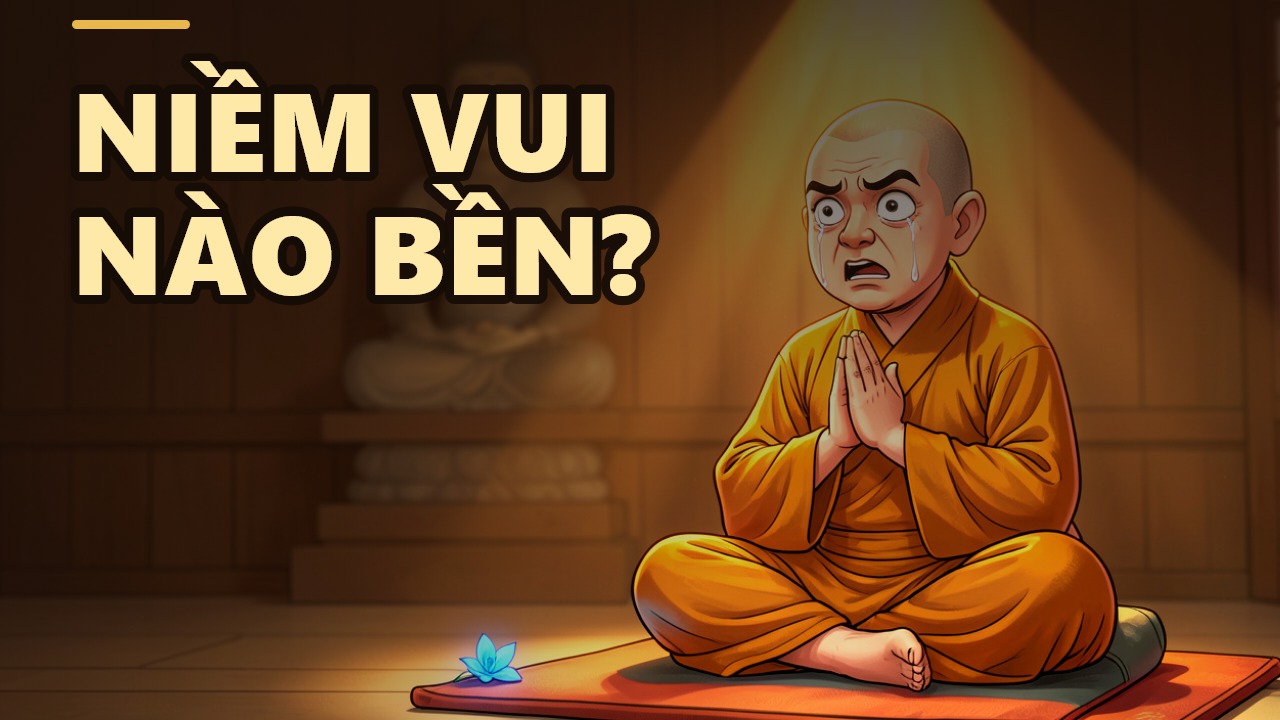
Each of us seeks joy. Yet some have chosen the wrong kind, pouring their life’s energy into it only to end up empty-handed. Where does true happiness come from? In a dharma talk given at the beginning of spring at Phat Quang Pagoda, Venerable Thich Chan Quang guided us in contemplating the question: “Why do we have joy?” It seems simple, but it opens many lessons on moral conduct.
### Joy from Luck – Unstable and Harmful to the Soul
When we win the lottery or find a lost wallet, we feel immense happiness. This is the joy of luck. Venerable Chan Quang defines it as gaining much without expending effort. Because it requires no work, we rejoice. However, if we constantly wait for such gifts to fall from the sky, we fall into feelings of injustice, superstition, and moral decay. He reminds us that this type of joy is not beneficial. Where does such luck come from? In truth, it arises because we made offerings and cultivated blessings in past lives.
Thus, luck is actually the result of good causes we planted long ago. But if we do not understand this and merely rely on chance, it drags us into the mud of greed and pettiness. We must remain mindful of unexpected “luck” so that we do not lose our integrity.
### Joy from Being Loved – The Root Must Be Loving Others First
Being loved by parents, teachers, friends, or a romantic partner brings great joy. But why are some people widely loved while others remain lonely? The teacher explains that the root cause of being loved is loving others first. When we ask, “How can I be loved by others?” we are asking the wrong question. Instead, we should ask, “How can I learn to love everyone?”
Receiving love is joyful, but if we use tricks, appearance, or sweet words to attract affection, we are focusing only on the branches, not the roots. The teacher points out that cosmetic procedures or manipulative tactics are all attempts to draw love toward oneself. Yet these methods are not lasting; they are not the foundation. The true root is offering love to others first.
When we practice compassion and love unconditionally, we gradually accumulate merit and conditions that allow us to be loved. This joy becomes pure, free from vanity or arrogance.
### Joy from Success – Legitimate but Vulnerable to Past Karma
Working hard, enduring difficulties, and achieving results is a very genuine form of joy. A farmer who tends his pepper garden for five years weeps with happiness when the fruit finally appears. Parents rejoice deeply when they see their children succeed. Similarly, practitioners experience supreme joy when their mind awakens after years of cultivation. The teacher affirms that suffering through hardship to achieve expected results is fair and just.
However, effort does not always yield proportional rewards because past negative karma may disrupt our outcomes. Therefore, we should appreciate what we have achieved but avoid clinging to it, as the laws of samsara (cycle of rebirth) are unpredictable. True joy comes from a mind free of craving and resentment.
### Joy from Art – Requires Mindfulness to Avoid Mixing with Desire
Listening to beautiful music, viewing art, or watching films brings pleasure. But the teacher warns of a dangerous confusion: the human body is closely linked to sexual desire and physical sensation. Consequently, when appreciating nude paintings or photographs, one’s emotions can easily mix with lust, staining the mind.
If we can separate pure artistic beauty from sensual desire, we enjoy a noble happiness. Otherwise, we fall into suffering. We are encouraged to view art as a masterpiece, keeping the mind undisturbed by impure emotions.
### True Happiness: Living in Mindfulness, Practice, and Love
Ultimately, the greatest joy arises when the mind is peaceful and filled with meditative concentration. When the light of mindfulness and concentration permeates our natural living, the heart remains clear and luminous. There is no greater happiness than this. It is not noisy or fleeting, but an inner peace built upon cause and effect (karmic law) and love.
### Practicing to Find True Joy
Pause each day and look within. Instead of chasing luck, cultivate merit so that blessings arise naturally. Instead of seeking love, give love first. Instead of rushing to celebrate success, remember impermanence (anicca); only compassion is a lasting possession. Instead of indulging in pleasures that lead to downfall, find joy in mindfulness.
In the spring days, listening to the Dharma and reflecting, we plant good seeds for future lives. May each of us find true joy in our hearts and spread that happiness to those around us.
AI-assisted translation from the Vietnamese original.
Read in Vietnamese →