
Dreams and Karmic Law: What Are You Planting for Your Next Life?
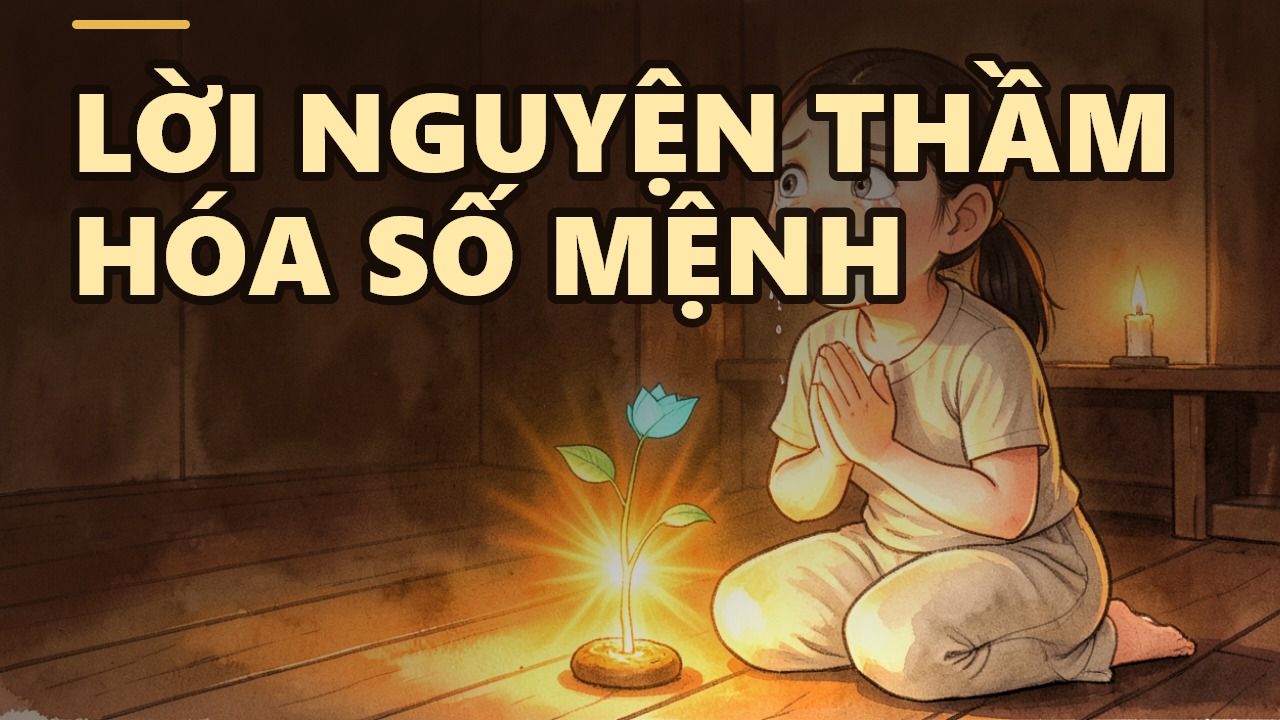
**SUMMARY:** This article helps you recognize that every dream plants a seed of karmic law, guiding you to choose noble aspirations to transform your present life and future rebirths.
Every time the Lunar New Year arrives, people eagerly flock to pagodas. Many stay awake through the night to reach the temples by the sacred hour of midnight, dedicating the most solemn moment of the year to the Buddha. Yet, there is a profound truth often overlooked: while we pray for peace and prosperity, the silent dreams whispering within our hearts are precisely the map charting our destiny.
**Visiting the Pagoda at the Year's Start: A Moral Act**
In a spring Dharma talk, Master Thích Chân Quang posed a question: Why, at the beginning of a new year, do we seek our spiritual roots and find refuge with the Buddha? He explained this holds a deep moral significance. When we devote our most precious time to the Buddha, we are directing our hearts toward goodness, and this very act generates blessings for the new year.
"In that very moment we consider the most sacred and precious of the entire year, we offer that time to the Buddha, making offerings, and turning our hearts toward him. This is the meaning of morality, of principle."
The Master shared a story of a lay follower with a small business who, upon visiting the pagoda that year, offered all the money in their pocket, though it was not much. By year's end, they were surprised to realize it had been their luckiest year. The Master emphasized he told this story not to encourage giving large sums, but to highlight: "The cause and effect (karmic law) resides within." The blessings from merit came not from the amount of money, but from the sincerity of the heart.
**Dreams Reflect Our Character**
Master Chân Quang has a striking saying: "Show me what you dream of, and I will tell you what kind of person you are." He gave examples: someone who dreams of eating dog meat is immediately seen as cruel, while someone dreaming of winning the jackpot is seen as greedy for money. Of course, everyone has the right to dream, but the crucial point is that our dreams reflect the quality and inclinations of our mind and heart.
**Dreams Plant Karmic Seeds, Not to Be Taken Lightly**
Beyond reflecting our nature, dreams also plant seeds of karma. The Master warned against reading news and giving rise to the thought, "I wish this criminal would be executed"—with just a moment of such judgment, one plants the cause to become an executioner in a future life. Conversely, when reading about a struggling family, if we think, "I wish I had money to help them," we are planting the seed to become a wealthy person in the future.
"What we dream of, its consequence follows that path. So here we must be careful and wise in weaving our dreams during the first days of the new year, for the coming year and for our entire life."
He told the story of someone who read about others' suffering, couldn't help but was deeply troubled, and so shared 50,000 dong with someone in need. That small action was a dream beginning to manifest into reality. In the "ledger" of karmic law, that person's name was inscribed among those who would have resources.
**When Old Age Arrives, Do Dreams Fade?**
Typically, older people dream less, knowing they have fewer opportunities to realize them. But for those with faith in Buddhism, death is not the final boundary. The Master said:
"After death, we still have so much to face. There are the realms of hell, hungry ghosts, and animals, threatening to seize us if our life was filled with wrongdoing. Or, there are heavenly realms awaiting us if, in this life, we cultivated much goodness."
Therefore, a Buddhist never stops dreaming. They dream for their next life, dreaming of an endless journey. Because of this, they never truly age. As the Master said: "The young are those with many dreams; the old are those whose dreams have withered." When we still hold dreams for lives beyond, we remain in the springtime of our spirit.
**Choose Noble Dreams for Yourself**
One who understands the Dharma gradually finds mundane dreams lose their appeal. They aspire to ambitions that benefit many beings. The Master offered an example: "I wish to become a president, to sign a decree requiring all schools to teach the law of cause and effect to students." Just one dream like this is enough to plant a magnificent seed, and karmic law will guide the way for that day to come.
And even higher, when we see beings suffering because of a turbulent mind, we dream of learning meditative concentration and practice letting go to find peace. The Master said:
"I wish that people could know meditative concentration, that each day they could sit in meditation, calming the mind in stillness, and recognize and let go of wandering thoughts."
These are dreams that enrich the soul and draw us closer to enlightenment.
**Weave Your Dreams as a Child of the Buddha**
Start with small dreams: the dream to help others, the dream to keep your mind pure. Each time a good thought arises, you are planting a wholesome seed. Do not underestimate simple dreams, for they are the force that propels us beyond death to continue our journey.
Dream for yourself: to become a person of compassion and wisdom. Dream for others: for all people to understand karmic law and know meditative concentration. Dream for all beings: for all to be free from suffering.
Remember the Master's words: "When we understand cause, effect, and karmic retribution, when we understand there are many future lives awaiting us, our dreams begin to awaken. We are no longer limited or stopped by death in our thinking, but begin to see beyond death, to continue dreaming."
So, this new year, what will you dream of? Choose for yourself a beautiful aspiration, a dream that can plant conditions of goodness for countless lifetimes. Because your dream today is the future you are walking toward.
AI-assisted translation from the Vietnamese original.
Read in Vietnamese →