
UFO and the Two Crossroads of Human Civilization
A dharma talk by Venerable Thích Chân Quang opens a broader view of the universe and the two paths humanity now faces: self-destruction, or becoming a paradise.
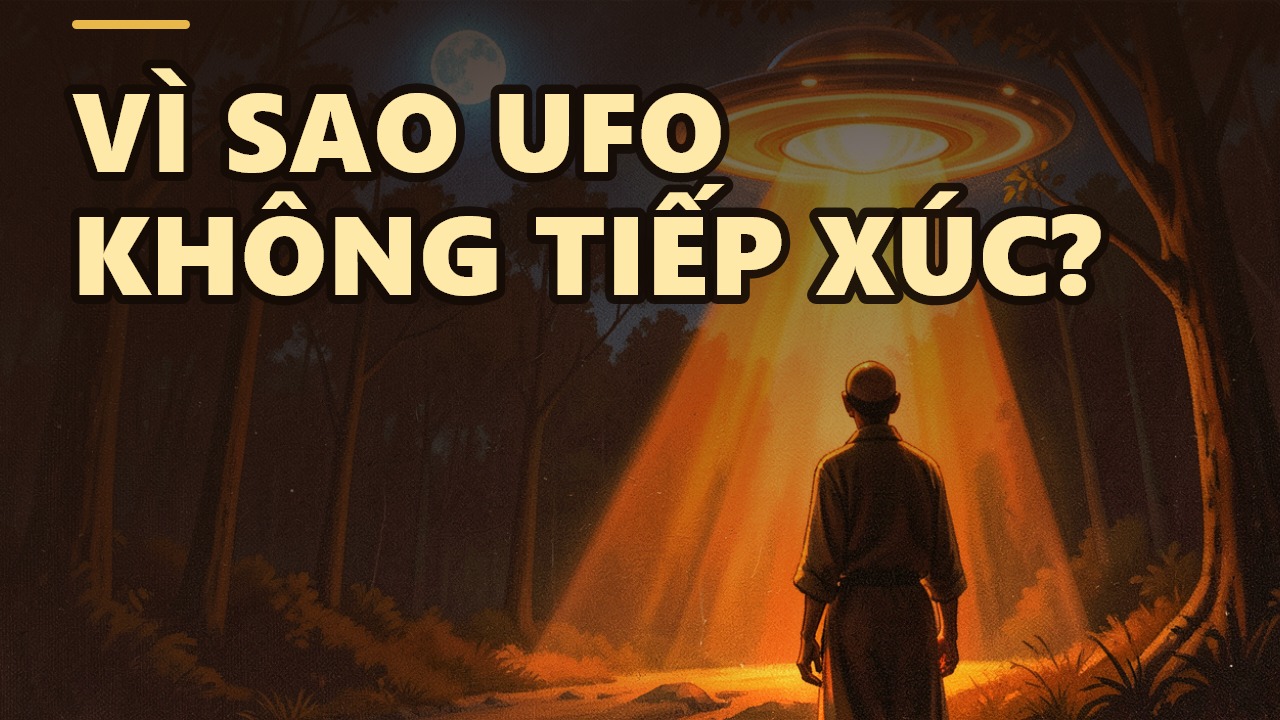
When "flying saucers" quietly appear in the sky, some people feel excited, others feel afraid. But few ask: why don't they make contact with us? The answer, according to the teachings of Venerable Thích Chân Quang, lies not only in science, but also in the very way we are living.
Flying Saucers: A Wake-Up Call from the Universe
All over the world, people have recorded sightings of flying saucers, from Vietnam to so-called "advanced" nations. Scientists continue to deny their existence because they have not been proven. But Thầy Chân Quang suggests that this reflects a narrow, arbitrary way of thinking:
"What if they have devices that travel faster than light? What if their level of advancement has reached that point? So we are, in effect, measuring the heart of a noble person with the heart of a petty one."
Do not rush to deny what we do not yet understand. The vast universe still holds countless wonders open to our hearts.
Do Not Take Earth's Civilization as the Measure
Thầy offers a familiar example: a country with many billionaires is not necessarily rich, because the money is concentrated in the hands of a few. That is sad news, not good news. "Only when there are no more billionaires, and everyone is a millionaire, will that be good news." Our way of evaluating must rise above the limited view of the worldly mind.
"We do not take the civilization of Earth as the standard by which to judge other civilizations. We stand upon the civilization of the universe."
Only then can we open our hearts to what is happening around us, without prejudice.
Why Don't Aliens Make Contact?
According to Thầy, they have no need to make contact, because they have already "scanned" and fully understood us. They know that human beings are quick to misunderstand — praise makes us arrogant, criticism makes us angry — so "we are impossible to deal with." They do not need Earth's resources, because their energy comes from the stars. They do not interfere, just as we do not interfere with the deep forests of Africa.
"They know that contacting us would only cause trouble. This bunch is always misunderstanding. Praise them and they become arrogant; criticize them and they flare up in anger. So this human race is impossible to deal with."
At times, their silence is itself a reminder about who we are.
The Two Crossroads of Civilization
When a civilization reaches its peak, it must face one of two outcomes: either it destroys itself, or it rises above to become a paradise, its inhabitants becoming divine beings. Our Earth now stands at that crossroads.
"When a civilization becomes too advanced, it destroys life. But if it does not fall into that dead end, it turns that planet into a paradise, where each person becomes like a divine being."
No one else — it is humanity itself that decides which way to go.
Artificial Intelligence: The Final Turning Point
From stone tools, shovels, bows and arrows, to machines that replaced muscle, then computers that could calculate, and now artificial intelligence. Machines no longer merely calculate — they create. They can paint, write scripts, and even teach the Dharma in place of human beings. Thầy poses the question: "So what are human beings for?"
"To the point that today machines are equal to humans and better than humans. We begin to tremble."
The development of technology mirrors our own inner hearts. If the mind is full of greed, hatred and delusion, AI will become an instrument of destruction. If the mind is gentle and wholesome, we will lift humanity to a higher level.
Let us look at ourselves each day. To practice, to live ethically, to open our hearts in compassion — this is how we avoid the dead end and instead walk through the gate of paradise, where each person becomes a divine being in their own right.
AI-assisted translation from the Vietnamese original.
Read in Vietnamese →