
Practicing Meditation: The Buddha's True Path and the Pitfalls to Avoid
This article shares the advantages and obstacles of practicing meditation according to the teachings of Thầy Thích Chân Quang, helping you recognize the right path and avoid dangerous mistakes.
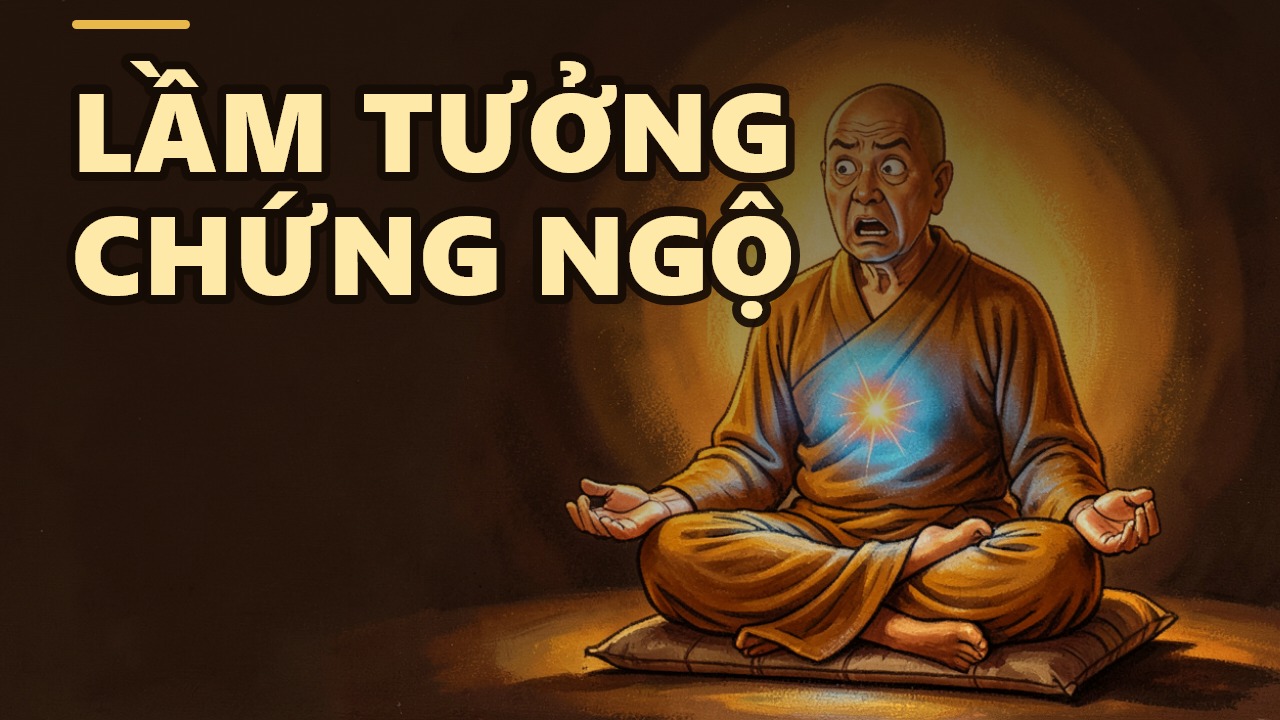
Have you ever been sitting in meditation and suddenly heard clearly the sound of a rice weevil eating grain in a jar not far away? You quietly think, "I must have attained the divine ear!" But that is only a state of stillness, not yet enlightenment. In moments like these, if we do not understand the path clearly, we easily fall into delusion and become carried away.
In a dharma talk on the topic of the advantages and obstacles when practicing meditation, Thầy Thích Chân Quang shared many profound insights. Today, let us listen together to understand what it means to practice meditation correctly, and how to overcome the obstacles that arise.
The Buddha's Meditation: A Clear Formula and Path
There are many schools of meditation in the world, but according to Thầy, the meditation of the Buddha is the highest pinnacle. Why? Because it was taught by one who attained absolute enlightenment — the Buddha. The Buddha's meditation is not vague or ethereal; it is a science with a clear formula and a clear path.
"The Buddha's meditation has a formula: two plus two is four, two plus three is five. There is a clear formula. Second, the Buddha's meditation has a clear path. However far you practice, you know for certain you have reached that far, with no error."
It is precisely because of this clear path that practitioners know where they stand, what a given state of mind means when it appears, and how to avoid illusion. Thầy told a story: a meditator sitting in meditation suddenly saw a brilliant light before him and thought, "I am about to attain realization!" It turned out to be only the light from a farmer's frog-hunting lamp shining across the field. Without understanding the path, we are easily deceived by temporary states.
Two Fatal Mistakes in Practice
According to Thầy, practicing with the wrong method is the greatest obstacle. Two basic mistakes can lead to madness or nervous breakdown.
The first mistake: the more one practices, the more arrogance grows. Some methods inflate the ego, causing practitioners to see themselves as superior, as becoming a Buddha, and to look down on others. The consequence is that they are easily led astray by demons and go mad. Thầy told of a monk whom a "handsome old man" touched on the head and told, "You have attained the Great Shurangama Samadhi." The monk believed it, became delusional, stripped off his clothes, and screamed wildly. To avoid this, each time we sit in meditation we must set the intention of three qualities of heart:
Absolute reverence for the Buddha;
Boundless love for all sentient beings;
Utmost humility, seeing ourselves as grass, refuse, sand, and dust.
"Each time we begin to sit in meditation, we must set the intention of these three qualities of heart to keep ourselves from the mistake of arrogance."
The second mistake: letting the energy rise to the head. The human body has an invisible system of energy. According to Eastern medicine, this energy must gather in the lower area of the dantian. If, while meditating, we focus attention on the head or on the points at the crown, the energy will rise, depleting our vital essence and leading to nervous exhaustion — a state of neither living nor dying, not mad yet full of suffering.
"Therefore the Buddha taught us to meditate with awareness of the whole body — aware of the head, aware of the body, aware of the chest, aware of the abdomen — to keep the energy settled in the lower belly."
Lacking Blessings from Merit and How to Create Them
The second obstacle is lacking blessings from merit. When we lack them, the mind is hard to settle, our surroundings are not favorable, and it is difficult to sustain our practice. Thầy advised: practice and create blessings from merit at the same time.
"Whatever we give to others, that is what we receive. If we want our practice to be blessed with more merit, we should help others practice as well. When we meet someone who does not yet understand meditation, encourage them, explain its benefits; when we create conditions for others to practice, we ourselves also achieve success."
In addition, the practice of repentance is fundamental for a practitioner. Do not think you have no faults; the deeper we practice, the more we see our transgressions from countless lifetimes. Therefore, be diligent in bowing to the Buddha in repentance. Thầy said: whoever feels warm happiness each time they kneel before the Buddha is a person with wholesome roots, a person with wisdom.
Conclusion: Practice on the Right Path
From the great patriarchs such as the Fifth Patriarch Hongren and the Sixth Patriarch Huineng down to us, everyone encounters obstacles on the path of practice. But those with wisdom do not lose heart. They always take refuge in the Buddha, keep a humble heart, and diligently repent.
Let us remind ourselves: "Strive not to betray yourself, not to be unkind, not to be lax, not to be lazy." If you have doubts about your path of practice, seek out genuine teachers and join a meditation retreat taught with the correct method. That is a blessed connection from many lifetimes, one we should cherish.
AI-assisted translation from the Vietnamese original.
Read in Vietnamese →