
Practicing Meditation: The Buddha's Formula and Common Obstacles Everyone Faces
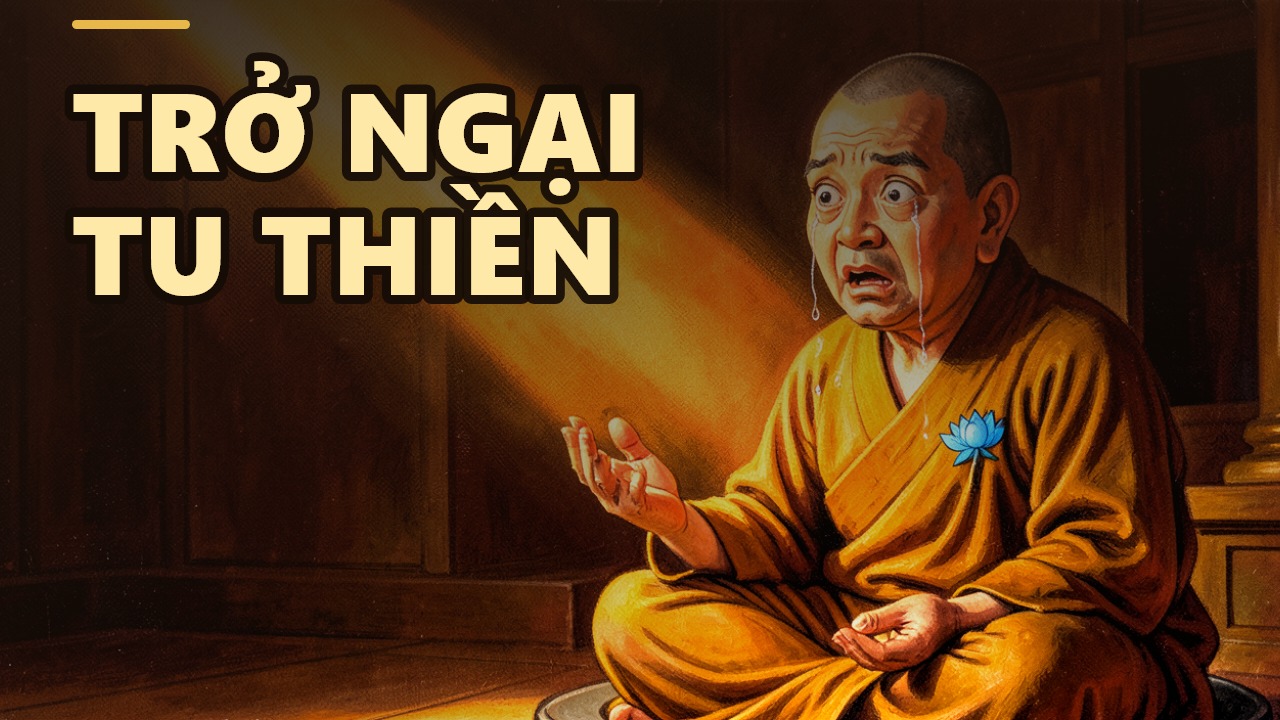
**Summary:** Venerable Thích Chân Quang shares the differences between Buddhist meditation and other schools, and the two obstacles in practice: using the wrong method and lacking merit. This helps practitioners identify and overcome them.
At the recent Quán Thế Âm festival in Đà Nẵng, after the grand main ceremony with thousands gathered, the afternoon meditation retreat was notably empty. It seemed people preferred entertainment over practice. Yet, Venerable Thích Chân Quang observed a profound truth: foreigners coming to Vietnam are not seeking pleasures, as they have plenty at home. They are searching for culture and for meditative concentration. Among the various meditation schools, the meditation of the Buddha is the pinnacle—the place where they can find the deepest truth.
**The Buddha's Meditation: A Clear Formula and Path**
What makes it so different? According to the Master, many other meditation traditions speak in romantic, vague terms that can be interpreted in any way. The Buddha's meditation, however, is like an exact science. It has a formula and a clear path. One can know with certainty how far they have progressed, with no room for error.
"The Buddha's meditation has a formula. Two plus two equals four. Two plus three equals five. That means there is a clear formula. Secondly, the Buddha's meditation has a clear path. Wherever you are in your practice, you know for certain where you stand without being misled."
**The First Obstacle: Applying the Wrong Method**
Because they do not know the path, many practitioners go astray. There are two fundamental mistakes that can ruin a person. The first is that as they practice, they become increasingly arrogant, thinking they have attained realization and are themselves a Buddha. Such a mindset can lead to madness. The second is by focusing energy on the acupoints in the head, causing the vital force to rise and lose its grounding essence in the lower abdomen. In this case, one may not go mad, but the nervous system deteriorates, leading to a life of endless distress.
"If they teach meditation and push the student into arrogance, that student will go mad. If they teach meditation and push the student into a state where they lose their grounding essence and the energy rushes to the head, that meditator's brain will eventually break down."
**Three Mental Practices Before Sitting in Meditation**
To avoid such errors, the Master teaches that before sitting in meditation, one should cultivate three mental attitudes: absolute reverence for the Buddha, boundless love for all beings, and ultimate humility—seeing oneself as worthless as weeds or dust. Hold onto these three attitudes as a key to protect the mind and the journey of practice.
**The Second Obstacle: Lacking Merit**
Another major obstacle is a lack of blessings from merit. For one lacking such blessings, the mind is difficult to settle, and the environment is not conducive to practice. A wise practitioner cultivates while also creating merit. The highest form of merit is helping others to practice as well. Do not practice alone silently in a corner. Encourage, guide, and support others. Naturally, the obstacles in your own practice will lessen.
"In meditative concentration, it is the same. Is our practice difficult? It is extremely hard. But if we want our practice to have more merit and more fortune, we help others to practice. Remember this."
**Repentance: The Fundamental Practice of a Practitioner**
A practitioner never thinks of themselves as innocent. Even if one lives as pure as ice and snow, one still recognizes karma from countless past lives. Therefore, every day, bow before the Buddha and practice repentance. When kneeling before the Buddha, the heart feels warm and happy, like a child returning to their parent. If someone feels joy when bowing before the Buddha, that person has wholesome roots and wisdom.
"Someone who can maintain a steady, consistent practice of repentance every day—know that this person's mind is very stable and very vast."
**Overcoming Obstacles with the Examples of the Masters**
Do not be discouraged when facing difficulties. The Fifth Patriarch, Hoàng Nhẫn, a reincarnated Bodhisattva, endured the hardship of being a single mother wrongly accused. The Sixth Patriarch, Huệ Năng, had to hide in the forests for fifteen years. If even they faced such trials, how much more so for us? Encountering obstructive conditions is normal. The key is not to lose one's ideals or to be swayed by emotions.
So, each day, begin by bowing to the Buddha, repenting, and cultivating the three mental practices. Sit in meditation with a calm mind, knowing where you are on the path. And share this wholesome Dharma with everyone. The more you help others to practice, the wider your own path becomes. Do not give up, for the Buddha's meditation is the pinnacle—and we now have the formula and the path. One only needs to persevere in following it.
AI-assisted translation from the Vietnamese original.
Read in Vietnamese →