
Meditation Practice: The Essentials and the Supporting Elements You Should Not Overlook
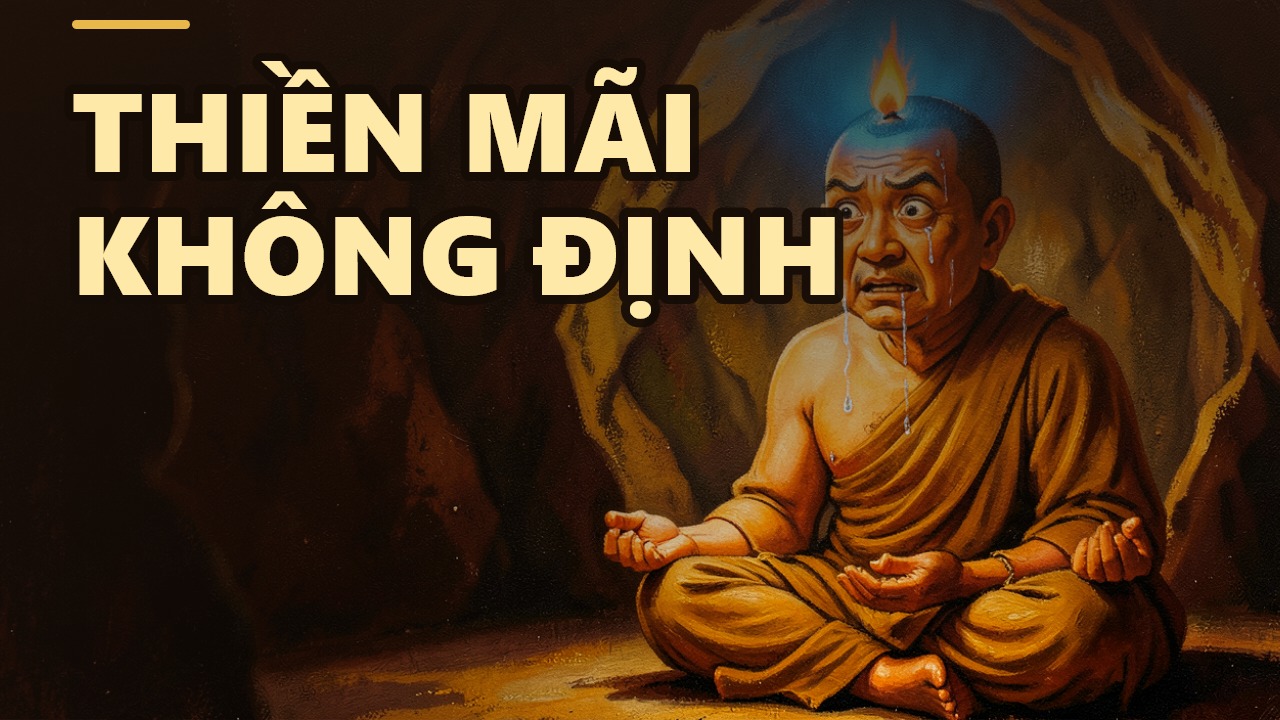
Meditative concentration is the core practice, but a virtuous life, qigong, proper mental attitude, and merit are indispensable supporting forces. Let us understand this correctly so that our practice may bear fruit.
Have you ever sat in meditation for hours, only to have your mind jump around like a monkey? One thought follows another, and you cannot stop them? Have you ever wondered, "Why do I try so hard but still cannot collect my mind?" Perhaps you have overlooked something that, while not the "core," is in fact the "supporting element" – the very foundation of meditative concentration. In a recent dharma talk, Master Thich Chan Quang offered a profound perspective on the essential and the supportive in meditation practice.
**Meditation is the Core, but Moral Conduct is the Foundation**
When we think of meditation, we often picture sitting still, eyes closed, with steady breathing. But according to Master Thich Chan Quang, meditation is only the "core" if it is built upon a solid foundation of moral conduct. If one lives immorally, harming others, then no matter how long one sits, the mind remains disturbed and restless.
"Meditation is the core, but a moral life is the foundation."
The Master shared a story: A person came to him seeking guidance because they could not collect their mind despite sitting in meditation for a long time. The Master inquired about their past, and the person confessed to having abandoned a lover to marry someone wealthier, causing the former such pain that she sought death. The Master said, "That karma remains there; even after many years, it surfaces to disturb our minds." How we treat others is how we create either merit or karma, and that karma directly impacts our meditative mind.
Therefore, if one wishes to attain deep meditative concentration, one must live kindly with all people. Compassion, sincerity, and an absence of selfishness – these are the very bricks that build a solid foundation for every hour of sitting meditation.
**Qigong: A Powerful Support for Meditation**
Many believe that meditation only requires sitting. But Master Thich Chan Quang emphasizes: sitting meditation is the core, but qigong is the supportive element – and it is an immense aid.
"Sitting meditation is the core, but practicing qigong is the supporting element, a tremendous support."
The Master recalled Patriarch Bodhidharma, who was both a Zen master and a martial arts expert, and even the Buddha was a supreme martial artist. Qigong is not just physical exercise; it is a pathway into meditation. Specifically, "Yin-Yang Qigong" – a method of abdominal breathing combined with movement – can bring the mind to a state of clarity even while practicing.
The Master said, "If you practice this Yin-Yang Qigong correctly, your mind will become clear, calm, and empty right while practicing." It also helps relieve deep-seated stress in the brain, improves sleep, and boosts health. If you are a beginner and cannot sit for long, practice qigong to supplement your training. After 30 minutes of sitting and 30 minutes of qigong – the results will come as a surprise.
**Proper Mental Attitude: Thinking in the Right Way**
Do you think meditation means abandoning all thoughts? Master Thich Chan Quang suggests this is not entirely correct. The core of meditation is a concentrated mind, free from delusive thoughts, but to achieve this, we need "proper mental attitude" – to generate thoughts that accord with the true Dharma.
"The core of meditation is a concentrated mind without delusive thoughts. But proper mental attitude is a tremendous support."
The Master explained that from the beginning of practice until achieving stable concentration may take many lifetimes. Through proper mental attitude, we create the merit needed to enter concentration. For example, at mealtime, if we think, "Because I am a practitioner, everyone serves me," that is wrong, as it stems from arrogance. The correct thought is, "Thanks to the teachers, the community, and the conditions they create for me to practice, I strive diligently to repay this kindness."
Another example: If you must leave a meditation retreat to help a close friend in crisis, do not think, "This act of kindness is no less than meditating," for that severs your connection to meditation. Instead, you should think, "Buddha, please witness my heart: my body is here with my friend, but my mind remains at the monastery with my teachers and community." This is proper mental attitude – the right way of thinking to preserve one's aspiration for practice.
**Merit: A Necessary Condition for Practicing Meditation**
The core of meditation is letting go of desires. Yet Master Thich Chan Quang likened "accumulating merit" to a supporting element that is supremely important. Without merit, we can hardly practice.
"The core of meditation is letting go of all desires. But a supremely important supporting element is the need to accumulate merit, endlessly."
The Master explained: If each day we are solely preoccupied with putting food in our mouths, lacking the merit to live peacefully, we are like birds or fish with a single goal: searching for food. Without merit, we cannot sit peacefully in meditation. Merit provides a stable life, support from good people, and the free time needed for practice. Accumulating merit is not greed; it is the necessary energy source for the journey of meditative concentration.
On the path of practice, do not become so engrossed in sitting meditation that you forget these "supporting" elements, which are actually the foundation. Live morally, practice qigong, cultivate the proper mental attitude, and nurture your merit every day. Then, every hour of sitting meditation will become deeper, and every step on the path of the Buddha's teachings will be more steadfast. May all practitioners remember and practice these things to develop meditative concentration – the most precious seed in the Buddhist path.
AI-assisted translation from the Vietnamese original.
Read in Vietnamese →