
Conquering Oneself Is the Highest Victory: A Remarkable Story from the Dhammapada
From the world’s most foolish love affair to the ultimate triumph: a profound lesson on self-mastery and the value of a single verse of peace.
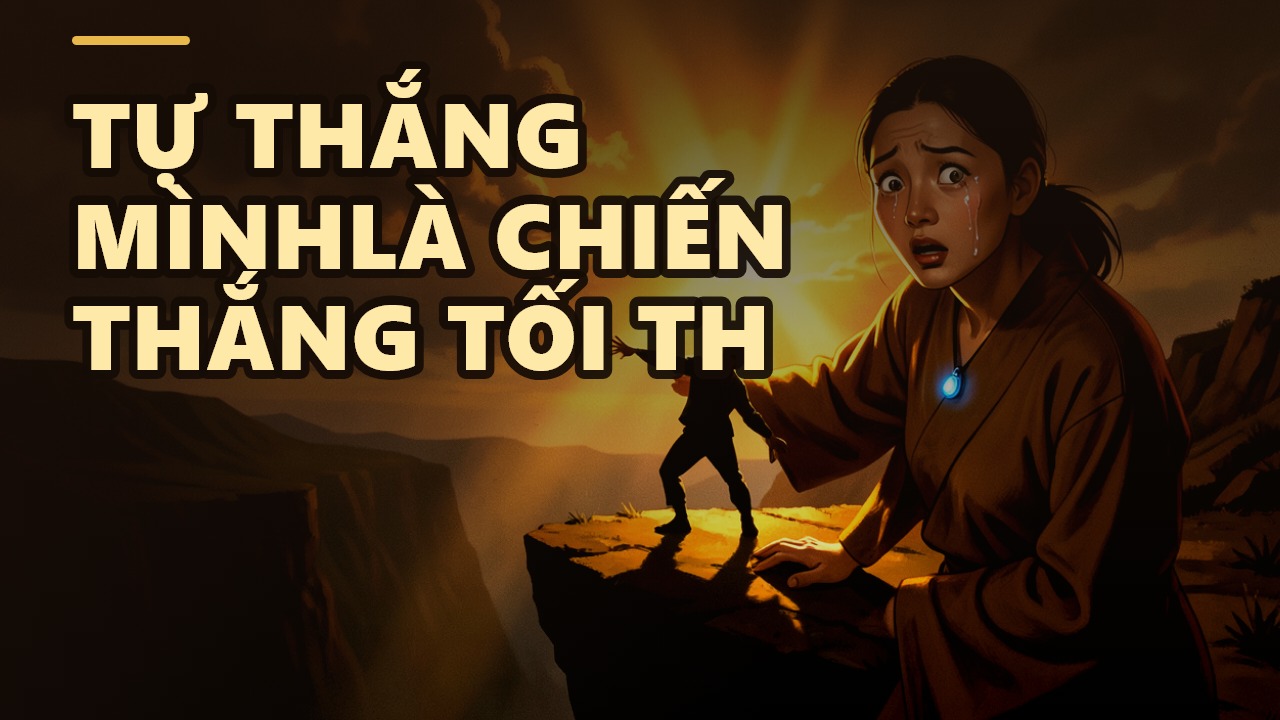
Do you believe that a single word can change the entire course of a person’s life? Today, I wish to share with you the story of a woman once known for having the most foolish love affair in the world, and how she discovered the highest victory.
Even if one speaks a hundred verses...
In the Dhammapada, the Buddha teaches: “Even if one recites a hundred verses without benefit, it is better to hear just one verse and find immediate peace.” This teaching is not merely advice about speech; it opens a great lesson. True practice does not lie in the quantity of knowledge, but in the ability to transform the mind so that we experience peace right now.
The Story of the World’s Most Foolish Love
Long ago, there was a woman named Baddha Kundala Kesi, the only daughter of a wealthy merchant. One day, looking down from a high balcony, she saw a bandit being escorted by guards to his execution. For reasons unknown, in that very moment, she was struck by lightning-like passion. She fell in love with the bandit instantly, a love so intense that her parents bribed officials to swap the prisoner, bringing him home as her husband. Everyone called this “the world’s most foolish love affair,” loving a man about to be executed, a fleeting attachment born without understanding.
After their marriage, the bandit’s true nature revealed itself. He did not love her; he only wished to seize her family’s wealth and then kill her. He took her to the edge of a cliff, demanded she remove all her jewelry, and coldly stated he would end her life. In that moment facing death, she realized her love had been an illusion. With wisdom and calmness, she pushed him off the cliff and escaped. Yet afterward, she wondered, “How will I face my parents?” She left behind her jewelry, abandoned her family, and went forth to become a nun.
When Emotion Overpowers Reason
Venerable Thich Chan Quang explains: “Emotion often overpowers reason. Even though we know many truths and moral principles, when feelings of liking or disliking arise, we are still commanded by those emotions.” This is something every one of us has experienced. There are people we know are flawed, yet we still love them, protect them, and forgive them. Conversely, there are good people whom we obsessively criticize. Emotion can blind us, just as it blinded that young woman who loved a bandit.
He also suggests that worldly love is not entirely real; it arises from gratitude and obligation. If we live together with kindness, duty, and morality, affection grows steadily, becoming sacred and enduring. But if there is deception and ingratitude, feelings fade. Therefore, do not falsely claim to love anyone carelessly, because such lies may create karmic debts in future lives.
A Fateful Encounter with Sariputta
After ordaining in the Nigantha sect, a group of ascetics who practiced nudity, Baddha Kundala Kesi became the most brilliant debater in the order due to her sharp intellect. She traveled everywhere challenging others to debate, and no one could defeat her. One day, she arrived in Savatthi and planted a branch at the city gate, issuing a challenge to the entire nation. Venerable Sariputta, the Buddha’s foremost disciple in wisdom, kicked the branch down and accepted the debate.
According to the etiquette of that time, he invited her to ask questions first. From morning until afternoon, she posed countless lengthy questions regarding nirvana, liberation, and practice. Venerable Sariputta calmly answered each one. By late afternoon, when she had no more questions, he asked her: “What is ‘One’?” It was an extremely simple question, yet deeply profound. He revealed: “Nirvana is unique, the sole peak of liberation, a peace and freedom beyond comparison.” Then he spoke of hundreds of different “ones,” all unique, absolute, and incomparable. Hearing this, she was completely subdued. She knelt down, taking refuge and requesting to ordain under the Buddha. The Buddha taught two famous verses:
“Though one may conquer a thousand times a thousand men in battle, yet he who conquers himself is the greatest victor.”
Upon hearing this, she attained Arhatship on the spot and was recorded in the Verses of the Elder Nuns.
The Highest Victory
Baddha Kundala Kesi’s story is a great lesson on conquering oneself. She once defeated the bandit by pushing him off a cliff, but that was only an external victory. The true victory occurred when she conquered herself: overcoming delusion, hatred, and ego-clinging. From a woman blinded by foolish love, she became a pure and holy nun.
Venerable Thich Chan Quang emphasizes that sometimes, before arriving at the true Dharma, people must travel many paths and study under various teachers. This is not a mistake, but preparation. Only when conditions are ripe do we meet the suitable teacher and method to advance on the path. Therefore, we should be tolerant of everyone’s spiritual journey, avoiding hasty judgment or contempt.
Lessons for Us
Through this story, we learn three things. First, emotion can cloud reason, so we must remain mindful to avoid blindness. Second, only conquering oneself is the greatest victory. Overcoming anger, craving, and attachment is more precious than any military triumph. Third, do not seek complex knowledge; instead, let a single verse penetrate your heart and bring peace.
Remember that every day offers us the chance to conquer ourselves. Do not look for opponents outside; look within. The more we overcome the ego, the brighter and freer we become. Fortunately, the Buddha’s teachings provide a clear path to do this: maintaining a pure mind, living with compassion, and practicing mindfulness in every breath.
Let us begin today. Do not try to defeat anyone out there. Instead, conquer all the agitation, greed, hatred, and delusion within your own mind. Only this victory brings true happiness. This is the highest victory.
AI-assisted translation from the Vietnamese original.
Read in Vietnamese →