
Death Is Like a Flood: How to Overcome the Fear of Dying
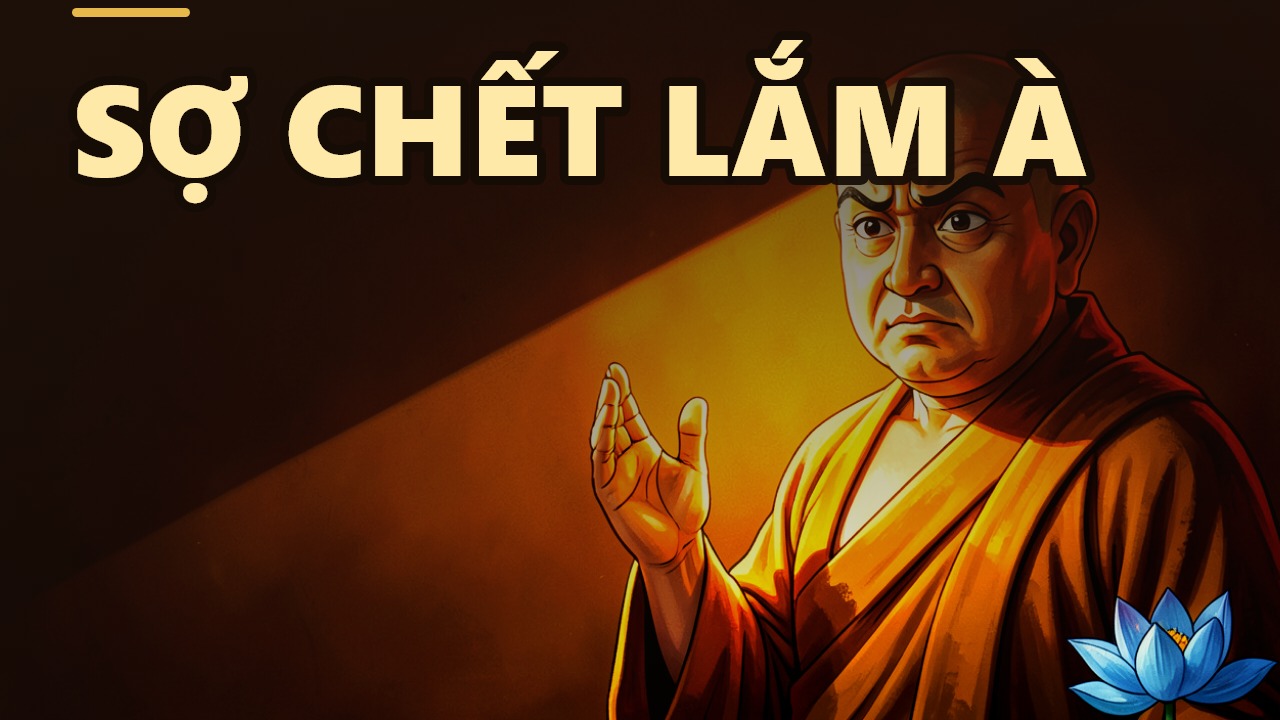
When a loved one passes away, you may weep inconsolably. Yet, do you realize that the departed soul might be standing beside you, trying to comfort you, while no one can hear them? Venerable Thich Chan Quang shared a story from a Buddhist practitioner who recalled a past life dream. After being killed on railway tracks, she rushed home to announce her death, but her family laughed and joked as if nothing had happened. She screamed in anguish, yet remained unheard. As the teacher explained, this separation between the living and the dead is a profound suffering that all sentient beings must face.
The flood of death washes everything away. In the Dhammapada, the Buddha taught that those whose minds are intoxicated by children and livestock will be swept away by death, just as a flood destroys a sleeping village. Venerable Thich Chan Quang explained that no matter how deep our familial love may be, separation is inevitable. If we do not part ways while alive, we must lose each other at the moment of death. He compared death to a torrential flood that carries everything off, leaving nothing behind. This serves as a wake-up call to recognize the transient nature of life. When we become too immersed in minor joys and sorrows, we forget that we are standing before an approaching flood.
At the time of death, we go alone. The tragic story of Patacara illustrates this truth. In a single night, she lost her husband, her two children, and her parents when their house collapsed. Driven mad with grief, she ran naked into the monastery. The Buddha did not speak of her personal pain; instead, he revealed a universal truth. Once death arrives, we depart alone, without parents, children, or anyone to protect us. Venerable Thich Chan Quang emphasized that although we love one another deeply, we are utterly solitary in the face of death. Understanding this law helps us endure loss without excessive suffering, for it is the common destiny of all beings.
So, how should we live? The teacher advised us to live as if we were about to die. While this sounds daunting, it is a profound philosophy of life. Each day during meditation, a disciple of the Buddha contemplates the impermanence of the body, acknowledging that it will age, fall ill, die, and eventually turn to dust. Through this practice, meditators cease to fear death itself. A true follower of the Buddha does not fear dying, but only fears pain. Instead of running from reality, we confront it daily. This is the spirit of meditative concentration in Buddhism—not an escape from the world, but a way to live peacefully amidst the flow of impermanence.
Letting go of small pleasures to find greater joy. In his teaching, Venerable Thich Chan Quang recounted a story from the Buddha’s past lives. The Bodhisattva had devoted great effort to sweeping and scattering flowers as offerings at a stupa built for his child. Due to this cause and effect (karmic law), when he later came to save the city of Vesali, rain fell, heavenly flowers rained down, and sweet fragrances filled the air—all manifesting naturally from his good karma. The Buddha taught that by abandoning small pleasures, one gains greater happiness. Wise individuals let go of trivial joys to seek boundless bliss. Sometimes we chase after insignificant entertainments and miss the opportunity to plant seeds of great merit. We must learn to sacrifice the small for the sake of the large, which is the wisdom of the enlightened.
Buddhism is not a pessimistic doctrine, but a path of meditative concentration and mindfulness. By accepting impermanence (anicca), we release petty attachments and discover vast happiness within inner peace. Begin today by reminding yourself that this could be your last day. Live fully in each breath and return to the boundless happiness that awaits.
AI-assisted translation from the Vietnamese original.
Read in Vietnamese →