
True Ease: When the Mind Is Calm but the Heart Still Warm
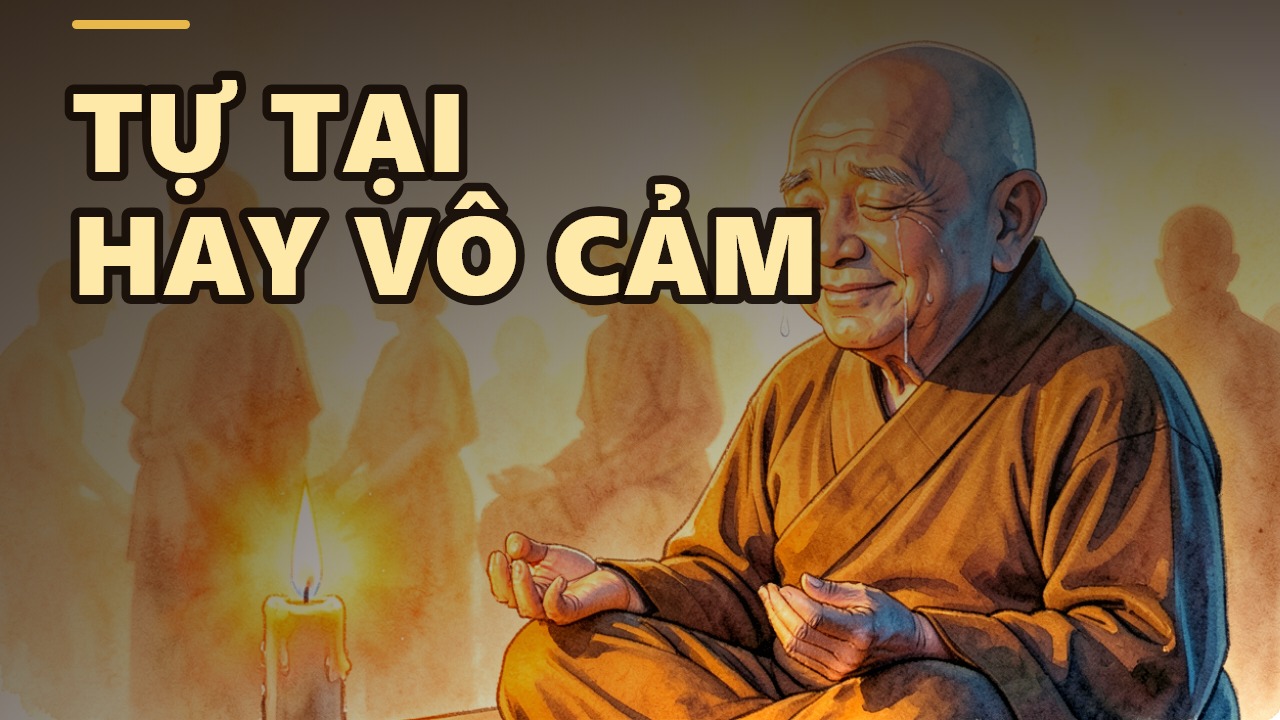
Understanding the true meaning of true ease according to the Buddha's teachings (Dharma): it is not living without feeling or with selfishness, but a soul that is at peace yet full of compassion, able to empathize with all sentient beings.
Have you ever met someone who, no matter what happens around them, remains calm as if nothing had occurred? People call this "true ease." But is true ease really about having no emotions, no longer caring about anyone?
What is true ease? – Genuine self-mastery
In lecture twenty-nine of the course "Moral Psychology," Thầy Thích Chân Quang begins by explaining the words "tự tại." "Tự means oneself, tại means within oneself" – true ease is an attitude of living in which we no longer depend on the outside, having found joy and value within ourselves.
"True ease means being at peace within oneself. It means an attitude where we no longer have to depend on the outside, but find joy, find some kind of value within ourselves."
However, Thầy also emphasizes that true ease is not something that can be attained hastily. It is the result of a long period of cultivating morality, meditative concentration, and wisdom. But because of impatience, many people seek true ease without a foundation, leading to misunderstandings and errors.
Dangerous misunderstandings about true ease
According to Thầy, there are three common misunderstandings: true ease being distorted into selfishness, indifference, and arrogance.
Selfishness: Because one is preoccupied with finding value within oneself, even worshipping the "self" (ego), one forgets others. Gradually, one no longer thinks of anyone but oneself.
Indifference: When one is no longer swayed by external circumstances, many people become apathetic to the joys and suffering (dukkha) of sentient beings. Hearing that someone's house has burned down and saying "life is a dream" before walking away – that is not true ease, it is numbness.
Arrogance: Living only for oneself, respecting no one, one inadvertently becomes a proud person. Humility, on the other hand, comes from having people to respect – the more people we respect, the greater our humility becomes.
"When a practitioner worries less about themselves, thinking this lessens self-grasping, then naturally concern for others appears, naturally the lives of the brothers and sisters around them come into view, for them to care for and help."
True ease in its real sense: Still empathetic, yet unshaken
Thầy tells the story of a blind man who praised Zen master Bankei. That blind man could hear the sounds of everyone and perceive the falsehood in their voices: some pretended to be sad but were actually glad, some praised others while feeling envy in their hearts. Only Zen master Bankei fully felt both the sorrow and the joy of others. That is precisely the heart of compassion, the genuine empathy that a practitioner must have.
"He could hear in the master's voice the complete sorrow, and when he heard the master praise another's joy, he could hear in the master's voice the complete joy and gladness."
So what is true ease, really? It is when our mind/heart is not shaken by what happens to us – whether we are scolded or praised – yet we still clearly see and share in the joys and sorrows of others. We can still be moved when others face misfortune, still rejoice when others succeed, but without losing the peace within our souls.
Practical suggestions for attaining genuine true ease
The Master also shared his own experience: when he was young, he dreamed of a world where everyone knew how to love one another. When he entered the path, he heard much about liberation and true ease, yet found himself constantly caring for the needs of his brothers and sisters. He concluded that this is precisely the natural step forward on the path of practice. When concern for others appears, only then do we truly lessen the ego and draw closer to true ease.
To attain true ease in its genuine sense, we must build from the foundation: regularly bowing to the Buddha, making offerings, performing acts of compassion, practicing meditative concentration to calm the mind/heart, and especially practicing humility – knowing how to respect our elders, and even those who are our equals. Humility is not looking down on ourselves, but recognizing the value of others and keeping our heart gentle and open.
Conclusion: Practicing true ease every day
Learning about true ease is not about imitating a certain attitude, but about understanding that true ease is the fruit of a long process of practice. Each day, we can practice by caring for those around us, not overreacting to what comes our way, and always keeping a peaceful smile within.
Remember: true ease is not numbness, but having a heart that can feel and a soul that is not bound. That is the true happiness that every practitioner of the Buddha's teachings (Dharma) longs for.
AI-assisted translation from the Vietnamese original.
Read in Vietnamese →