
Cultivation Is Like Planting a Tree: Which Seed Will You Choose for Your Life?
In this dharma talk, Thầy Thích Chân Quang compares spiritual practice to planting a tree: from choosing the seed, preparing the soil, and watering, to weathering storms and bearing fruit. Through this, we come to see that the true goal of the spiritual life is enlightenment and liberation.
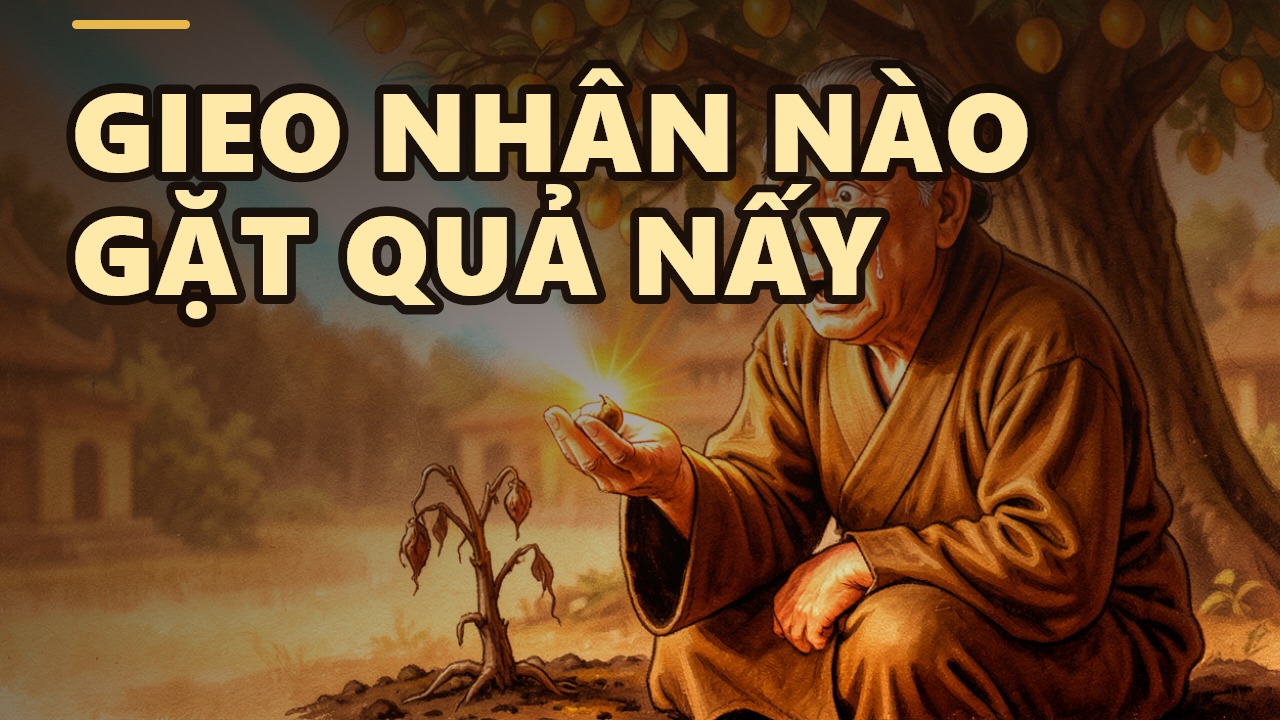
A person once came to a Zen master and said, "I want to practice. But practice for what? For good health? For intelligence? For miraculous powers?" The master did not answer. He simply handed the person a seed and said, "Plant it. When the tree bears fruit, you will understand." The person took the seed home, planted it, and cared for it, but the tree bore fruit so bitter that everyone ran away. Only then did the master say, "You chose the wrong seed from the very beginning." Upon hearing this, the person suddenly awoke. Our spiritual practice is just like this: as you sow, so shall you reap. And the most important thing is choosing the right seed for our life.
Choosing the Right Seed from the Start
In the dharma talk "Cultivation Is Like Planting a Tree," Thầy Thích Chân Quang emphasizes that the first step for anyone planting a tree is choosing the seed. If we choose a poor seed, the tree will later bear only sour or poisonous fruit. If we choose the seed of a great sweet tree, that tree will offer shade to all beings. Spiritual practice is the same: the seed is the goal we pursue.
"If we choose a tiny, short-lived, bitter and sour seed, then later it will bear that kind of fruit. But if we choose the seed of a great tree with fragrant flowers and sweet, wholesome fruit that humans, birds, and animals can all enjoy, then later it will grow into just such a tree."
Thầy Chân Quang warns that some people practice in order to be healthy, to be intelligent, or to gain supernatural powers. Those seeds may bear fruit, but the fruit stops at health, wisdom, or magic; they cannot lead to liberation. So what is the right seed? It is the aspiration for enlightenment and liberation from samsara (cycle of rebirth), the vow to become a bodhisattva in order to serve the world and help others. We must identify this seed precisely from the very beginning, otherwise we may sow the seed of a wrong path and fall into delusion.
Planting the Seed in Real Soil
A good seed, if left floating in the air, will never sprout. The Dharma is the same: we cannot practice by running away from life. We must learn to live honestly and kindly with ourselves, with our families, and with society. This is the first soil in which the Dharma takes root.
"The sacred and lofty Dharma takes root in this very real life. That means, to begin practicing, we must learn to live well within the life we are living, not turning our backs on it, not avoiding this real life."
The roots of the Dharma are concrete actions: uprooting greed, hatred and delusion, jealousy, and selfishness; cultivating patience, compassion, and forgiveness. We need not look far away. The soil of our life is right where we stand, among those we love and even those we find difficult. Let us begin practicing right within our daily duties, amid the ordinary concerns of life.
Watering and Fertilizing So the Tree Grows
For a tree to reach toward the sky, it needs two essentials: water and fertilizer. In practice, water is the taming of the mind, which is meditative concentration; fertilizer is merit, the doing of good deeds.
"Fertilizing means creating merit. Watering means stilling the mind in meditative concentration. The tree will die at once without water. The Dharma will be lost the moment we stop watching over our own inner mind."
Thầy Chân Quang teaches that our mind is full of ignorance and fetters. If for even a single moment we fail to look inward, unwholesome thoughts will surge up. Therefore, we must be awake in every moment. But guarding the mind alone is not enough. Just as a tree without fertilizer grows stunted, a practitioner who does not know how to love, to help, and to give to the world will not grow in spiritual strength. We must fulfill our duties to family, society, and country. In this way, merit nourishes the spiritual heart and helps us transform.
Welcoming the Storms and Hardships
In a garden, trees that grow in perfect stillness are often weak. In contrast, trees that must struggle against the wind grow strong and sturdy. The storms are adversity itself: harsh words, betrayal, or unexpected difficulties. Those who do not practice see them as misfortune, but those who practice recognize them as opportunities for training.
"We need harsh words in order to practice patience and grow. We need the ingratitude, the imperfection, and the insecurity of life in order to guard our hearts and advance on the path."
The karmic obstacles that appear in this lifetime are not calamities, but opportunities to repay old debts and strengthen our inner power. Practitioners should be grateful to those who make their lives difficult, for they are the very winds that keep the tree of the Dharma from ever daring to stop reaching upward. Do not fear adversity; learn to face it with a heart of ease and compassion.
Guarding Against the Borer Worm
Trees also face the threat of insects. The most dangerous insect is not the one that eats the leaves, but the borer that tunnels into the trunk, cutting off the flow of sap until the tree dies. In practice, we have invisible enemies that enter through those closest to us.
"The borer worm is inside our own soul. There are people who come to us, who become intimate with us, close to us, who win our affection and gain our trust, and then begin to speak wrongly. The moment anyone speaks even half a word that goes against the true Dharma, we should know that this is the borer worm."
Those who win our trust and then advise us to turn away from the Buddha's teachings (Dharma), who make our mind arrogant and attached, or who shake our faith, are the borer worms. There are even those who bring saws to cut down the tree of the Dharma, people who use violence to destroy temples and scriptures. We must stay alert, recognize them clearly, and resolutely protect the Dharma, just as we protect a natural forest so that life may continue. Only when the spiritual heart stands firm can we continue on the path of liberation.
Leaves, Flowers, Fruit, and the Warning of Poisonous Fruit
When the tree grows strong, it puts forth leaves, flowers, and fruit. The leaves are graceful conduct, virtue expressed in every gesture and word. The flowers are mindfulness and awakened awareness, a mind that is bright, clear, and at peace. The fruit is the noble attainment that practitioners reach, such as the fruits of Stream-Entry, Once-Returning, Non-Returning, and Arahantship.
"The fruit is the true noble attainment. If from the beginning we chose the right seed, then later we will attain noble fruits, fruits that are delicious, nourishing, and wholesome when all beings taste them. But if someone teaches us in a way that makes our mind arrogant, we should know that person has attained a false fruit, and that person bears poisonous fruit."
A noble one at the stage of Stream-Entry has destroyed three fetters: doubt is ended, selfishness is cut off, and stubborn clinging is no more. Such a person lives selflessly and forbearingly, and will not commit even a small wrong the size of a grain of dust. Their sweet fruit is the Dharma flowing forth, bringing benefit to all beings. In contrast, if we choose the seed of a wrong path, the fruit will be poison, making those who taste it arrogant and harmed. Remember: the seed we choose at the beginning determines everything. If someone teaches us and the result is arrogance and attachment in our mind, then it is a wrong path.
Every day we live is another sowing of seeds. The seed we choose at the start sets the direction of our whole life. Let us practice with the goal of enlightenment, preparing the soil of the mind with goodness, watering it with wakefulness, fertilizing it with good deeds, welcoming the storms with patience, and courageously protecting the Dharma. Then the tree of the Dharma in each of us will flourish, not only for ourselves, but as shelter for countless living beings.
AI-assisted translation from the Vietnamese original.
Read in Vietnamese →