
Practicing for Years Without Enlightenment? Perhaps You Only Have One Wing
Still not attaining realization after years of practice? Because you are still planting. Cultivate both merit and wisdom like the two wings of a bird—know how to create great merit and keep persevering.
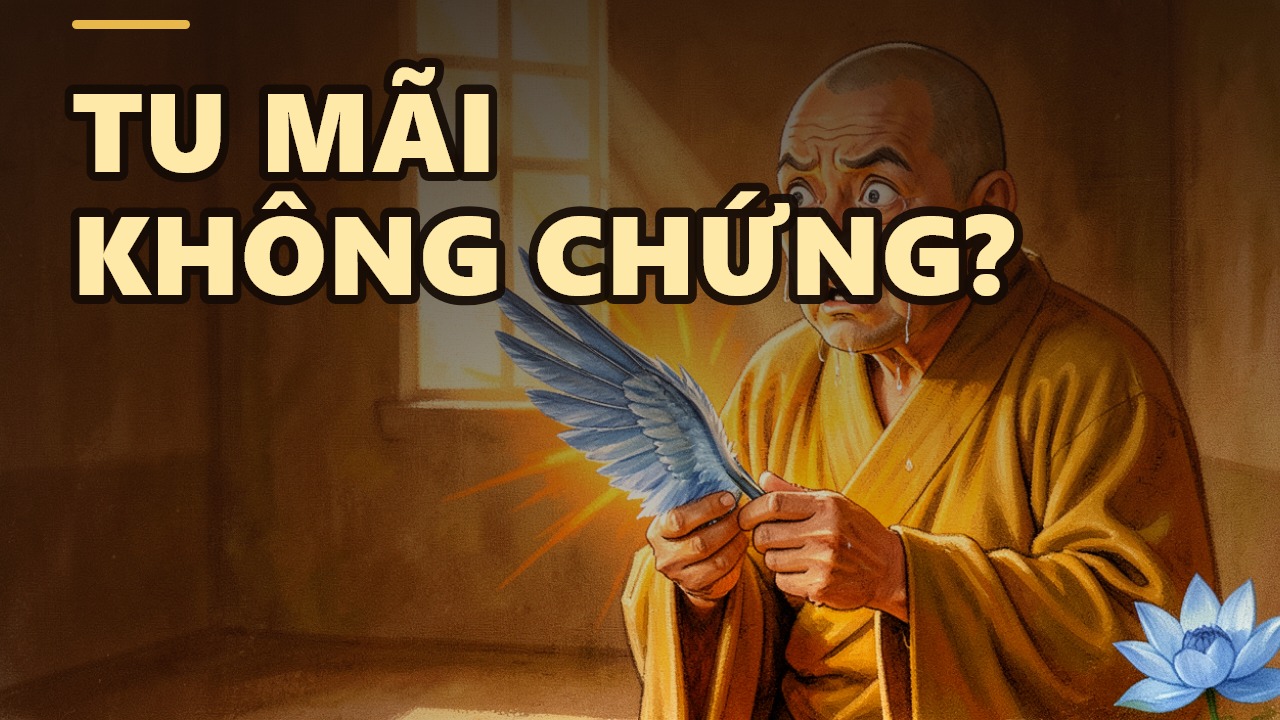
Have you ever wondered why some people meet the Buddha for only a few days and attain a noble fruit, while after years of practice our mind is still restless and our legs still ache? The story is told that the Venerable Bakula met the Buddha and attained Arhatship by the seventh day, while the Buddha himself had to endure six years of ascetic practice before attaining the way. We may feel very small in comparison. But there is a comforting truth: we are not the losers—we are simply planting merit, and the harvest season has not yet come. Today, through a dharma talk by Thượng Tọa Thích Chân Quang at Phật Ngọc Temple, let us pick up our own wings and look back at ourselves.
Why do some people attain the way quickly while others practice for years without realization?
In Buddhist history, there are those called beings of the highest capacity—people who accumulated merit over many lifetimes. When they meet an enlightened teacher, they realize enlightenment very quickly. In contrast, we today are seeds just beginning to sprout. Thầy Chân Quang gently reminds us:
"Those beings had already perfected their merit, so in that life they appeared to harvest the fruit of attaining the way. As for us, right now we are still planting merit and cultivating practice."
Do not deceive yourself into thinking that practicing means attaining. The Buddha's teachings (Dharma) are not that easy. But do not be discouraged, for every moment of practice today is planting a seed for the next season.
Merit and wisdom: the two wings of a bird
Thầy teaches that to fly toward liberation, we need merit and wisdom moving together. Merit means helping others; wisdom means turning toward non-self (anatta). Sitting in meditative concentration and practicing mindfulness is cultivating wisdom. Meanwhile, generosity, making offerings, and supporting fellow practitioners is cultivating merit. If we focus on only one side, we are like a bird with one wing, unable to fly at all.
"A bird must have two wings to fly. If we have only one wing, we are on the wrong path, because the bird cannot fly. And even if the two wings are uneven—one large and one small—the bird will still not fly along the path it wishes."
It is like building a house with only a solid foundation but no roof, or conversely, a beautiful roof on a weak foundation. Neither will last. The life of practice is the same: it requires a balance of merit and wisdom.
The wise know how to create great merit: where should you give so your merit grows?
Many people think that simply giving generously is enough to gain merit. But in reality, there is a clever insight that Thầy calls "the secret at Phật Ngọc": when your merit is still small, prioritize supporting true practitioners—those who bring benefit to many sentient beings.
"There are people whom, when you support and help them, your merit grows. And there are people whom, when you support and help them, your merit shrinks. That is because such a person lives ethically and brings benefit to many others."
One million dong given to a poor person who lives carelessly—spending it on food and entertainment—means the merit shrinks. But one million dong offered in making offerings to a true practitioner, someone who practices exemplarily and teaches sentient beings, means that merit spreads like a drop of water merging into the great ocean. However, when you meet someone in real danger, do not hesitate, even if you know their flaws. Compassion must always remain the driving force.
Cultivating merit is not only with money, but also with speech and effort
There are many intelligent ways to create merit! First, with money: support retreats and courses, making it possible for people to come and practice. Thầy emphasizes:
"Money that flows into places of practice is truly very good, very good indeed."
Second, with speech: praise the path of practice and encourage friends to come to the temple for meditation sessions. Third, with effort: volunteer to clean, help in the kitchen, or tend the temple grounds so that everyone has a place to practice. When you bring even one person to practice, you have created an entire chain of merit.
Persevering through difficulty: the sign of one who carries the seed of enlightenment
I have seen many Buddhists feeling lost in their minds: unable to sit still, aching legs, sore backs. Some give up. But Thầy himself points out:
"Whoever, amid the hardship and difficulty of practice like this, still persists with determination—that person already has the seed of enlightenment."
If your legs hurt, if you are tired, yet you still return to the temple every week and still try to sit for ten minutes each day—do not underestimate yourself. You are walking the path of right diligent effort, a stage that requires a hundred times more willpower. And when one day you sit and your mind rests in peace like heaven itself, you will surely never want to leave.
Acknowledge that your merit is still thin, but do not be pessimistic. Plant one more leaf each day, and one day it will become a tree. And when your merit is complete, you will deeply understand Thầy's teaching:
"We are still planting merit and cultivating practice."
The harvest season will come to those who do not give up.
AI-assisted translation from the Vietnamese original.
Read in Vietnamese →